
البحث
790 نتيجة لـ "iatf-2025-africa-is-the-future-2501831ar"


“Algeria Is The Most Likely To Lead Artificial Intelligence In North Africa”
A report issued by the New Lines Institute placed Algeria at the forefront of the technological scene in the Maghreb, considering it the most qualified to lead artificial intelligence in North Africa thanks to a comprehensive and multi-dimensional national strategy that combines technology development, human resource qualification, expansion of international partnerships, and enhancement of strategic […] The post “Algeria Is The Most Likely To Lead Artificial Intelligence In North Africa” appeared first on الشروق أونلاين .

MALEK BENNABI A Journey Through Time — Back to the Future
PART I — THE MAN, THE WORK, THE WEAPONS OF UNDERSTANDING A Journey Through Time — Back to the Future The Thought of an Algerian Genius Confronting the Barbarity of the Contemporary World Malek Bennabi (1905–1973) is the most systematically ignored major thinker of the twentieth century. An Algerian engineer, polyglot and civilisational analyst, he […] The post MALEK BENNABI A Journey Through Time — Back to the Future appeared first on الشروق أونلاين .


Focus Turns to Algeria’s New Government as Continuity Appears Most Likely
With the Constitutional Court having officially validated the final results of Algeria’s legislative elections, attention is now turning to the formation of the country’s next government. President Abdelmadjid Tebboune is expected to decide in the coming days on the composition of the new cabinet and the future of the Prime Minister, amid growing speculation over whether he will retain members of the current government, appoint political figures, or once again rely on technocrats drawn from the public administration, academia and state institutions. Political and constitutional indicators suggest that continuity is the most likely outcome. Throughout President Tebboune’s two terms, successive governments have been shaped largely around senior civil servants, academics and technical experts, while political parties have played only a limited role in cabinet appointments. The latest parliamentary elections did little to alter that equation. Rather than producing a rival parliamentary majority capable of imposing a partisan government, the vote consolidated a presidential majority that remained broadly supportive of the President’s programme. The elections also reignited criticism of political parties, many of which were blamed for the low voter turnout, reinforcing the argument for maintaining a government built on expertise rather than party representation. Speaking to Echorouk, political analyst Ali Hachani said any discussion over the composition of the next government must first be understood through the constitutional framework governing executive appointments. “The Constitution provides for two distinct scenarios,” he explained. “If a parliamentary majority emerges that differs from the presidential majority, the President appoints a Head of Government from that bloc. However, when Parliament is dominated by parties supporting the President’s programme, the Constitution provides for the appointment of a Prime Minister. That is the situation Algeria has experienced in recent years.” According to Hachani, the results of the latest legislative elections clearly fall into the second category. The winning parties did not create an alternative parliamentary majority but instead strengthened the presidential coalition, which continues to command the majority of seats in the National People’s Assembly. Consequently, he believes the constitutional path points toward retaining the current model, with a Prime Minister heading the government, while leaving open the possibility that other political forces could eventually join the presidential majority. Against that backdrop, Hachani does not expect the incoming cabinet to take on a distinctly political or partisan character. Experience over the past several years, he argued, has shown that President Tebboune consistently prioritizes professional competence and administrative experience over party affiliation when selecting ministers, resulting in governments dominated by technocrats rather than politicians. He acknowledged that parties aligned with the presidential majority may submit names for ministerial positions, but stressed that such proposals remain purely consultative. Under the Constitution, the appointment of ministers is an exclusive presidential prerogative, leaving the final decision entirely in the hands of the Head of State. Hachani also expects the anticipated cabinet reshuffle to remain limited in scope. Rather than a sweeping overhaul, he believes any changes will likely affect only ministries that, in the President’s assessment, have fallen short of expectations or failed to adequately implement his programme. President Tebboune, he noted, has consistently favoured stability within the executive branch over frequent ministerial reshuffles, arguing that continuity in government has proven more effective than repeated changes in leadership. As for the future of the Prime Minister, Hachani considers his continuation the most probable outcome, given the existence of a parliamentary majority that supports the President’s agenda. As required by established constitutional practice, the Prime Minister may submit his resignation following the elections. Should the President decide to retain him, he would simply reappoint him; if not, the resignation would be accepted and a successor designated. Another possibility, Hachani added, is for the President to accept the resignation while asking the outgoing Prime Minister to remain in a caretaker capacity as consultations begin on the formation of a new government. Those consultations could take into account candidates proposed by parties within the presidential majority, alongside respected national experts, although the President would ultimately retain sole authority over the final appointments and could also consult the Prime Minister on setting the government’s priorities. Hachani concluded that President Tebboune now finds himself in a constitutional position that grants him broad discretion in appointing both the Prime Minister and cabinet ministers. As a result, he argued, the next phase is likely to be defined less by political bargaining over ministerial portfolios than by the government’s ability to implement state policies and deliver on the President’s programme. In his view, that reality offers the clearest indication of what the next government will look like: a cabinet built primarily on competence, professional expertise and institutional experience, tasked with meeting citizens’ expectations while advancing the President’s reform agenda.
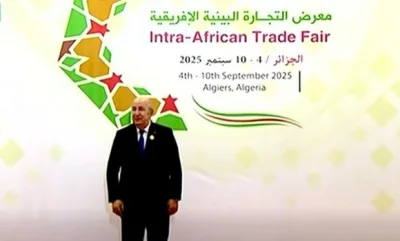
IATF 2025: President Tebboune welcomes leaders and heads of delegations
President of the Republic, Abdelmadjid Tebboune, welcomed on Thursday, at the International Centre of Conferences (CIC) Abdelatif-Rahal, in Algiers, the leaders and heads of the delegations participating in the 4th Intra-African Trade Fair (IATF 2025). This edition, held from 4 to 10 September, is organized under the slogan “Gateway to New Opportunities.” The post IATF 2025: President Tebboune welcomes leaders and heads of delegations appeared first on جريدة اللقاء الجزائرية .
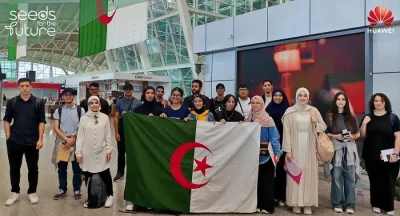
Des étudiants algériens participent en Chine au « Huawei Seeds For the Future 2025 »
feed Une vingtaine d’étudiants algériens, issus de diverses universités, grandes écoles et instituts de formation professionnelle en Algérie participeront à Shenzhen (Chine) au programme « Huawei Seeds For the Future 2025 », indique samedi un communiqué de l’entreprise des télécommunications Huawei. Ces étudiants représentent plusieurs établissements relevant des ministères de l’Enseignement supérieur et de la Recherche scientifique, de […] L’article Des étudiants algériens participent en Chine au « Huawei Seeds For the Future 2025 » est apparu en premier sur Ntic-dz .
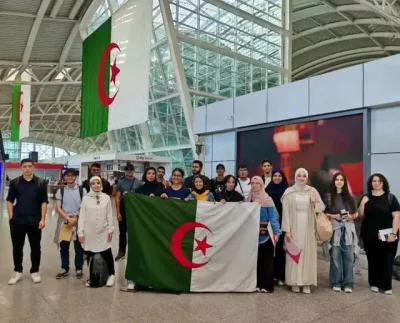
Des étudiants algériens participent en Chine au programme « Huawei Seeds For the Future 2025 »
Une vingtaine d’étudiants algériens, issus de diverses universités, grandes écoles et instituts de formation professionnelle en Algérie participeront à Shenzhen (Chine) au programme « Huawei Seeds For the Future 2025 », indique samedi un communiqué de l’entreprise des télécommunications Huawei. Ces étudiants représentent plusieurs établissements relevant des ministères de l’Enseignement supérieur et de la Recherche scientifique, de […] The post Des étudiants algériens participent en Chine au programme « Huawei Seeds For the Future 2025 » appeared first on Algerie Eco .
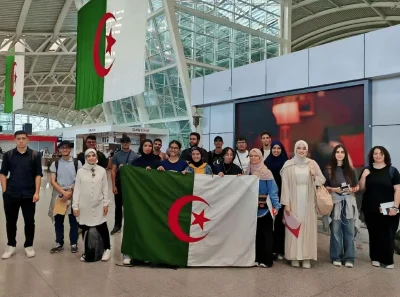
20 étudiants algériens sélectionnés pour le programme « Huawei Seeds For the Future 2025 » en Chine
Actuellement à Shenzhen en Chine, une délégation d’une vingtaine d’étudiants algériens, représentant diverses universités, grandes écoles et instituts professionnels, prend part au prestigieux programme « Huawei […] L’article 20 étudiants algériens sélectionnés pour le programme « Huawei Seeds For the Future 2025 » en Chine est apparu en premier sur .
The French Ambassador Received A Mandate From His Superiors To Speak About Visas
The state of nervousness that characterized the positions of French officials regarding the statements made by the French Ambassador to Algeria, Stephane Romatet, while discussing visas granted to Algerians, revealed that something unknown to the public lies behind this commotion that “demonized” the Ambassador and made him an outcast even by those who appointed him to this position. However, this secret did not remain hidden for long, and as it has become known to many in Algeria and Paris, the traces of the former French Ambassador, Xavier Driencourt, can be felt to discover that the man is behind every political and media “bombshell”, as is the case for what has become known as the “visa” affair, which seems likely to claim other heads in the near future. In this regard, the former French Ambassador to Algeria, Xavier Driencourt, dropped a bombshell regarding the “visa controversy” between Algeria and France, confirming that the French Ambassador, Stephane Romatet, when he spoke about his intention to increase the number of visas, did not decide on his own, but rather received a “mandate” from the higher authorities, represented by the French President, Emmanuel Macron. Driencourt said in a contribution, Wednesday, July 29, 2026, on the website of “Le Journal du Dimanche”, that Ambassador Romatet stated that he “returned to Algeria commissioned by President Macron, in order to put relations between the two countries back on the right track, and to return the number of visas issued to Algerian citizens to pre-crisis levels, i.e., 250,000 visas annually.” The retired French diplomat explained: “With this seemingly innocent statement, the Ambassador acknowledged two things: first, he confirmed his goal of issuing 250,000 visas from the three French consulates in Algeria; second, he acknowledged receiving this mandate from the President (and therefore from the Ministries of Foreign Affairs and Interior) for this purpose. These two statements are what exposed him to harsh criticism, as well as a correction from the Elysee Palace.” Immediately after the French Ambassador made those statements, an uproar broke out, and prominent figures in the government and opposition mobilized to attack him. However, what is striking is the campaign he was subjected to by state officials, while opposition criticism remains part of the political practice there. He was criticized by the Minister Delegate for Europe at the Ministry of Foreign Affairs, Benjamin Haddad, by the Minister of Overseas Territories, Naïma Moutchou, and most strangely by the minister overseeing him, Foreign Minister Jean-Noël Barrot. The matter did not stop there, but even reached the Elysee Palace, where Emmanuel Macron, in a cabinet meeting, tasked the government spokesperson, Maud Bregeon, with refuting the French Ambassador, in an unenviable scene. In his analysis of this issue, the author of the book “The Double Blindness” wondered: “Why?”, before answering: “Because the issue of visas is an extremely sensitive topic in Algeria, which is no secret to anyone, because the Algerian community in France is the largest of all, and this imposes obligations on Paris that it must fulfill.” Until now, the French authorities have not announced the dismissal of the Ambassador, nor has the Ambassador himself voluntarily resigned as is customary in a country described as democratic. This means, among other things, that the French authorities do not believe the Ambassador committed an error justifying his dismissal, nor does the Ambassador believe he committed an error requiring resignation, and therefore he did not. This leads to the hypothesis that what the former Ambassador said is true, which is that the current Ambassador executed what he received from his superiors in Paris. Here lies the importance of the confirmations issued by President Abdelmadjid Tebboune in his recent meeting with the media, which indicate, among other things, that the storm created by the French Ambassador’s statements about visas is a French-French matter, and that Algeria has no role in it, considering that some might be misled into thinking that Stephane Romatet’s “move” could be misunderstood as having come as a result of suggestions by the host country. This is what the former French Ambassador debunked by confirming that such statements cannot be issued by the Ambassador without referring back to his superiors in Paris, especially when it comes to a country like Algeria, which has very sensitive relations with the French state.
Programme «Huawei Seeds For the Future 2025» : des étudiants algériens en Chine
Une vingtaine d’étudiants algériens, issus de diverses universités, grandes écoles et instituts de formation professionnelle en Algérie participeront à Shenzhen (Chine) au programme «Huawei Seeds For the Future 2025», indique samedi un communiqué de l’entreprise des télécommunications Huawei. Ces étudiants représentent plusieurs établissements relevant des ministères de l’Enseignement supérieur et de la Recherche scientifique, de …
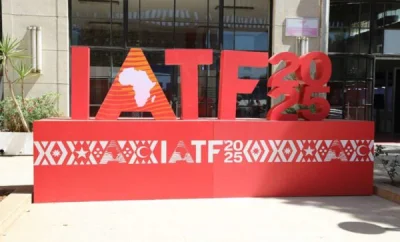
IATF 2025 : Belle moisson pour l’Algérie
Sans conteste aucun, la foire commerciale intra-africaine (IATF 2025) tenue du 4 au 10 septembre a tenu tous ses engagements. De l’avis aussi bien des officiels africains, dont de hauts responsables de plusieurs pays présents à Alger pour la circonstance, que de l’ensemble des participants algériens, africains et même ceux venus des autres continents, le […] The post IATF 2025 : Belle moisson pour l’Algérie appeared first on Le Jeune Indépendant .
IATF 2025 : forte participation des entreprises publiques
Plusieurs grandes entreprises économiques du secteur public prennent part à la 4e édition de la Foire commerciale intra-africaine (IATF), organisée à Alger du 4 au 10 septembre 2025, avec pour objectif de renforcer leur présence sur les marchés du continent. Cette forte participation au pavillon algérien de la Foire, qui regroupe au total 200 entreprises, […] The post IATF 2025 : forte participation des entreprises publiques appeared first on Algerie Eco .
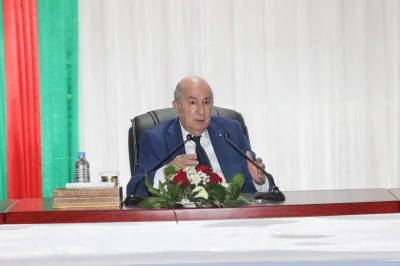
IATF 2025 : Le président Tebboune préside l’ouverture d’une rencontre avec les opérateurs économiques
Le président de la République, M. Abdelmadjid Tebboune, a présidé jeudi, au Centre international des conférences Abdellatif-Rahal (CIC, Alger), la cérémonie d’ouverture d’une rencontre avec les opérateurs économiques pour la consolidation de la réussite de la 4e édition de la Foire commerciale intra-africaine (IATF 2025) qui s’est tenue septembre dernier à Alger. Les travaux de […] The post IATF 2025 : Le président Tebboune préside l’ouverture d’une rencontre avec les opérateurs économiques appeared first on Algerie Eco .
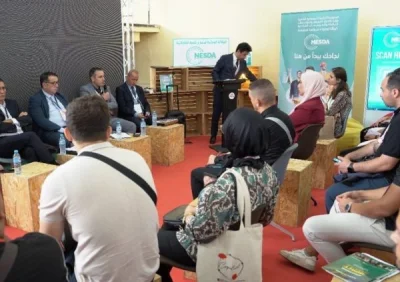
IATF 2025: Des microentreprises algériennes avec de grandes ambitions
La 4e édition de la Foire commerciale intra-africaine (IATF 2025) a été aussi une occasion pour les petites entreprises d’exposer leur savoir-faire. Spécialisées dans divers secteurs d’activités, ces microentreprises, créées avec l’appui de l’Agence nationale d’appui et de développement de l’entrepreneuriat (NESDA), voient grand et veulent se faire une place sur le marché africain. L’IATF […] The post IATF 2025: Des microentreprises algériennes avec de grandes ambitions appeared first on Le Jeune Indépendant .