
البحث
141 نتيجة لـ "startups-the-future-of-africa-2506173ar"

Service and sales engineer - Mechanical seal
Service & Sales Engineer (Mechanical Seals) Algiers, Algeria POSITION Service & Sales Engineer (Mechanical Seals) LOCATION Algiers, Algeria Background The Company, the Middle East and Africa regional hub of its Japanese parent group, provides sealing solutions such as mechanical seals, gland packing and gaskets to customers in various industries including oil & gas, petrochemicals and power generation. Currently looking to expand in the Algerian market and have positioned the strengthening of after-sales service capabilities for customers in the oil and gas industry, as a key strategy. We aim to establish a framework that can provide prompt technical support and repair services, contributing to the safe, stable and reliable operation of customer facilities. As part of strengthening our service structure in Algeria, we are seeking an engineer. About the Company The Company is a specialist manufacturer of sealing technologies with more than 100 years of history. Our main products include mechanical seals, gland packing, gaskets, rotary joints and various fluoropolymer products (fittings, tubes, etc.). These products are widely used in oil & gas, petrochemical, power generation, semiconductor and general industrial applications. Location note: There is a possibility of assignment to other regions within Algeria in the future. Growth path: While the title reflects our long-term vision for this role, day-to-day responsibilities will begin with a strong focus on technical support and workshop operations. Sales and business-development duties will grow over time — potentially including secondment to our local partner’s workshop. Why join the Company · A stable, long-established Japanese manufacturer — listed on the Tokyo Stock Exchange Prime Market, with over 100 years of sealing-technology expertise · Global footprint across Japan, Asia, the Middle East and beyond, serving oil & gas, petrochemical and semiconductor industries · Be a founding member of the Company's service operations in Algeria — rare early-career opportunity to grow with the business from day one · Structured technical training at the Company's facilities in Japan and regional hubs, with a defined growth path from service engineering toward sales & business development · Work directly with world-class customers in the Algerian energy sector · International engineering experience, built into your development: learn Japanese precision-engineering standards and global best practices through structured on-the-job development and training programs at the Company's facilities in Japan and regional hubs — an engineering foundation that is hard to obtain early in your career in the local market Main Responsibilities Under the guidance of senior engineers and Head Office, the engineer will progressively take on the following responsibilities: · Provide on-site and remote technical support for mechanical seals, gland packing and related sealing equipment, including root-cause analysis of seal failures · Carry out installation, dismantling, inspection, troubleshooting and commissioning support for mechanical seals and sealing systems, in line with technical specifications and safety standards · Respond promptly to customer technical inquiries and emergency call-outs, coordinating rapid diagnosis and resolution to minimize customer equipment downtime · Support repair, reconditioning and testing of mechanical seals at the workshop, working alongside workshop technicians to maintain quality and turnaround standards · Assist in managing local spare-parts and consignment inventory to support rapid-response service delivery · Prepare technical reports, inspection records and failure-analysis summaries to support customer follow-up and internal quality tracking · Build and maintain strong working relationships with customers’ maintenance, reliability and procurement teams in the oil & gas, petrochemical and power industries, supporting ongoing business development · Participate in technical training programs, both locally and internationally (including at the Company's facilities in Japan or regional hubs), to build expertise in sealing technology and best practices Qualifications Bachelor’s degree in Engineering (Mechanical Engineering, Electromechanical Engineering, Industrial Engineering or related fields). Recent graduates and early-career engineers are welcome. Interest in rotating equipment and the oil & gas industry is preferred. This is a locally based position, open to Algerian nationals only. No prior HSE certification is required; site-specific health, safety and environment training will be provided directly by Head Office before any site visits. Desired Profile · Interested in machinery and rotating equipment · Interested in the oil & gas industry · Eager to learn new technologies · Able to build strong communication with customers · Positive attitude toward overseas training and business travel · Ability to work independently and take initiative, given limited day-to-day on-site supervision · Strong team collaboration skills, working effectively alongside workshop technicians and partner-company staff Languages Arabic (native), with working proficiency in French and English. Salary & Working Conditions · Monthly Salary: As per company standard (initial band; open to review for candidates with stronger experience/qualifications) · Bonus: As per company policy, applicable after successful completion of the initial one-year contract · Employment Type: Full-time (local employment contract under Algerian labour law) · Working Hours: In accordance with Algerian laws and company regulations · Domestic travel within Algeria required · Overseas training opportunities available · Laptop and mobile phone provided by the company

Programme Intern
UNHCR, the UN Refugee Agency, is offering a full-time internship with the Programme Unit – at UNHCR Algiers, Algeria. Established in December 1950, UNHCR is a global organization dedicated to saving lives, protecting rights and building a better future for asylum seekers, refugees, returnees, internally displaced communities and stateless people. Every year, millions of men, women and children are forced to flee their homes to escape conflict and persecution. UNHCR currently operates in over 130 countries, using its long expertise to protect and care for millions. Organizational context UNHCR has been accredited to the People’s Democratic Republic of Algeria, a signatory to the 1951 Convention relating to the status of refugees , since 1984. It provides protection and assistance to persons of concern in both urban and camp settings. UNHCR’s operation in Algiers serves more than 10,000 refugees and asylum-seekers from the Middle East and Sub-Saharan Africa. At the request of the Algerian authorities, UNHCR undertakes registration and refugee status determination for asylum-seekers and helps them to secure durable solutions once recognized as refugees. Owing to natural and human-made crises regional and global in nature, over the past years there has been an increase in the number of individuals seeking asylum in Algiers. In this context, the Programme Unit plays a central role in coordinating and monitoring UNHCR’s partnership arrangements to ensure the effective delivery of protection and assistance to refugees and asylum-seekers. Working in close collaboration with national and international partners, the Programme Unit oversees project planning, implementation, and reporting, ensuring activities are aligned with UNHCR’s global Results-Based Management framework. It further contributes to strategic planning and resource allocation, supports monitoring and evaluation of interventions, and promotes accountability to affected populations. By fostering constructive dialogue and coordination with partners, the Programme Unit strengthens protection and assistance delivery, while promoting sustainability, resilience, and complementarity with national systems and other humanitarian actors. The position Under the supervision of the Associate Programme Officer and in line with UNHCR standards, policies and operating procedures, the intern will support the activities of Programme unit. Duties and responsibilities Assist in monitoring the implementation of programme activities and contribute to tracking progress against established plans and indicators. Support the review and consolidation of implementing partner reports, project proposals, and related documentation. Contribute to the maintenance and updating of programme monitoring tools, databases, and filing systems in line with UNHCR standards. Assist in the preparation of internal and external reports, briefing notes, and other documentation required for planning, monitoring and reporting purposes. Support the organization of meetings, workshops, and capacity-building activities, including drafting minutes and follow-up actions. Conduct desk research and compile information relevant to programme design, implementation, and reporting. Provide administrative and logistical assistance to the Programme Unit, ensuring effective coordination and communication. Perform other related duties as required. Minimum qualifications required In order to be considered for an internship, candidates must meet the following eligibility criteria: Be either a recent graduate (having completed their studies within two years of applying) or a current student in a graduate/undergraduate school programme from a university or higher education facility accredited by IAU/UNESCO ; and Have completed at least two years of undergraduate studies in a field relevant or of interest to the work of UNHCR. Not have exhausted the maximum cumulative internship period with UNHCR, including any prior internships (8 months for full-time and 12 months for part-time) Desirable qualifications and skills Proficiency in computer applications, including Microsoft Office (Word, Excel, PowerPoint), Outlook, SharePoint, and Teams. Excellent drafting and communication skills in both French and English (both oral and written); knowledge of Arabic would be an asset. Strong analytical, organizational, and problem-solving skills. Ability to work effectively both independently and as part of a team in a multicultural environment. High level of accuracy, attention to detail, and ability to manage multiple tasks within established deadlines. Conditions The internship is a full -time role with working hours starting from 8.30am to 16:30pm Sunday to Thursday (40 hours per week). The successful candidate will be assigned to support the team in person in Algiers, Algeria. Allowance: Interns who do not receive financial support from an outside party will receive an allowance to partially help to cover the cost of food, local transportation and living expenses. Travel: Unless provided or paid by external sponsoring entities, UNHCR reimburse interns engaged from a location outside of the country of the duty station for the ticket costs of their outward and return travel to/from the duty station by the most economical route available on economy class, irrespective of the duration of the journey. Reimbursement shall be limited to the authorized outward and return travel between the intern’s country of residence and the intern’s duty station, or actual route of travel, whichever is lower. Before travel is undertaken, the selected intern must obtain authorization in writing from the hiring office. Such authorization must include the approved cost of the ticket. Internships normally last two to six months with the possibility of extension up to eight months for full-time internships and twelve months for part-time internships. How to apply Interested applicants should submit their application through: Apply NOTE : An individual who bears the relationship of parent, child or sibling or stepparent, stepchild or stepsibling to a current UNHCR staff member or affiliate is not eligible for an internship. Obligations Acquiring and renewing current visas, residence permits including all associated costs, obtaining medical certification and compliance with taxation requirements (if applicable), are the responsibility of the intern. The selected candidate will need to provide UNHCR with a proof of health insurance coverage applicable to the assigned internship location and a certificate of good health from a qualified medical practitioner certifying their fitness for work and travel. In the event the selected candidate is not able to produce the required certificates, they will not be admitted to the Internship Programme. If you are a person with a disability and you expect you may face challenges during the recruitment process, you can indicate it in your application form. There are options to select any health conditions you may have and outline any necessary adjustments related to disabilities during the recruitment phases. Providing this information is optional. It will be treated as strictly confidential and used only for the purpose of finding out how to better assist you during the recruitment process. Adjustments for candidates with disabilities will be provided as best as possible and as needed upon request. All candidates will be assessed based on meeting the requirements for each vacancy in relation to experience, skills, and education. The UNHCR workforce consists of many diverse nationalities, cultures, languages and opinions. UNHCR seeks to sustain and strengthen this diversity to ensure equal opportunities as well as an inclusive working environment for its entire workforce. Applications are encouraged from all qualified candidates without distinction on grounds of race, colour, sex, national origin, age, religion, disability, sexual orientation, and gender identity. UNHCR does not charge a fee at any stage of its recruitment process (application, interview, meeting, travelling, processing or training. We welcome applications from candidates with a refugee or stateless background. Additional Information Candidates’ profiles will be assessed against the internship requirements. Only shortlisted applicants will be contacted for interviews.
Protection Intern - Translation
UNHCR, the UN Refugee Agency, is offering a full-time internship with the Protection Unit – at UNHCR Algiers, Algeria. Established in December 1950, UNHCR is a global organization dedicated to saving lives, protecting rights and building a better future for asylum seekers, refugees, returnees, internally displaced communities and stateless people. Every year, millions of men, women and children are forced to flee their homes to escape conflict and persecution. UNHCR currently operates in over 130 countries, using its long expertise to protect and care for millions. Organizational context UNHCR has been accredited to the People’s Democratic Republic of Algeria, a signatory to the 1951 Convention relating to the status of refugees , since 1984. It provides protection and assistance to persons of concern in both urban and camp settings. UNHCR’s operation in Algiers serves more than 10,000 refugees and asylum-seekers from the Middle East and Sub-Saharan Africa. At the request of the Algerian authorities, UNHCR undertakes registration and status determination for asylum-seekers and helps them to secure durable solutions once recognized as refugees. The position Under the supervision of the Associate Refugee Status Determination (RSD) Officer and in line with UNHCR standards, policies and operating procedures, the intern will support the activities of the Protection Unit. The Protection Intern will provide support to the Protection Team in interpreting and translating communication between asylum seekers and refugees and UNHCR staff, as well as assisting in identifying and responding to Persons with Specific Needs (PWSN) who require protection counselling and assistance. Moreover, the Protection intern will support the RSD Team within the Protection Unit with key activities of refugee status determination and resettlement. This role will also allow the intern to gain practical exposure to UNHCR protection standards, working with local partners, and the broader protection framework. Duties and responsibilities Interpret/translate between UNHCR staff and asylum seekers and refugees in one-to-one interviews as well as in multilateral meetings. Support the identification of PwSN and document their needs and protection risks. Assist in providing general protection counselling to PwSN, and more generally asylum seekers and refugees. Support Refugee Status Determination and Resettlement procedures: Conduct Country of Origin Information (COI) research, legal analysis to support Refugee Status Determination and first instance and appeal decisions, resettlement activities. Assist with the system for the triaging and prioritization of cases for interviews. Help determine appropriate responses, including referrals to partners or other relevant UNHCR units. Maintain accurate records of interactions, cases, and follow-up actions. Support the preparation of briefing notes or summaries for other protection staff. Work closely with UNHCR Protection staff and partners to ensure that PwSN receive timely and appropriate protection support. Attend team briefings, trainings, and relevant inter-agency meetings as appropriate. Minimum qualifications required In order to be considered for an internship, candidates must meet the following eligibility criteria: Be either a recent graduate (having completed their studies within two years of applying) or a current student in a graduate/undergraduate school programme from a university or higher education facility accredited by IAU/UNESCO ; and Have completed at least two years of undergraduate studies in a field relevant or of interest to the work of UNHCR. Very good command of spoken and written Arabic, French, and English, minimum at C1 level. Not have exhausted the maximum cumulative internship period with UNHCR, including any prior internships (8 months for full-time and 12 months for part-time) Desirable qualifications and skills University degree in interpretation/translation between Arabic, French, and English languages is highly desirable, or demonstrable practical experience in this field. Computer proficiency, including familiarity with Microsoft products Outlook, SharePoint and Teams and, ideally, registration and scheduling software. Strong analytical and organizational skills. Conditions It is a full-time role with working hours starting from 8:30 am to 4:30 pm Sunday to Thursday (40 hours per week). The successful candidate will be assigned to support the team in person in Algiers, Algeria. Allowance: Interns who do not receive financial support from an outside party will receive an allowance to partially help to cover the cost of food, local transportation and living expenses. How to apply Interested applicants should submit their application through: Apply NOTE : An individual who bears the relationship of parent, child or sibling or stepparent, stepchild or stepsibling to a current UNHCR staff member or affiliate is not eligible for an internship. Obligations The selected candidate will need to provide UNHCR with a proof of health insurance coverage applicable to the assigned internship location and a certificate of good health from a qualified medical practitioner certifying their fitness for work and travel. In the event the selected candidate is not able to produce the required certificates, they will not be admitted to the Internship Programme. --------------------------------- If you are a person with a disability and you expect you may face challenges during the recruitment process, you can indicate it in your application form. There are options to select any health conditions you may have and outline any necessary adjustments related to disabilities during the recruitment phases. Providing this information is optional. It will be treated as strictly confidential and used only for the purpose of finding out how to better assist you during the recruitment process. Adjustments for candidates with disabilities will be provided as best as possible and as needed upon request. All candidates will be assessed based on meeting the requirements for each vacancy in relation to experience, skills, and education. The UNHCR workforce consists of many diverse nationalities, cultures, languages and opinions. UNHCR seeks to sustain and strengthen this diversity to ensure equal opportunities as well as an inclusive working environment for its entire workforce. Applications are encouraged from all qualified candidates without distinction on grounds of race, colour, sex, national origin, age, religion, disability, sexual orientation and gender identity. UNHCR does not charge a fee at any stage of its recruitment process (application, interview, meeting, travelling, processing or training. We welcome applications from candidates with a refugee or stateless background. Additional Information Candidates’ profiles will be assessed against the internship requirements. Only shortlisted applicants will be contacted for interviews.
Backend Engineer (Node.js)
About Yassir : Yassir is the leading super App in the Maghreb region set to changing the way daily services are provided. It currently operates in 45 cities across Algeria, Morocco and Tunisia with recent expansions into France, Canada and Sub-Saharan Africa . It is backed (~ $200M in funding ) by VCs from Silicon Valley, Europe and other parts of the world. We offer on-demand services such as ride-hailing and last-mile delivery. Building on this infrastructure, we are now introducing financial services to help our users pay, save and borrow digitally. Helping usher the continent into a digital economy era. We’re not just about serving people - we’re about creating a marketplace to bring people what they need while infusing social values. About the role In this role, you will be part of our growing and international engineering team, working with a high-quality code base and the latest tools, where you will promote your skills to be an expert in complex backend development, including microservices architecture, using Node.js,. You will own and build large scale backend systems and micro-services. You will design, develop, and deliver powerful server-side applications in a highly dynamic environment, where root cause analysis and rapid problem-solving are required. About your role as a “Back-end Engineer” Build robust and scalable software in Node js. Design and create (micro)services and system architecture for projects, and contribute and provide feedback to other team members Help improve existing code quality through writing unit tests, automation and performing code reviews Participate in brainstorming sessions and contribute ideas to our technology, algorithms and products Work with the engineering and design teams to understand end-user requirements, formulate use cases, and then translate that into a pragmatic and effective technical solution Dive into difficult problems and successfully deliver results on schedule About your experience BSc/MSc in Engineering, Computer Science or relevant field. Minimum 4 years of experience in a similar role Demonstrated ability to prioritize, self-start, contribute under pressure and meet tight deadlines Highly organized, creative and critical thinker Comfortable working in an entrepreneurial environment Solid OOP and software design knowledge – you should know how to create software that is extensible, reusable and meets desired architectural objectives Must have technical skills: Language: Node.Js. Database: Mongodb or other. Framework: Express.js & Nest j.s. Web architecture: Rest and restful APIs, micro-services Master source version control: GIT Containers: Docker, kubernetes Caching, Redis server Experience in a rapidly growing company in the mobility, on-demand or fintech space is a plus Web load balancing Scaling OS administration Encryption : https//, digital signing Why you should join Yassir You will be part of one of the first Algerian startups to go through the Y Combinator program and one of the fastest-growing tech companies in North Africa. We are current in +60 cities (Algeria, Tunisia, Morocco, and Senegal) Attractive salary and you even get a stake in the company Subsidized public transit pass Have a lasting impact on our company's culture Perfect timing with renowned investors to build something great Extremely steep learning curve with own responsibility and intensive guidance Make a real impact on the world by helping us bring affordable financial and on-demand services to millions of Africans At Yassir, we believe in the power of diversity and the importance of an inclusive culture. So, if you're ready to bring your unique perspective and experiences to the table, then we're excited to listen. Don't just apply for a job, come and be a part of our journey. Let's create a better tomorrow together. We look forward to receiving your application! Best of luck, Your Yassir TA Team
Senior Talent Acquisition
About Yassir Yassir is the leading super App in the Maghreb region set to changing the way daily services are provided. It currently operates in 45 cities across Algeria, Morocco and Tunisia with recent expansions into France, Canada and Sub-Saharan Africa . It is backed (~ $200M in funding ) by VCs from Silicon Valley, Europe and other parts of the world. We offer on-demand services such as ride-hailing and last-mile delivery. Building on this infrastructure, we are now introducing financial services to help our users pay, save and borrow digitally. Helping usher the continent into a digital economy era. We’re not just about serving people - we’re about creating a marketplace to bring people what they need while infusing social values. About the Role As a Senior Talent Acquisition Specialist at Yassir, you will play a key role in attracting and hiring top talent to support our growth. You will work closely with hiring managers and business leaders to understand their needs, develop effective recruitment strategies, and deliver a seamless hiring experience. This role requires a proactive, hands-on recruiter with strong sourcing skills, excellent stakeholder management, and the ability to manage multiple recruitment processes in a fast-paced environment. You will also contribute to improving recruitment processes, strengthening our employer brand, and building talent pipelines for current and future hiring needs. Key Responsibilities End-to-End Recruitment: Manage the full recruitment cycle, from understanding hiring needs to sourcing, interviewing, negotiating offers, and onboarding. Talent Sourcing: Identify and engage qualified candidates through LinkedIn, job boards, referrals, databases, and proactive sourcing strategies. Stakeholder Management: Partner with hiring managers to understand role requirements, define recruitment strategies, and ensure an efficient hiring process. Candidate Experience: Ensure clear communication, timely feedback, and a smooth recruitment journey for every candidate. Technical Recruitment: Lead recruitment for technical roles, including Engineering, Product, Data, and other specialized positions. Talent Pipeline Development: Build and maintain strong talent pipelines for current and future hiring needs. Recruitment Performance: Track key recruitment metrics, including time-to-hire, offer acceptance rate, and source effectiveness, to identify areas for improvement. Employer Branding: Contribute to recruitment marketing initiatives and employer branding activities to strengthen Yassir's visibility in the talent market. Process Improvement: Identify opportunities to optimize recruitment workflows and improve hiring efficiency. Market Intelligence: Monitor talent market trends, salary benchmarks, and competitor hiring practices to support informed recruitment decisions. Requirements Bachelor's or Master's degree in Human Resources, Business Administration, or a related field. 5+ years of experience in Talent Acquisition or recruitment, preferably in a fast-paced, technology-driven environment. Proven experience managing end-to-end recruitment for technical and non-technical positions. Strong expertise in sourcing techniques and recruitment tools, particularly LinkedIn and applicant tracking systems. Excellent stakeholder management, communication, and negotiation skills. Ability to manage multiple vacancies simultaneously and prioritize effectively. Strong analytical skills, with the ability to use recruitment data to drive decisions. Fluent in English and French; Arabic is a plus. What We Offer The opportunity to work in a fast-growing technology company. A dynamic and collaborative work environment. The chance to contribute directly to business growth by building high-performing teams. Opportunities to develop your expertise and take ownership of impactful recruitment projects. Interested? If you are passionate about connecting great talent with great opportunities and want to make a real impact, we would love to hear from you.

Quality Control Specialist
Description : Job Posting Jotun’s story in the MEIA region (Middle East, India and Africa) began in 1962, and has grown to include 18 legal entities committed to achieving success and growth of the Jotun Group. Throughout our history, we have focused on providing our employees with meaningful and challenging work, rewarding them through continued learning and development, underpinned by our values of Loyalty, Care, Respect and Boldness. Jotun Algerie, established in 2011, is one of the key markets within the MEIA region. With a production facility Jotun Technover P SPA since 2022 and a rapidly growing team with 1 production facility, 2 warehouses and more than 80 employees, we aim to further strengthen Jotun’s position in Algeria through ambitious market growth plans that focus on innovation, efficiency and profitability. SUMMARY OF THE ROLE Join our dynamic team as a Quality Control Specialist to manage the planning, organization, and follow-up of quality control laboratory activities, ensuring that products are in accordance with relevant specifications. This position is located in Freha Tizi Ouazou and will be reporting to the Factory Manager. Missions : Manage assigned personnel by ensuring tasks are executed efficiently, with the right quality, and in alignment with organizational plans. Lead the team in line with Leadership Expectations by coaching, guiding, and developing members to build a competent, engaged, and future-ready workforce. Receive and register production samples, oversee incoming raw material quality control, and ensure QC processes are completed accurately in the shortest possible time. Conduct analyses according to approved methods, compare results with specifications, issue Certificates of Analysis, and maintain proper documentation and filing. Store retain samples responsibly, remove expired samples promptly, ensure instruments are calibrated to standards, and supervise powder lab technicians with care. Measure and follow up on agreed KPIs, driving continuous improvement, efficiency, and motivation across the team. Profil : WHAT WE ARE LOOKING FOR AND WHAT WE OFFER We are looking for: Bachelor's degree in Chemist or related field. Minimum 2 years as a Quality control. preferable to have Lean and six sigma certifications. Fluency in English, French and Arabic language. Competencies for this Position: Communicates in a clear, precise and structured way; speaks with authority and conviction; presents effectively. Adheres to company rules and procedures; executes plans with commitment and determination; achieves high quality results. Uses a methodical and systematic approach; plans ahead, defines clear priorities and allocates resources effectively. Makes an impact; convinces and persuades others; promotes plans and ideas successfully. What we offer: Competitive compensation and benefits. Continuous learning opportunities and training activities through on-the-job training and our in-house learning. Career development opportunities across multiple disciplines and geographies. Leaders who focus on engaging and enabling their team, proven by consistently high employee feedback scores. A supportive and inclusive company culture where you can be your authentic self. A focus on having fun together through team buildings and social activities Autres : POSITION INFORMATION Company: Jotun Technover P SPA Contract Type: Regular Time Type: Full time CLOSING DATE (dd.mm.yyyy): 28.06.2026
GA Senior Sales Manager - Algeria & Tunisia
Job Description Summary Senior Sales Manager – is responsible for developing and executing strategic sales plans to drive growth and customer success within the utility, transmission, distribution, and industrial sectors. This role leads the commercial engagement for Grid automation solutions including Substation Automation Systems (SAS), Protection & Control, Telecom, Grid Digital technologies. Key Responsibilities Drive sales and orders growth across the Grid Automation portfolio within assigned markets. Develop and execute go-to-market strategies aligned with business objectives and customer requirements. Identify new business opportunities, build a strong sales pipeline, and ensure alignment with the Operating Plan. Lead complex solution sales, including grid modernization and grid automation projects. Manage the end-to-end sales process, including deal structuring, pricing, proposal development, customer negotiations, and contract closure. Build and maintain strong customer relationships to support long-term business growth and identify future opportunities. Collaborate closely with Technical Application, Project Management, and Tendering teams to develop competitive, customer-focused solutions. Coordinate with other Grid Solutions Sales teams across assigned countries to maximize commercial opportunities and ensure alignment. Monitor market trends, competitor activities, customer needs, and regulatory developments within the energy automation sector. Provide market insights and strategic recommendations to Marketing, Product Management, and business leadership to support commercial planning and portfolio development. Required Qualifications Degree in Engineering from an accredited university. Expert knowledge of sales process with minimum 10 years in grid automation or other related filed in Gulf and Middle East. Overview of Power System, Protection and Automation systems, communication Applications for Transmission, Distribution and Industry segments. Financial acumen, knowledge of pricing, costing and product accounting. Working knowledge in Sales Force/SPEAK environment Fluency in Arabic, English and French languages Desired Qualifications MBA degree is plus. Prior experience in OT software sales Prior knowledge in O&G in North Africa subregion Demonstrated ability to analyze and resolve problems. Excellent written/oral communication and interpersonal skills, customer focused, enthusiastic. Strong interpersonal, communication and leadership skills Ability to document, plan, market and execute programs.

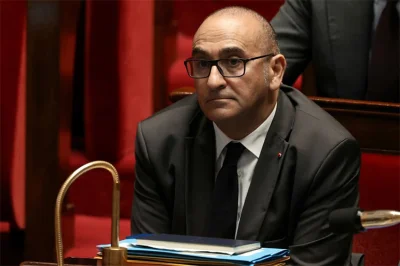
French Interior Minister Doubts Renewal of Ties with Algeria
French Interior Minister Laurent Nuñez expressed cautious pessimism about the future of Franco-Algerian relations, citing recent setbacks that seemed objective, including a revival of political blackmail and media incitement from the French side after an undeclared truce. Laurent Nuñez used the phrase “we must remain vigilant” in an interview published in Saturday’s edition of Le […] The post French Interior Minister Doubts Renewal of Ties with Algeria appeared first on الشروق أونلاين .
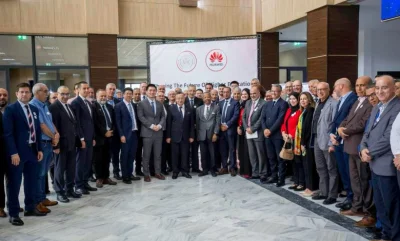
Huawei : organise une journée d’étude sur les universités 4.0
Une rencontre a été organisée le lundi 3 novembre 2025 au Pôle Scientifique et Technologique Abdelhafid Ihaddaden à Sidi Abdallah. Placée sous le thème « Shaping the Future of Higher Education », cet événement qui a été co-organisé par Huawei et le ministère de l’Enseignement Supérieur et de la Recherche scientifique (MESRS), a été l’occasion …

MALEK BENNABI A Journey Through Time — Back to the Future
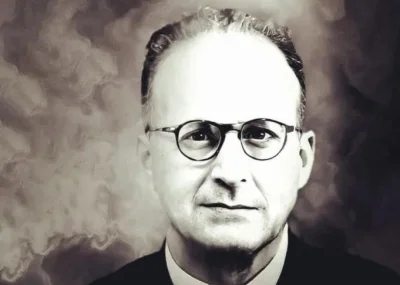
PART I — THE MAN, THE WORK, THE WEAPONS OF UNDERSTANDING A Journey Through Time — Back to the Future The Thought of an Algerian Genius Confronting the Barbarity of the Contemporary World Malek Bennabi (1905–1973) is the most systematically ignored major thinker of the twentieth century. An Algerian engineer, polyglot and civilisational analyst, he […] The post MALEK BENNABI A Journey Through Time — Back to the Future appeared first on الشروق أونلاين .
Focus Turns to Algeria’s New Government as Continuity Appears Most Likely
With the Constitutional Court having officially validated the final results of Algeria’s legislative elections, attention is now turning to the formation of the country’s next government. President Abdelmadjid Tebboune is expected to decide in the coming days on the composition of the new cabinet and the future of the Prime Minister, amid growing speculation over whether he will retain members of the current government, appoint political figures, or once again rely on technocrats drawn from the public administration, academia and state institutions. Political and constitutional indicators suggest that continuity is the most likely outcome. Throughout President Tebboune’s two terms, successive governments have been shaped largely around senior civil servants, academics and technical experts, while political parties have played only a limited role in cabinet appointments. The latest parliamentary elections did little to alter that equation. Rather than producing a rival parliamentary majority capable of imposing a partisan government, the vote consolidated a presidential majority that remained broadly supportive of the President’s programme. The elections also reignited criticism of political parties, many of which were blamed for the low voter turnout, reinforcing the argument for maintaining a government built on expertise rather than party representation. Speaking to Echorouk, political analyst Ali Hachani said any discussion over the composition of the next government must first be understood through the constitutional framework governing executive appointments. “The Constitution provides for two distinct scenarios,” he explained. “If a parliamentary majority emerges that differs from the presidential majority, the President appoints a Head of Government from that bloc. However, when Parliament is dominated by parties supporting the President’s programme, the Constitution provides for the appointment of a Prime Minister. That is the situation Algeria has experienced in recent years.” According to Hachani, the results of the latest legislative elections clearly fall into the second category. The winning parties did not create an alternative parliamentary majority but instead strengthened the presidential coalition, which continues to command the majority of seats in the National People’s Assembly. Consequently, he believes the constitutional path points toward retaining the current model, with a Prime Minister heading the government, while leaving open the possibility that other political forces could eventually join the presidential majority. Against that backdrop, Hachani does not expect the incoming cabinet to take on a distinctly political or partisan character. Experience over the past several years, he argued, has shown that President Tebboune consistently prioritizes professional competence and administrative experience over party affiliation when selecting ministers, resulting in governments dominated by technocrats rather than politicians. He acknowledged that parties aligned with the presidential majority may submit names for ministerial positions, but stressed that such proposals remain purely consultative. Under the Constitution, the appointment of ministers is an exclusive presidential prerogative, leaving the final decision entirely in the hands of the Head of State. Hachani also expects the anticipated cabinet reshuffle to remain limited in scope. Rather than a sweeping overhaul, he believes any changes will likely affect only ministries that, in the President’s assessment, have fallen short of expectations or failed to adequately implement his programme. President Tebboune, he noted, has consistently favoured stability within the executive branch over frequent ministerial reshuffles, arguing that continuity in government has proven more effective than repeated changes in leadership. As for the future of the Prime Minister, Hachani considers his continuation the most probable outcome, given the existence of a parliamentary majority that supports the President’s agenda. As required by established constitutional practice, the Prime Minister may submit his resignation following the elections. Should the President decide to retain him, he would simply reappoint him; if not, the resignation would be accepted and a successor designated. Another possibility, Hachani added, is for the President to accept the resignation while asking the outgoing Prime Minister to remain in a caretaker capacity as consultations begin on the formation of a new government. Those consultations could take into account candidates proposed by parties within the presidential majority, alongside respected national experts, although the President would ultimately retain sole authority over the final appointments and could also consult the Prime Minister on setting the government’s priorities. Hachani concluded that President Tebboune now finds himself in a constitutional position that grants him broad discretion in appointing both the Prime Minister and cabinet ministers. As a result, he argued, the next phase is likely to be defined less by political bargaining over ministerial portfolios than by the government’s ability to implement state policies and deliver on the President’s programme. In his view, that reality offers the clearest indication of what the next government will look like: a cabinet built primarily on competence, professional expertise and institutional experience, tasked with meeting citizens’ expectations while advancing the President’s reform agenda.
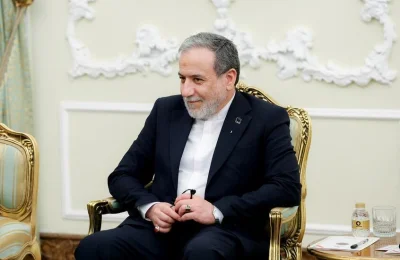
عراقجي يهاجم الرئيس الفرنسي: “فات الأوان”!
انتقد وزير الخارجية الإيراني عباس عراقجي الرئيس الفرنسي ايمانويل ماكرون قائلا: “إن الشعب الفرنسي يطالب بتغييرات جذرية”، معتبرًا أن “الأوان فات لإلقاء اللوم علی الآخرين”. وكتب عراقجي في منشور على منصة “إكس” موجها كلامه إلى الرئيس الفرنسي عشية احتجاجات كبيرة تشهدها المدن الفرنسية: “لقد جلب السيد ماكرون على نفسه المصير عندما أكد للرئيس الأمريكي ترحيبه بالفظائع المرتكبة ضد الإيرانيين.” Mr. Macron made his bed when he assured POTUS that he welcomes atrocities against Iranians. Too late to blame the war his ilk helped cause. The French people demand wholesale change, including freedom of assembly. Listen to the future of France, Mr. President. pic.twitter.com/dMCj6O6V8T — Seyed Abbas Araghchi (@araghchi) October 19, 2026 وتابع قائلا: “فات الأوان لإلقاء اللوم على الحرب التي ساهم أمثاله في إشعالها. يطالب الشعب الفرنسي بتغيير جذري، بما في ذلك حرية التجمع.” مخاطبا ماكرون بالقول: “السيد الرئيس، أصغ إلى صوت مستقبل فرنسا”. تأتي تصريحات عراقجي في ظل احتجاجات تشهدها فرنسا على غلاء المعيشة وتراجع القدرة الشرائية والسياسات الاقتصادية للحكومة، تخللتها مواجهات بين محتجين وقوات الأمن وأعمال تخريب.

كيف يقوم “البنتاغون” و”وادي السيليكون” بتشكيل مستقبل الحروب؟
د. خالد وليد محمود في وقت يتزايد فيه الاعتماد على التكنولوجيا العسكرية كقوة محركة للحروب والصراعات المسلحة، يتناول كتاب “الوحدة إكس: كيف يقوم البنتاغون ووادي السيليكون بتشكيل مستقبل الحروب؟ “Unit X: How the Pentagon and Silicon Valley Are Transforming the Future of War لكاتبيه راج م. شاه وكريستوفر كيرتشوف، موضوعاً في غاية الحساسية حول دور …

استعادة روح الزمن الجميل… أم تلاعبٌ بالحنين!
الزمن في حد ذاته محايد، نحن مَن نُعطيه صفة الجمال والأمل أو نُعطيه صفة الرداءة واليأس. نحن مَن نُعطيه روح الحياة والسعادة أو نقتلها فيه. نحن من نجعله دافعا للتقدم أو كابحا له، نحن من نجعله وسيلة للتماسك الاجتماعي وربط الماضي بالحاضر والمستقبل أو نجعله أداة لزيادة تعميق اليأس بين الناس ومنعهم من الدخول في حالة من الطمأنينة والانسجام مع الذات. إننا يمكن أن نتحدث عن الزمن الجميل بصيغة اليأس ويمكن التحدث عنه بصيغة الأمل! بالصيغة الإيجابية أو بالصيغة السلبية. كما يمكن للبعض التلاعب بهذا الحنين الطبيعي إلى الماضي! بالصيغة الإيجابية استعادة روح الزمن الجميل كما تُطرَح اليوم ممكنة إذا ما حَرَّرنا أنفسنا من ضغوط الحياة المادية ومتطلبات العصر التي لا نهاية لها، وممكنة إذا ما اقتنعنا أن جمال الزمن هو في جمال العلاقات الاجتماعية بِقيمها السامية وأبعادها الإنسانية. أما بالصيغة السلبية فإن الحديث عن “الزمن الجميل” يصبح حديثا مُثبِّطا قاتلا للأمل مانعا الناس من مواجهة تحديات المستقبل والسير بثقة نحو غد أفضل، وفوق ذلك يُصبح مبرِّرا لكل نقائص الماضي حتى وإن كان ماضيا استعماريا ظالما بكل ما تحمل الكلمة من معنى! لقد ناقشت الكاتب الروسية – الأمريكية سفيتلانا بويم Svetlana Boym هذا الموضوع في كتابها الموسوم بمستقبل الحنين The Future of Nostalgia وبيَّنت بوضوح أن شروط الحياة المادية التي فرضتها العولمة هي السبب الرئيس لتفشي ظاهرة الحنين إلى الماضي عالميا. ذلك أن العولمة اتجهت نحو إلغاء القيم القائمة على الثقافات المحلية واستبدلتها بقيم عالمية ذات طبيعة مادية. الجميع بات يسعى لتوفير متطلبات المجتمعات العصرية ويقارن نفسه بالآخرين غافلا عما يملك من عناصر حياة غير مادية صنعت زمنه الجميل كما عاشه آباؤه وأجداده… ولذلك عندما يعجز عن الاندماج في هذه العولمة يعود إلى الحديث عن ذلك الزمن الجميل أو على الأقل إلى تضخيم الجوانب الإيجابية فيه. وبهذا المفهوم تُصبح محاولات تذكر “الزمن الجميل”، أو العودة إليه، كابحا لمواجهة تحديات المستقبل، خاصة عندما يتم استغلال هذا “الحنين” استغلالا سلبيا، أو يتم التلاعب بعواطف الحنين إلى الماضي الجياشة لدى الناس لنشر مزيد من الإحباط واليأس بينهم، وإحداث خلط لديهم في التمييز بين أسباب سعادة الأمس وتعاسته أيضا، وأسباب سعادة اليوم وتعاسته أيضا… لذا،علينا من باب وعي طبيعة المرحلة أن نُدرك الفرق الجوهري بين حديثنا عن “الزمن الجميل” بمقياس قيم القناعة والتضامن والمواساة التي تصنع دفء العلاقات الاجتماعية وصدقها وبساطتها وانعدام التكلف فيها، والزمن الحاضر بمقياس ماديات العولمة ومظاهر التقدم التكنولوجي المختلفة… وألا نخلط بين هذا وذاك… عندها فقط يُصبح بمقدورنا أن نصنع زمننا الجميل اليوم من خلال تكامل نصنعه بأنفسنا بين قيم زمن ما قبل العولمة وقيم مواجهة تحديات المستقبل بثقة ورباطة جأش… ولكي نستطيع فليس أمامنا سوى كشف التلاعب بروح “الحنين إلي الماضي” ووقفه، ذلك أن مثل هذا التلاعب إن لم ُيثبِّط روح التحدي لدينا فإنه سيمنعنا من صناعة المستقبل الذي نريد…
The Position On Western Sahara Has Broken The Back Of Bilateral Relations
The French press focused prominently on the statements of President Abdelmadjid Tebboune in response to the storm caused by the recent remarks of the French ambassador to Algeria, Stéphane Romatet, considering what is happening at the level of bilateral relations to be a new episode in the series of tensions that characterize the Algiers-Paris axis, while it was notable that the subject was ignored by the majority of right-wing and far-right outlets, which used to hold talk shows and interviews to insult Algeria and Algerians. In this regard, the leading news channel in France, “TF1”, while reporting President Tebboune’s statements on its website, described what is happening between the two countries as a “new episode that comes after a deep crisis in which tensions escalated between Paris and Algiers in the summer of 2024 when France expressed its support for the autonomy plan under the (alleged) sovereignty of Morocco over the disputed territory of Western Sahara”, which caused Algeria to withdraw its ambassador from Paris, in a decision that served as a prelude to a series of events that further strained relations between the two countries. It noted that one of the most prominent episodes of this escalation was the decision of the Algerian authorities last March to enact a law criminalizing the heinous practices of French colonialism in Algeria, a text that holds the French state “legally responsible for its colonial past in Algeria and the tragedies it caused”. The leftist-leaning newspaper “Libération” paved the way for President Tebboune’s statements with an introduction reviewing the difficult stages bilateral relations have passed through, saying they have been “characterized by historical complexity since independence in 1962”, and noting that the future of these relations seemed to be in better shape after Emmanuel Macron described French colonialism as a “crime against humanity” and expressed his desire to “turn the page on the past”. However, the newspaper pointed out that “the visa crisis in 2021, followed by France’s recognition of (alleged) Moroccan sovereignty over Western Sahara in July 2024, ended this period of improvement”, before the crisis worsened with the arrest of the French writer of Algerian origin, Boualem Sansal, and the explosion of the crisis regarding the deportation of Algerians present on French soil illegally, as well as the arrest of Algerian consular employees in France, according to the same source. For their part, both the private news channel “BFMTV” and the “France 24″channel, which is affiliated with the French Ministry of Foreign Affairs, focused on their websites on President Tebboune’s statements, which set the record straight and contributed to ending the political and media debate in Paris regarding Algeria, which had given some the impression of Algerian suggestions regarding visas. The same source noted that what is happening is merely an episode in a “deep crisis” that exploded in the summer of 2024 between France and Algeria, when Paris offered its support for an autonomy plan under the (alleged) sovereignty of the Moroccan regime regarding the disputed territory in Western Sahara, causing Algeria to recall its ambassador, who has not yet returned to his post. Added to this, according to “France 24”, is an old crisis dating back to the remnants of the colonial era, which Paris has been unable to overcome due to the inability of successive French presidents to rid themselves of the Algeria complex, which seems to still be entrenched in the gears of the deep state in Paris, leading Algeria to respond by enacting a law criminalizing the practices of French colonialism in Algeria after years of hesitation for political considerations. What is striking is that many outlets and channels associated with the far-right, such as “Le Figaro”, “CNews”, and “Europe 1”, which are accustomed to delving into every small and large detail related to Algeria, did not address the statements of President Abdelmadjid Tebboune, which seem to have caused them embarrassment due to the absolute denial of any Algerian role in that French political and media storm. Furthermore, many newspapers and websites covered the President of the Republic’s statements from a news perspective, quoting the “Agence France-Presse” (AFP), in what appeared to be an indication of directives from certain parties keen not to push matters toward further media deterioration.


New Visa Facilitation Measures for Students and Business Leaders
Algeria Is a Strategic Partner for the United Kingdom in Energy, Security and Education Expanding Security Cooperation to Combat Terrorism and Organized Crime Algeria Plays a Pivotal Role in European Energy Security Energy Transition and Green Hydrogen at the Core of the Future Partnership More Than 3,500 New English Language Teachers Trained Algerian-British relations have […] The post New Visa Facilitation Measures for Students and Business Leaders appeared first on الشروق أونلاين .
Echorta Magazine: Algeria Confronts ‘Makhzen Poisons’ and Online Propaganda Campaigns
Algeria’s General Directorate of National Security (DGSN) has stressed that the country, along with all its security institutions, is now facing a new generation of threats. These range from “poisons” spread by its western neighbor in an attempt to corrupt the minds and bodies of Algeria’s youth, to hostile voices hiding behind computer screens and exploiting digital technologies to disseminate disinformation across borders. According to the DGSN, these campaigns seek to distort Algeria’s image and falsify facts, but they will not succeed as long as the nation is defended by men who have devoted their lives to serving and protecting it, foremost among them the People’s National Army and the country’s other security services. In the latest issue of Echorta (Police) Magazine (No. 165), titled “A Nation Whose Glory Was Guarded by the Martyrs and Is Built by Its Loyal Sons,” the editorial states that “all Algerian state institutions continue to work side by side with unwavering determination and unrelenting resolve, keeping firmly in sight the goal of achieving comprehensive development and advancing every sector through reforms that meet the challenges of the present and the aspirations of the future.” The editorial continues: “From development projects to reform initiatives, from investing in human capital to building infrastructure and public facilities, efforts converge and determination unites to move steadily toward broader horizons and a brighter future, in line with the sound guidance and far-sighted vision of President Abdelmadjid Tebboune.” The magazine further praises “the united efforts of Algerian hands and the ambitions of constructive national talent that are shaping tomorrow and envisioning the future, guided by knowledge and learning, and armed with awareness and a profound sense of responsibility for the trust placed upon them, in order to lay the foundations of a strong state underpinned by security and stability.” The editorial also highlights the responsibilities entrusted to the General Directorate of National Security, emphasizing that, “like all state institutions carrying out their duty in the service of the nation and its citizens, the DGSN remains vigilant in safeguarding security and preserving public order. It draws inspiration from the values of loyalty, discipline, and selfless dedication. Thanks to the vigilance and sacrifices of its personnel, the pillars of security and stability are strengthened, public trust is reinforced, and a modern security approach based on proximity to citizens and public service is translated into practice.” It adds that the DGSN continues to adapt to evolving challenges by modernizing its operational capabilities, enhancing training, and expanding the use of advanced technologies, enabling it to remain, alongside Algeria’s other security institutions, “an impregnable fortress protecting the nation and a towering bulwark against those who seek to undermine Algeria’s security and stability, backed by operational readiness and a strong digital footprint.”
البرازيل وصربيا وجنوب أفريقيا وأوزبكستان يتسابقون لاستضافة حدث phygital sports (الرياضات الجسدية الرقمية) العالمي
The Games of the Future (ألعاب المستقبل) هو حدث دولي سنوي يدمج بين العوالم المادية والرقمية وهو ذروة phygital sports (الرياضات الجسدية الرقمية). تجمع هذه البطولة السنوية الجيل القادم من الأبطال الرياضيين الديناميكيين من جميع أنحاء العالم للتنافس في مجموعة متنوعة من التخصصات والتحديات. سينعقد حدث The Games of the Future (ألعاب أعلنت شركة Phygital …
History, Hegemony and the Civilizations That Outlive Empires
There are moments when the decline of a power can be measured in statistics, military setbacks or shifting alliances. And there are moments when something deeper seems to be happening — something we recognize before we can fully measure it: an entire historical order begins to lose the confidence, coherence and authority that once allowed it to shape the world in its own image. For those of us who grew up in societies that experienced colonialism not as an abstraction in a history book but as a memory still carried by families, cities and generations, this question is inevitably more than academic. We have seen the extraordinary power of the West, learned from its knowledge, encountered its institutions and contradictions, and watched its promises of universality collide, too often, with the realities of power. Today, as the Middle East is again shaken by war, Gaza devastated, Iran confronted, American power tested and the international order increasingly contested, we find ourselves returning to a thinker who understood that civilizations cannot ultimately be measured by the weapons they possess or the wealth they accumulate. Long before “multipolarity” became the vocabulary of contemporary geopolitics, Malek Bennabi had offered another way of reading history: through man, time, ideas, moral energy and the mysterious moment when a society acquires the capacity to enter history — or begins to lose it. Perhaps this is why Bennabi speaks so directly to our present. Not because he predicted it. But because he gave us a language with which to think about it. The Equation of History In a timely and readable recent book titled “Why History Matters”1, Dr Yakoob Ahmed engages themes from theology and civilization to imagination and storytelling with a view to reviving historical consciousness as both an intellectual and spiritual imperative. In it, he reminds us of the oft-cited saying according to which history tends to repeat itself and the quote, widely attributed to American humorist Mark Twain suggesting that “history does not repeat itself, but it rhymes.2 One way to examine the idea that humans are destined to repeat the actions of the past, Ahmed says, is “through the rise and fall of states, the inevitable end of power, and the cyclical patterns of tyranny that ultimately come to a close.” He also rightly observed that Ibn Khaldun was not the only Muslim thinker who made the case of cycles in history, nor that simply Muslims wrote about cyclical theories. Indeed, during the 18th and 19th centuries, Ahmed adds, thinkers in Western Europe and the Ottoman 1 Yakoob Ahmed, Why History Matters: Reviving Faith Through the Lens of History, Ketebe Publishing, Istanbul, Türkiye, 2025. 2 Although the saying is almost universally attributed to Mark Twain, the earliest documented use of a similar phrasing appears in Theodor Reik’s 1965 essay The Unreachables, where he wrote: “It has been said that history repeats itself. This is perhaps not quite correct; it merely rhymes.” Twain did, however, express related ideas about historical repetition in his 1874 novel The Gilded Age: A Tale of To-Day, stating: “History never repeats itself, but the Kaleidoscopic combinations of the pictured present often seem to be constructed out of the broken fragments of antique legends”. This conveys a sense of historical echoes, though it does not use the rhyme metaphor. (Source: David J. Kent, in Word Hot White Snow, wordpress.com, April 2024). Empire examined Ibn Khaldun’s ideas to establish where and how nations tend to repeat themselves, and where lessons can be learned. He specifically mentioned the Scottish 18th century historian Alexander Fraser Tyler who claimed that democracies follow a predictable cyclical pattern, evolving from “having virtuous intentions to becoming corrupted, and later declining.” Conventional political science commonly diagnoses the deep and accelerating shift characterizing the modern landscape of global geopolitics — that is the transition away from a unipolar world anchored by Western hegemony toward a fragmented, multipolar reality— through macroeconomic volatility, demographic deficits, or logistical overreach. Such a view stems from a secular understanding of reality, typically supposed to be grounded in the scientific method, empirical evidence, rational enquiry, and experimentation, while totally excluding any religious interpretations. For his part, Malek Bennabi offered a profoundly different diagnosis. By way of a method reflective of his personal intellectual and religious culture — consisting essentially in bridging traditional Islamic sociology, mid-twentieth century Western historiography, and modern structural analysis — he approached history not as a sequence of random interactions or pure material accumulations, but as a rigorous biological and psychological cycle governed by structural laws. As outlined earlier, Bennabi treated sociology with the precision of mathematics through his famous triad: Civilization = Man + Soil + Time. These three fundamental elements, Bennabi explains, exist in every human group, yet they remain static, inert materials until they are vitalized by an ideological or spiritual catalyst. He mapped the lifecycle of any civilization across three psychological and chronological stages. Hence, when an intense moral breath tames the primal instincts of a society, it binds individuals into a unified social network (the Stage of the Spirit) turning raw human potential into an engine capable of historical creation of institutions, sciences, law, and physical architecture (the Stage of the Reason). Conversely, when that spiritual catalyst loses its active energy, the social network disintegrates and dissolves into individualism, hyper-consumerism, and a worship of material objects, thereafter initiating an irreversible slide into ethical decay, which in turn unavoidably leads to societal collapse (the Stage of the Instinct). How does Bennabi’s view compare to some other influential classical and contemporary civilizational theorists? During the classical and modern eras, two towering figures, Abdurrahman Ibn Khaldun and Arnold Toynbee, profoundly influenced the history of ideas concerning the study of the destiny of human civilizations, particularly through their monumental works, the “Muqaddimah” and ‘The Study of History”, respectively. It is therefore not surprising that Bennabi was considerably influenced by their theories. That being said, while Ibn Khaldun asserted that “Asabiyyah” (social bonds and group solidarity) naturally develops among rugged desert groups and nomadic states and is subsequently dissolved by urban luxury within a strict four-generation cycle, thus paving the way for the rise of a new group with a stronger asabiyyah, Bennabi deepened this observation. He posited that social cohesion is not generated spontaneously by environment or blood alone; rather, it is a secondary manifestation of a primary spiritual/religious catalyst. He further argued that luxury is not toxic because it is comfortable, but because it breaks the social network by shifting focus from transcendent duties to immediate individual instincts. Similarly, Bennabi’s framework closely parallels Arnold Toynbee’s concept of “Challenge and Response.” Both scholars rejected racial or strictly geographical explanations of historical primacy. Toynbee argued that when a “Creative Minority” stops offering innovative solutions to existential challenges, it degenerates into a “Dominant Minority” that can only govern through coercive violence. Bennabi provided the inner psychological anatomy for this transition: the loss of creativity is the direct consequence of a society entering the Stage of the Instinct, where its ideas turn into hollow cultural artifacts, leaving behind nothing but raw force. All Roads Lead to Rome In more recent times, thinkers like Paul Kennedy, Francis Fukuyama, Samuel Huntington and others provided diverging opinions but having in common a strongly-marked materialistic perspective. In his acclaimed book “The Rise and Fall of the Great Powers”3, historian Paul Kennedy traces the postures of the world’s leading nations over five centuries starting with the Habsburg Empire in the 16th century. In it, he argues that empires project military power according to their economic resources but eventually the high cost of maintaining military supremacy weakens their economic base. As a result, they tend to respond by spending more on defense and thus weaken themselves further by diverting essential resources away from new, productive investment. Bennabi would view Kennedy’s fundamentally materialist analysis of “imperial overstretch” as a symptom, not a cause, given that, for him, economic and military imbalances occur only after a civilization has entered its Stage of the Instinct, and also because a society rich in “moral capital” can survive material scarcity, whereas a morally bankrupt society will collapse regardless of its GDP or military spending. Huntington, argued that post-Cold War conflicts would trigger along cultural and religious fault lines. Bennabi anticipated this friction but offered a deeper diagnostic. He contended that the tension between the West and the Islamic world is not an inherent clash of civilizations, but a clash between a dying, over-materialized civilization (the West) and a stagnant, “colonizable” society (the Islamic world) that has yet to rekindle its original spiritual formula. Bennabi’s entire philosophy stands as a direct refutation of Francis Fukuyama’s thesis positing that Western liberal democracy was the final endpoint of human ideological evolution. Bennabi warned against confusing “civilization” with “accumulation”, considering that buying, copying, or implementing Western political institutions and consumer products does not make a society civilized. Without a living spiritual and moral anchor, he explained, consumerist democracy is merely the final, sterile stage of the Stage of the Instinct. Two decades before Fukuyama, Bennabi used the concept of the “end of history,” but from radically different civilizational lenses: while Fukuyama — who views history as a linear, evolutionary process — history “ends” because the ultimate political and ideological consensus (that is Western liberal democracy and market capitalism) has been reached, for Bennabi — who views history as a cyclical law of nature — history “ must end at some point” when a specific civilizational cycle has exhausted its psychological and spiritual momentum. History then does not stop permanently; it resets so that a “new point” of civilizational genesis can begin. As for the “Last Man”, Fukuyama — drawing from Friedrich Nietzsche — sees him as a secure, materially satisfied individual devoid of great passions, higher ideals, or willingness to struggle, in other words, a figure representing the psychological stagnation of a triumphant Western model. Conversely, Bennabi observed a similar stagnation in the 3 Paul Kennedy, The Rise and Fall of the Great Powers: Economic Change and Military Conflict from 1500 to 2000, Unwyn Hyman, London, 1988. Muslim world, which he termed the “colonizability” stage: when a civilization’s initial moral and spiritual impulse dies out, its people become passive consumers of other civilizations’ products, losing their agency in making history. Historian and demographer Emmanuel Todd famously predicted the collapse of the Soviet Union using mainly infant mortality rates. In his 2004 book first published in French “La Défaite de l’Occident” (The Defeat of the West) 4, he argues that the war in Ukraine (as well as the American nihilism exhibited in Gaza) acts as a revealer of the terminal decline of the West, triggered by internal self-destruction rather than just the power of its adversaries. Organized around demographic, industrial, and religious factors, Todd’s analysis concludes that the West in general and the United States in particular are in a deep state of social disintegration. Moreover, the total disappearance of Protestantism, which, he says, historically drove the strength of the Anglo-Saxon world (literacy, discipline, work ethic) left an ideological and moral vacuum. Thus, deprived of religious or collective guidance, the West has plummeted into a metaphysical void and a self-destructive impulse, resulting in a divorce between elites and the working class. In short, Todd is of the opinion that the Western bloc survives only through the aggressive expansion of an already hollow model. The concluding remark of the book is particularly grim: “If we want to anticipate America’s strategic choices, we must urgently abandon the axiom of rationality. The United States is not looking for gains by weighing costs. In the village of Washington, in the land of mass shootings, in the era of zero religion, the primary impulse is a need for violence.” Like Bennabi, Todd looks at the biological metrics of “Man” and “Time.” In particular, his observation of rising nihilism and declining birth rates in the West aligns precisely with Bennabi’s Stage of the Instinct, where individual gratification supersedes the generational transmission of civilization. In the same vein, jumping on the bandwagon of thinkers like Edward Gibbon5 in particular, historian Peter Heather and economist John Rapley contend, in their new book “Why Empires Fall”,6 that empires inevitably sow the seeds of their own destruction through an internal “imperial life cycle”. The authors show how an empire’s own success enriches and modernizes its geographic “periphery”, only to see these newly empowered outside regions rise up to challenge and overtake the imperial core. In such a pattern they find striking parallels between ancient Rome and the modern West (led by the United States), including — interestingly enough in light of the ongoing unjust US-Israeli war on Iran — in the fact that “the eventual revival of Persia as a peer competitor put unsustainable pressure on Rome’s declining fiscal and military capacities.”7 In concluding they stress that Western 4 Emmanuel Todd, La Défaite de l’Occident, Editions Gallimard, 2024. 5 Edward Gibbon (1737-1794) was a British historian, essayist, and politician best known for his six-volume The History of the Decline and Fall of the Roman Empire in which he analyzed the causes of Rome’s fall from 98 to 1590, emphasizing internal decay, barbarian invasions, and the role of Christianity. His skeptical analysis of Christianity sparked lasting controversy, but his narrative style and rigorous scholarship profoundly influenced later historians and writers. Among those is British historian Niall Ferguson who said in 2015 that Europe “has grown decadent in its shopping malls and sports stadiums” while letting in “outsiders who have coveted its wealth without renouncing their ancestral faith (…) Like the Roman Empire in the early fifth century, Europe has allowed its defenses to crumble (…) This is exactly how civilizations fall.” 6 Peter Heather and John Rapley, Why Empires Fall: Rome, America, and the Future of the West, Allen Lane, 2023. 7 Read in this respect: -the essay co-authored by Narges Bajoghli and Vali Nasr titled Iran’s New Grand Strategy, published in the July/August 2026 issue of Foreign Affairs magazine (https://www.foreignaffairs.com/iran/irans-new-grand-strategy). In it, the two scholars of Iranian origin examine how a new generation of Iranian leaders is reshaping the country’s domestic order, society, and regional policy. following recent conflicts; -Marc Lynch’s analysis titled The End of the American Middle East: Iran and the Last Gasp of a Failed Order, in the September/October 2026 issue of the same magazine, in which the Professor of Political Science and International Affairs global primacy cannot be recovered, but total collapse is not a foregone conclusion if leadership adapts. To preserve the West’s core interests, they say, Western leaders must stop trying to police the world and instead focus on creating a multipolar global framework. By doing so, “Not only would the form of the Western nation state — originally built on leveraged wealth flows from the rest of the planet — have managed to negotiate a moment of potentially existential crisis, but it would have generated a post-colonial legacy of real greatness, of which its citizens could be genuinely proud.” It is important to point out here that the literature on the historiography of how empires rise and fall, and more specifically the one on the parallel between the fate of ancient Rome and that of the modern West (under the leadership of the United States), has exploded in recent decades, especially following the fall of the Soviet Union and, consequently, the emergence of the United States of America as the sole “hyperpower,” to use the term coined by former French Foreign Minister Dominique de Villepin. Almost two decades before Heather and Hapley, the former editor-at-large of Vanity Fair magazine in the US, and previously managing editor of The Atlantic Monthly, Cullen Murphy, wrote a compelling book8 on this very subject. In it, he explores how the Roman and American populations saw their political elites, and their insular cultures; looks at the consequences of military overstretch and the widening gap between military and civilian society; sees both states weakened through “privatization” and vexed by the paradoxical issue of borders; and argues that America most resembles Rome in the “burgeoning corruption of its government and in its arrogant ignorance of the world”. With regard to this last point, he writes: “The Romans were aware, to be sure, that all previous empires had fallen. But they saw their own empire as the culminating work of creation. The torch had been passed, once and for all. Roma Aeterna! In the eyes of a Roman living in the empire’s Golden Age, Rome would never die.” Outside of academia, French President Emmanuel Macron was one of the few Western leaders to publicly acknowledge this historical shift. At a conference, on August 27, 2019, at the Élysée Palace, he delivered a significant speech to his ambassadors accredited worldwide, in which he notably declared: “We are undoubtedly witnessing the end of Western hegemony over the world,” due to Western errors and the emergence of new powers. The President analyzed the transition from an international order shaped since the 18th century by the West (France, the United Kingdom, and then the United States) to a new balance of power disrupted by geopolitical missteps and American choices.9 The fate of the “Jewish State”: Like Father like Son at George Washington University and author of America’s Middle East: The Ruination of a Region, argues that “The American Middle East is finished. The regional order that has prevailed since 1991 has been one of the many casualties of the U.S.-Israeli war with Iran. The American and Israeli failure to dislodge the regime in Tehran has proved the bankruptcy of decades of sanctions and violence (…) the old order is in fact giving way to something new (…) And assuming that the Iranian regime does not collapse any time soon — which it appears highly unlikely to do — an emboldened Tehran will hope to defend and expand its regional influence by bogging Washington down in the kinds of endless, borderless ‘gray zone’ conflicts in which it has always thrived.” 8 Cullen Murphy, The New Rome: The Fall of an Empire and the Fate of America, Houghton Mifflin Company, USA, 2007. 9 To read the full speech in French: https://www.elysee.fr/emmanuel- macron/2019/08/27/discours-du-president-de-la- republique-a-la-conference-des-ambassadeurs-1 In his recent book, The Monstrosity of Our Century 10, Amir Nour devoted an entire chapter to the complex issue of the fate of what Israelis call the “Jewish state.” He expressed his conviction that this “state” — created from scratch with the active complicity and multifaceted support of the West in 1948 in a geographical and civilizational area entirely different from the history, culture, and aspirations of the Zionist settlers who came primarily from Central and Eastern Europe — lacks both the legitimacy and the demographics necessary to guarantee its long-term survival. Nour offered his perspective on what he considers the only lasting solution to a conflict originating In World War I and whose dramatic consequences risk multiplying in the future absent an urgent and definitive settlement. Past and present upheavals throughout the West Asian region prove beyond a doubt that such a lasting solution could be nothing other than the creation of a democratic state (or confederation) in Palestine where Muslim, Jewish, Christian and other citizens will have the same constitutional rights and obligations, and share the common desire to achieve peace and prosperity in a “holly land”, transformed by an “unholy alliance” between a supremacist Zionist ideology and nihilist West only pursuing its vested interests, into a land of genocide and other tragedies, of which the Palestinians are the principal sin-offerings. This viewpoint, long considered by representatives of the said alliance as a chimera, or even anathema, is today increasingly shared and defended by figures who are authorities in Western academic circles and, more significantly, among young Jews and a significant fringe within the American Democratic Party, as evidenced by recent polls conducted by bodies known for their seriousness.11 To back up our point, we’ll share in the lines that follow some viewpoints similar to Nour’s, expressed by well-known personalities from different cultural and religious backgrounds. In his latest book12 “Israël. Une course vers l’abîme” (Israel. A Race to the Abyss), renowned Jewish historian, a specialist of Nazi Germany and the genocide of the Jews of Europe, Omer Bartov gives a searing critique of Israel’s trajectory from a post-Shoah refuge to what he describes as an ethno- nationalist regime engaged in “systematic war crimes, crimes against humanity, and genocidal acts” in Gaza. The grandson and son of fervent Zionist figures, the Israeli-American academician wonders what “went wrong” in the realization of the Zionist dream, an ideology, he says, that has now become “indefensible” and must be relegated to the dustbin of history.13 It is important to note here that in November 2023, Bartov believed that there was no evidence a genocide was happening in Gaza, and in an interview with Democracy Now! the same month he explained that neither the two-state solution nor a binational state is realistic, saying “A binational state wouldn’t work, and an independent Palestinian state has become practically impossible. The only solution is a confederation, two distinct but interdependent states, with shared institutions.” Without a political solution, he says, Israeli society will sink a little deeper into a moral and psychological abyss every day. He, therefore, places 10 See:https://www.claritypress.com/product/the-monstrosity-of-our-century-the-war-on-palestine-and-the-last-western- man/ 11 Read Bededict Vigers’ article “Israelis No Longer Ahead in Americans’ Middle East Sympathies” showing shifting public opinion in the United States, with 57% of Americans supporting an independent Palestinian state, and 41% expressing more sympathy for Palestinians compared to 36% for Israelis, especially among specific young adults: https://share.google/Sjb3Ar8563GxuAPWK 12 Omer Bartov, Israël. Une course vers l’abîme, (translated by Sibylle Grimbert), Editions du Seuil, May 2026. 13 For more insights about the Zionist ideology, read: Pr. Yakov Rapkin, Israel in Palestine: Jewish Rejection of Zionism, Aspect Editions, September 2025. his hope in international pressure, particularly from Germany, which would force Israel to accept the creation of a confederation based on openness and cooperation, linking two distinct states, one Palestinian and the other Israeli, separated by a border set along the “1967 Green Line” (the one that existed before the so-called Six-Day War). Pr. John Mearsheimer argues that history is not a neutral backdrop in international politics. It is “a living force that shapes perceptions, fuels grievances, and molds the behavior of states and societies. The Six-Day War of 1967 — which left Israel in control of Jerusalem, the West Bank, Gaza, and the Golan Heights — he rightly reminds us, was a humiliation for the Arab world and a turning point in regional memory. That defeat still echoes in Arab political culture, and the longer those territories remain occupied, the more deeply they entrench hostility toward Israel, not only among Palestinians but across the wider region. Beyond the Middle East, especially in Africa, Asia and Latin America, Mearsheimer adds, Israel is increasingly viewed through the lens of colonial history, and “in a multipolar world where the voices of the Global South carry more weight, this perception magnifies Israel’s isolation.” Moreover, resentment is not confined to the Arab-Muslim worlds and the other countries of the Global South. In Europe, Mearsheimer explains, memories of colonialism and guilt over the Holocaust initially produced strong sympathy for Israel, but “as the decades have passed, the sympathy has waned. This shift in European sentiment is significant because “Europe remains an important partner in international diplomacy, and its criticism adds to Israel’s isolation in global forums.” Even more significant is for Mearsheimer the fact that in the United Stated, “which has provided Israel with a unique combination of military aid, diplomatic cover, and economic assistance that no other state on earth has enjoyed for such an extended period of time — consensus is eroding as younger Americans evaluate Israel primarily through the lens of contemporary politics, namely respect for human rights and international law rather than Cold War ideologies and alliances. For them, “the narrative of eternal victimhood rings hollow when it conflicts with the lived reality of Palestinians under occupation.”. History, Mearsheimer concludes as a serious warning to Israel, “is full of examples where states dependent on external guarantees found themselves exposed when their patrons shifted course.” Concurring broadly with Mearsheimer’s views, Wadah Khanfar, a prominent Palestinian journalist and former Director of the Al Jazeera Network, explicitly compares the current contends that Western and Israeli strategists evaluate their conflicts in the Arab-Muslim world solely in terms of physical destruction and technological superiority. In doing so, they overlook the civilizational psychology of the region, and much like the Crusaders, the Mongols, Napoleon Bonaparte, and Western colonialists experienced in their entanglements with the peoples of the region, “bombing infrastructures does not erase a people’s will for dignity or their collective memory. The escalation against Iran and the siege of Gaza only entrench long-term resistance, turning Israel into a pariah state that is unmanageable for Washington.” For Khanfar, the war on Gaza and the strikes against Iran are not isolated events, but the convulsions of a dying Western order. Escaping the colonial era and Western hegemony in the Middle East, he says, relies on a dual dynamic: an internal impulse (the youth rejecting passive elites and rewriting the global narrative) and an external geopolitical coalition (i.e. an expanded Islamic alliance). Only through such a synergy will the region cease to be a playground for major powers and “once again become the author of its own history.”` Conclusion Only through such a synergy, Khanfar argues, will the region cease to be a playground for major powers and “once again become the author of its own history.” And perhaps this is where we should return, one final time, to Bennabi. Because the decline of one civilization is not the birth certificate of another. The weakening of Western hegemony, however profound it may become, will not by itself restore the historical agency of the Arab-Muslim world. Nor will American retreat, Israeli isolation, multipolarity, or the emergence of new powers automatically produce a new civilization. Bennabi would probably have regarded such expectations as another form of dependence: waiting for history to be delivered by the decline of others instead of creating it ourselves. This, ultimately, is why history matters to us. We come from a region that has known conquest and resistance, humiliation and renewal, colonization and independence. We have inherited both wounds and possibilities. And we have learned that military superiority can occupy territory, destroy cities and impose political orders — sometimes for generations — but it cannot indefinitely command memory, dignity or the human desire to recover agency. Empires eventually discover this. Peoples rarely forget it. Bennabi’s enduring lesson is therefore neither a prophecy of Western collapse nor a promise of Muslim renaissance. It is considerably more demanding: no civilization inherits the future simply because another civilization is losing its grip on the present. History does not reward those who wait beside the ruins of an exhausted order. It begins again with those capable of transforming Man, Soil and Time into meaning, responsibility and action. The question before us is therefore no longer merely whether an age is ending. It is whether we are ready to help write what comes next.

The path of development of Islamic banks.. Where will Islamic banks reach
The path of development of Islamic banks.. Where will Islamic banks reach? The future and status of Islamic banking The Islamic financial industry has witnessed a remarkable growth in the volume of assets over the past years. The volume of its assets is about three trillion US dollars, with an annual growth rate of more … ظهرت المقالة The path of development of Islamic banks.. Where will Islamic banks reach أولاً على الجزائرية للأخبار .