
البحث
35 نتيجة لـ "washington-and-tehran-edge-of-confrontation-2882102ar"



Marco Rubio: “Significant Progress In Relations With Algeria In Economic, Cultural, And Security Fields”
U.S. Secretary of State Marco Rubio, on Monday, praised the “significant progress” witnessed in bilateral relations between Washington and Algeria, in the economic, cultural, and security fields. This came out in Rubio’s congratulations sent to Algeria, on the occasion of the 64th anniversary of the restoration of national sovereignty on July 5, 1962. شاهد المحتوى كاملا على الشروق أونلاين

The surprise of Hamas that changed the equation of confrontation with the Israeli air defense.. What is the reason for Hamas’ missiles igniting in the air?
The surprise of Hamas that changed the equation of confrontation with the Israeli air defense.. What is the reason for Hamas’ missiles igniting in the air? Mohammed NassarResidents of the Gaza Strip have noticed a strange phenomenon in the current war between Israel and the Palestinian resistance factions, which is the ignition of some rockets … ظهرت المقالة The surprise of Hamas that changed the equation of confrontation with the Israeli air defense.. What is the reason for Hamas’ missiles igniting in the air? أولاً على الجزائرية للأخبار .

Netanyahu, commander of the American and British armed forces
Netanyahu, commander of the American and British armed forcesThe most accurate description of the current situation in Palestine is the definition of Benjamin Netanyahu, the Prime Minister of Israel, or any Prime Minister in Israel, as in fact the Commander-in-Chief of the armed forces affiliated with the governments of Washington and London in Palestine. What … ظهرت المقالة Netanyahu, commander of the American and British armed forces أولاً على الجزائرية للأخبار .


History, Hegemony and the Civilizations That Outlive Empires
There are moments when the decline of a power can be measured in statistics, military setbacks or shifting alliances. And there are moments when something deeper seems to be happening — something we recognize before we can fully measure it: an entire historical order begins to lose the confidence, coherence and authority that once allowed it to shape the world in its own image. For those of us who grew up in societies that experienced colonialism not as an abstraction in a history book but as a memory still carried by families, cities and generations, this question is inevitably more than academic. We have seen the extraordinary power of the West, learned from its knowledge, encountered its institutions and contradictions, and watched its promises of universality collide, too often, with the realities of power. Today, as the Middle East is again shaken by war, Gaza devastated, Iran confronted, American power tested and the international order increasingly contested, we find ourselves returning to a thinker who understood that civilizations cannot ultimately be measured by the weapons they possess or the wealth they accumulate. Long before “multipolarity” became the vocabulary of contemporary geopolitics, Malek Bennabi had offered another way of reading history: through man, time, ideas, moral energy and the mysterious moment when a society acquires the capacity to enter history — or begins to lose it. Perhaps this is why Bennabi speaks so directly to our present. Not because he predicted it. But because he gave us a language with which to think about it. The Equation of History In a timely and readable recent book titled “Why History Matters”1, Dr Yakoob Ahmed engages themes from theology and civilization to imagination and storytelling with a view to reviving historical consciousness as both an intellectual and spiritual imperative. In it, he reminds us of the oft-cited saying according to which history tends to repeat itself and the quote, widely attributed to American humorist Mark Twain suggesting that “history does not repeat itself, but it rhymes.2 One way to examine the idea that humans are destined to repeat the actions of the past, Ahmed says, is “through the rise and fall of states, the inevitable end of power, and the cyclical patterns of tyranny that ultimately come to a close.” He also rightly observed that Ibn Khaldun was not the only Muslim thinker who made the case of cycles in history, nor that simply Muslims wrote about cyclical theories. Indeed, during the 18th and 19th centuries, Ahmed adds, thinkers in Western Europe and the Ottoman 1 Yakoob Ahmed, Why History Matters: Reviving Faith Through the Lens of History, Ketebe Publishing, Istanbul, Türkiye, 2025. 2 Although the saying is almost universally attributed to Mark Twain, the earliest documented use of a similar phrasing appears in Theodor Reik’s 1965 essay The Unreachables, where he wrote: “It has been said that history repeats itself. This is perhaps not quite correct; it merely rhymes.” Twain did, however, express related ideas about historical repetition in his 1874 novel The Gilded Age: A Tale of To-Day, stating: “History never repeats itself, but the Kaleidoscopic combinations of the pictured present often seem to be constructed out of the broken fragments of antique legends”. This conveys a sense of historical echoes, though it does not use the rhyme metaphor. (Source: David J. Kent, in Word Hot White Snow, wordpress.com, April 2024). Empire examined Ibn Khaldun’s ideas to establish where and how nations tend to repeat themselves, and where lessons can be learned. He specifically mentioned the Scottish 18th century historian Alexander Fraser Tyler who claimed that democracies follow a predictable cyclical pattern, evolving from “having virtuous intentions to becoming corrupted, and later declining.” Conventional political science commonly diagnoses the deep and accelerating shift characterizing the modern landscape of global geopolitics — that is the transition away from a unipolar world anchored by Western hegemony toward a fragmented, multipolar reality— through macroeconomic volatility, demographic deficits, or logistical overreach. Such a view stems from a secular understanding of reality, typically supposed to be grounded in the scientific method, empirical evidence, rational enquiry, and experimentation, while totally excluding any religious interpretations. For his part, Malek Bennabi offered a profoundly different diagnosis. By way of a method reflective of his personal intellectual and religious culture — consisting essentially in bridging traditional Islamic sociology, mid-twentieth century Western historiography, and modern structural analysis — he approached history not as a sequence of random interactions or pure material accumulations, but as a rigorous biological and psychological cycle governed by structural laws. As outlined earlier, Bennabi treated sociology with the precision of mathematics through his famous triad: Civilization = Man + Soil + Time. These three fundamental elements, Bennabi explains, exist in every human group, yet they remain static, inert materials until they are vitalized by an ideological or spiritual catalyst. He mapped the lifecycle of any civilization across three psychological and chronological stages. Hence, when an intense moral breath tames the primal instincts of a society, it binds individuals into a unified social network (the Stage of the Spirit) turning raw human potential into an engine capable of historical creation of institutions, sciences, law, and physical architecture (the Stage of the Reason). Conversely, when that spiritual catalyst loses its active energy, the social network disintegrates and dissolves into individualism, hyper-consumerism, and a worship of material objects, thereafter initiating an irreversible slide into ethical decay, which in turn unavoidably leads to societal collapse (the Stage of the Instinct). How does Bennabi’s view compare to some other influential classical and contemporary civilizational theorists? During the classical and modern eras, two towering figures, Abdurrahman Ibn Khaldun and Arnold Toynbee, profoundly influenced the history of ideas concerning the study of the destiny of human civilizations, particularly through their monumental works, the “Muqaddimah” and ‘The Study of History”, respectively. It is therefore not surprising that Bennabi was considerably influenced by their theories. That being said, while Ibn Khaldun asserted that “Asabiyyah” (social bonds and group solidarity) naturally develops among rugged desert groups and nomadic states and is subsequently dissolved by urban luxury within a strict four-generation cycle, thus paving the way for the rise of a new group with a stronger asabiyyah, Bennabi deepened this observation. He posited that social cohesion is not generated spontaneously by environment or blood alone; rather, it is a secondary manifestation of a primary spiritual/religious catalyst. He further argued that luxury is not toxic because it is comfortable, but because it breaks the social network by shifting focus from transcendent duties to immediate individual instincts. Similarly, Bennabi’s framework closely parallels Arnold Toynbee’s concept of “Challenge and Response.” Both scholars rejected racial or strictly geographical explanations of historical primacy. Toynbee argued that when a “Creative Minority” stops offering innovative solutions to existential challenges, it degenerates into a “Dominant Minority” that can only govern through coercive violence. Bennabi provided the inner psychological anatomy for this transition: the loss of creativity is the direct consequence of a society entering the Stage of the Instinct, where its ideas turn into hollow cultural artifacts, leaving behind nothing but raw force. All Roads Lead to Rome In more recent times, thinkers like Paul Kennedy, Francis Fukuyama, Samuel Huntington and others provided diverging opinions but having in common a strongly-marked materialistic perspective. In his acclaimed book “The Rise and Fall of the Great Powers”3, historian Paul Kennedy traces the postures of the world’s leading nations over five centuries starting with the Habsburg Empire in the 16th century. In it, he argues that empires project military power according to their economic resources but eventually the high cost of maintaining military supremacy weakens their economic base. As a result, they tend to respond by spending more on defense and thus weaken themselves further by diverting essential resources away from new, productive investment. Bennabi would view Kennedy’s fundamentally materialist analysis of “imperial overstretch” as a symptom, not a cause, given that, for him, economic and military imbalances occur only after a civilization has entered its Stage of the Instinct, and also because a society rich in “moral capital” can survive material scarcity, whereas a morally bankrupt society will collapse regardless of its GDP or military spending. Huntington, argued that post-Cold War conflicts would trigger along cultural and religious fault lines. Bennabi anticipated this friction but offered a deeper diagnostic. He contended that the tension between the West and the Islamic world is not an inherent clash of civilizations, but a clash between a dying, over-materialized civilization (the West) and a stagnant, “colonizable” society (the Islamic world) that has yet to rekindle its original spiritual formula. Bennabi’s entire philosophy stands as a direct refutation of Francis Fukuyama’s thesis positing that Western liberal democracy was the final endpoint of human ideological evolution. Bennabi warned against confusing “civilization” with “accumulation”, considering that buying, copying, or implementing Western political institutions and consumer products does not make a society civilized. Without a living spiritual and moral anchor, he explained, consumerist democracy is merely the final, sterile stage of the Stage of the Instinct. Two decades before Fukuyama, Bennabi used the concept of the “end of history,” but from radically different civilizational lenses: while Fukuyama — who views history as a linear, evolutionary process — history “ends” because the ultimate political and ideological consensus (that is Western liberal democracy and market capitalism) has been reached, for Bennabi — who views history as a cyclical law of nature — history “ must end at some point” when a specific civilizational cycle has exhausted its psychological and spiritual momentum. History then does not stop permanently; it resets so that a “new point” of civilizational genesis can begin. As for the “Last Man”, Fukuyama — drawing from Friedrich Nietzsche — sees him as a secure, materially satisfied individual devoid of great passions, higher ideals, or willingness to struggle, in other words, a figure representing the psychological stagnation of a triumphant Western model. Conversely, Bennabi observed a similar stagnation in the 3 Paul Kennedy, The Rise and Fall of the Great Powers: Economic Change and Military Conflict from 1500 to 2000, Unwyn Hyman, London, 1988. Muslim world, which he termed the “colonizability” stage: when a civilization’s initial moral and spiritual impulse dies out, its people become passive consumers of other civilizations’ products, losing their agency in making history. Historian and demographer Emmanuel Todd famously predicted the collapse of the Soviet Union using mainly infant mortality rates. In his 2004 book first published in French “La Défaite de l’Occident” (The Defeat of the West) 4, he argues that the war in Ukraine (as well as the American nihilism exhibited in Gaza) acts as a revealer of the terminal decline of the West, triggered by internal self-destruction rather than just the power of its adversaries. Organized around demographic, industrial, and religious factors, Todd’s analysis concludes that the West in general and the United States in particular are in a deep state of social disintegration. Moreover, the total disappearance of Protestantism, which, he says, historically drove the strength of the Anglo-Saxon world (literacy, discipline, work ethic) left an ideological and moral vacuum. Thus, deprived of religious or collective guidance, the West has plummeted into a metaphysical void and a self-destructive impulse, resulting in a divorce between elites and the working class. In short, Todd is of the opinion that the Western bloc survives only through the aggressive expansion of an already hollow model. The concluding remark of the book is particularly grim: “If we want to anticipate America’s strategic choices, we must urgently abandon the axiom of rationality. The United States is not looking for gains by weighing costs. In the village of Washington, in the land of mass shootings, in the era of zero religion, the primary impulse is a need for violence.” Like Bennabi, Todd looks at the biological metrics of “Man” and “Time.” In particular, his observation of rising nihilism and declining birth rates in the West aligns precisely with Bennabi’s Stage of the Instinct, where individual gratification supersedes the generational transmission of civilization. In the same vein, jumping on the bandwagon of thinkers like Edward Gibbon5 in particular, historian Peter Heather and economist John Rapley contend, in their new book “Why Empires Fall”,6 that empires inevitably sow the seeds of their own destruction through an internal “imperial life cycle”. The authors show how an empire’s own success enriches and modernizes its geographic “periphery”, only to see these newly empowered outside regions rise up to challenge and overtake the imperial core. In such a pattern they find striking parallels between ancient Rome and the modern West (led by the United States), including — interestingly enough in light of the ongoing unjust US-Israeli war on Iran — in the fact that “the eventual revival of Persia as a peer competitor put unsustainable pressure on Rome’s declining fiscal and military capacities.”7 In concluding they stress that Western 4 Emmanuel Todd, La Défaite de l’Occident, Editions Gallimard, 2024. 5 Edward Gibbon (1737-1794) was a British historian, essayist, and politician best known for his six-volume The History of the Decline and Fall of the Roman Empire in which he analyzed the causes of Rome’s fall from 98 to 1590, emphasizing internal decay, barbarian invasions, and the role of Christianity. His skeptical analysis of Christianity sparked lasting controversy, but his narrative style and rigorous scholarship profoundly influenced later historians and writers. Among those is British historian Niall Ferguson who said in 2015 that Europe “has grown decadent in its shopping malls and sports stadiums” while letting in “outsiders who have coveted its wealth without renouncing their ancestral faith (…) Like the Roman Empire in the early fifth century, Europe has allowed its defenses to crumble (…) This is exactly how civilizations fall.” 6 Peter Heather and John Rapley, Why Empires Fall: Rome, America, and the Future of the West, Allen Lane, 2023. 7 Read in this respect: -the essay co-authored by Narges Bajoghli and Vali Nasr titled Iran’s New Grand Strategy, published in the July/August 2026 issue of Foreign Affairs magazine (https://www.foreignaffairs.com/iran/irans-new-grand-strategy). In it, the two scholars of Iranian origin examine how a new generation of Iranian leaders is reshaping the country’s domestic order, society, and regional policy. following recent conflicts; -Marc Lynch’s analysis titled The End of the American Middle East: Iran and the Last Gasp of a Failed Order, in the September/October 2026 issue of the same magazine, in which the Professor of Political Science and International Affairs global primacy cannot be recovered, but total collapse is not a foregone conclusion if leadership adapts. To preserve the West’s core interests, they say, Western leaders must stop trying to police the world and instead focus on creating a multipolar global framework. By doing so, “Not only would the form of the Western nation state — originally built on leveraged wealth flows from the rest of the planet — have managed to negotiate a moment of potentially existential crisis, but it would have generated a post-colonial legacy of real greatness, of which its citizens could be genuinely proud.” It is important to point out here that the literature on the historiography of how empires rise and fall, and more specifically the one on the parallel between the fate of ancient Rome and that of the modern West (under the leadership of the United States), has exploded in recent decades, especially following the fall of the Soviet Union and, consequently, the emergence of the United States of America as the sole “hyperpower,” to use the term coined by former French Foreign Minister Dominique de Villepin. Almost two decades before Heather and Hapley, the former editor-at-large of Vanity Fair magazine in the US, and previously managing editor of The Atlantic Monthly, Cullen Murphy, wrote a compelling book8 on this very subject. In it, he explores how the Roman and American populations saw their political elites, and their insular cultures; looks at the consequences of military overstretch and the widening gap between military and civilian society; sees both states weakened through “privatization” and vexed by the paradoxical issue of borders; and argues that America most resembles Rome in the “burgeoning corruption of its government and in its arrogant ignorance of the world”. With regard to this last point, he writes: “The Romans were aware, to be sure, that all previous empires had fallen. But they saw their own empire as the culminating work of creation. The torch had been passed, once and for all. Roma Aeterna! In the eyes of a Roman living in the empire’s Golden Age, Rome would never die.” Outside of academia, French President Emmanuel Macron was one of the few Western leaders to publicly acknowledge this historical shift. At a conference, on August 27, 2019, at the Élysée Palace, he delivered a significant speech to his ambassadors accredited worldwide, in which he notably declared: “We are undoubtedly witnessing the end of Western hegemony over the world,” due to Western errors and the emergence of new powers. The President analyzed the transition from an international order shaped since the 18th century by the West (France, the United Kingdom, and then the United States) to a new balance of power disrupted by geopolitical missteps and American choices.9 The fate of the “Jewish State”: Like Father like Son at George Washington University and author of America’s Middle East: The Ruination of a Region, argues that “The American Middle East is finished. The regional order that has prevailed since 1991 has been one of the many casualties of the U.S.-Israeli war with Iran. The American and Israeli failure to dislodge the regime in Tehran has proved the bankruptcy of decades of sanctions and violence (…) the old order is in fact giving way to something new (…) And assuming that the Iranian regime does not collapse any time soon — which it appears highly unlikely to do — an emboldened Tehran will hope to defend and expand its regional influence by bogging Washington down in the kinds of endless, borderless ‘gray zone’ conflicts in which it has always thrived.” 8 Cullen Murphy, The New Rome: The Fall of an Empire and the Fate of America, Houghton Mifflin Company, USA, 2007. 9 To read the full speech in French: https://www.elysee.fr/emmanuel- macron/2019/08/27/discours-du-president-de-la- republique-a-la-conference-des-ambassadeurs-1 In his recent book, The Monstrosity of Our Century 10, Amir Nour devoted an entire chapter to the complex issue of the fate of what Israelis call the “Jewish state.” He expressed his conviction that this “state” — created from scratch with the active complicity and multifaceted support of the West in 1948 in a geographical and civilizational area entirely different from the history, culture, and aspirations of the Zionist settlers who came primarily from Central and Eastern Europe — lacks both the legitimacy and the demographics necessary to guarantee its long-term survival. Nour offered his perspective on what he considers the only lasting solution to a conflict originating In World War I and whose dramatic consequences risk multiplying in the future absent an urgent and definitive settlement. Past and present upheavals throughout the West Asian region prove beyond a doubt that such a lasting solution could be nothing other than the creation of a democratic state (or confederation) in Palestine where Muslim, Jewish, Christian and other citizens will have the same constitutional rights and obligations, and share the common desire to achieve peace and prosperity in a “holly land”, transformed by an “unholy alliance” between a supremacist Zionist ideology and nihilist West only pursuing its vested interests, into a land of genocide and other tragedies, of which the Palestinians are the principal sin-offerings. This viewpoint, long considered by representatives of the said alliance as a chimera, or even anathema, is today increasingly shared and defended by figures who are authorities in Western academic circles and, more significantly, among young Jews and a significant fringe within the American Democratic Party, as evidenced by recent polls conducted by bodies known for their seriousness.11 To back up our point, we’ll share in the lines that follow some viewpoints similar to Nour’s, expressed by well-known personalities from different cultural and religious backgrounds. In his latest book12 “Israël. Une course vers l’abîme” (Israel. A Race to the Abyss), renowned Jewish historian, a specialist of Nazi Germany and the genocide of the Jews of Europe, Omer Bartov gives a searing critique of Israel’s trajectory from a post-Shoah refuge to what he describes as an ethno- nationalist regime engaged in “systematic war crimes, crimes against humanity, and genocidal acts” in Gaza. The grandson and son of fervent Zionist figures, the Israeli-American academician wonders what “went wrong” in the realization of the Zionist dream, an ideology, he says, that has now become “indefensible” and must be relegated to the dustbin of history.13 It is important to note here that in November 2023, Bartov believed that there was no evidence a genocide was happening in Gaza, and in an interview with Democracy Now! the same month he explained that neither the two-state solution nor a binational state is realistic, saying “A binational state wouldn’t work, and an independent Palestinian state has become practically impossible. The only solution is a confederation, two distinct but interdependent states, with shared institutions.” Without a political solution, he says, Israeli society will sink a little deeper into a moral and psychological abyss every day. He, therefore, places 10 See:https://www.claritypress.com/product/the-monstrosity-of-our-century-the-war-on-palestine-and-the-last-western- man/ 11 Read Bededict Vigers’ article “Israelis No Longer Ahead in Americans’ Middle East Sympathies” showing shifting public opinion in the United States, with 57% of Americans supporting an independent Palestinian state, and 41% expressing more sympathy for Palestinians compared to 36% for Israelis, especially among specific young adults: https://share.google/Sjb3Ar8563GxuAPWK 12 Omer Bartov, Israël. Une course vers l’abîme, (translated by Sibylle Grimbert), Editions du Seuil, May 2026. 13 For more insights about the Zionist ideology, read: Pr. Yakov Rapkin, Israel in Palestine: Jewish Rejection of Zionism, Aspect Editions, September 2025. his hope in international pressure, particularly from Germany, which would force Israel to accept the creation of a confederation based on openness and cooperation, linking two distinct states, one Palestinian and the other Israeli, separated by a border set along the “1967 Green Line” (the one that existed before the so-called Six-Day War). Pr. John Mearsheimer argues that history is not a neutral backdrop in international politics. It is “a living force that shapes perceptions, fuels grievances, and molds the behavior of states and societies. The Six-Day War of 1967 — which left Israel in control of Jerusalem, the West Bank, Gaza, and the Golan Heights — he rightly reminds us, was a humiliation for the Arab world and a turning point in regional memory. That defeat still echoes in Arab political culture, and the longer those territories remain occupied, the more deeply they entrench hostility toward Israel, not only among Palestinians but across the wider region. Beyond the Middle East, especially in Africa, Asia and Latin America, Mearsheimer adds, Israel is increasingly viewed through the lens of colonial history, and “in a multipolar world where the voices of the Global South carry more weight, this perception magnifies Israel’s isolation.” Moreover, resentment is not confined to the Arab-Muslim worlds and the other countries of the Global South. In Europe, Mearsheimer explains, memories of colonialism and guilt over the Holocaust initially produced strong sympathy for Israel, but “as the decades have passed, the sympathy has waned. This shift in European sentiment is significant because “Europe remains an important partner in international diplomacy, and its criticism adds to Israel’s isolation in global forums.” Even more significant is for Mearsheimer the fact that in the United Stated, “which has provided Israel with a unique combination of military aid, diplomatic cover, and economic assistance that no other state on earth has enjoyed for such an extended period of time — consensus is eroding as younger Americans evaluate Israel primarily through the lens of contemporary politics, namely respect for human rights and international law rather than Cold War ideologies and alliances. For them, “the narrative of eternal victimhood rings hollow when it conflicts with the lived reality of Palestinians under occupation.”. History, Mearsheimer concludes as a serious warning to Israel, “is full of examples where states dependent on external guarantees found themselves exposed when their patrons shifted course.” Concurring broadly with Mearsheimer’s views, Wadah Khanfar, a prominent Palestinian journalist and former Director of the Al Jazeera Network, explicitly compares the current contends that Western and Israeli strategists evaluate their conflicts in the Arab-Muslim world solely in terms of physical destruction and technological superiority. In doing so, they overlook the civilizational psychology of the region, and much like the Crusaders, the Mongols, Napoleon Bonaparte, and Western colonialists experienced in their entanglements with the peoples of the region, “bombing infrastructures does not erase a people’s will for dignity or their collective memory. The escalation against Iran and the siege of Gaza only entrench long-term resistance, turning Israel into a pariah state that is unmanageable for Washington.” For Khanfar, the war on Gaza and the strikes against Iran are not isolated events, but the convulsions of a dying Western order. Escaping the colonial era and Western hegemony in the Middle East, he says, relies on a dual dynamic: an internal impulse (the youth rejecting passive elites and rewriting the global narrative) and an external geopolitical coalition (i.e. an expanded Islamic alliance). Only through such a synergy will the region cease to be a playground for major powers and “once again become the author of its own history.”` Conclusion Only through such a synergy, Khanfar argues, will the region cease to be a playground for major powers and “once again become the author of its own history.” And perhaps this is where we should return, one final time, to Bennabi. Because the decline of one civilization is not the birth certificate of another. The weakening of Western hegemony, however profound it may become, will not by itself restore the historical agency of the Arab-Muslim world. Nor will American retreat, Israeli isolation, multipolarity, or the emergence of new powers automatically produce a new civilization. Bennabi would probably have regarded such expectations as another form of dependence: waiting for history to be delivered by the decline of others instead of creating it ourselves. This, ultimately, is why history matters to us. We come from a region that has known conquest and resistance, humiliation and renewal, colonization and independence. We have inherited both wounds and possibilities. And we have learned that military superiority can occupy territory, destroy cities and impose political orders — sometimes for generations — but it cannot indefinitely command memory, dignity or the human desire to recover agency. Empires eventually discover this. Peoples rarely forget it. Bennabi’s enduring lesson is therefore neither a prophecy of Western collapse nor a promise of Muslim renaissance. It is considerably more demanding: no civilization inherits the future simply because another civilization is losing its grip on the present. History does not reward those who wait beside the ruins of an exhausted order. It begins again with those capable of transforming Man, Soil and Time into meaning, responsibility and action. The question before us is therefore no longer merely whether an age is ending. It is whether we are ready to help write what comes next.
Algeria Awaits Final Composition of the Tenth Parliament
As the countdown to the announcement of the final legislative election results enters its final stage, attention has shifted to the Constitutional Court, which is expected to rule within the coming days on electoral appeals and confirm the final composition of Algeria’s 10th National People’s Assembly. The 10-day legal deadline for adjudicating appeals and certifying the final results expires next Thursday under Algeria’s Organic Election Law. The deadline may be extended by an exceptional 48 hours if necessary. Until then, both successful candidates and those contesting the provisional results remain on edge as the Constitutional Court continues reviewing appeals, while security authorities pursue investigations into complaints related to voting results in several electoral districts. These developments leave open the possibility of changes to a number of parliamentary seats before the final results are officially declared. شاهد المحتوى كاملا على الشروق أونلاين
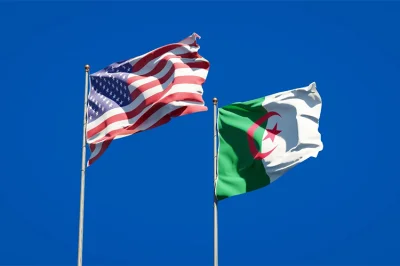
Washington Opens The Door For Cooperation With Algeria In Oilseeds And Fodder
The United States of America has opened the door for cooperation and potential future partnerships with Algeria in the oilseed processing and fodder production sector, following the livestock and dairy cattle sector, with 30,000 head for Qatar’s “Baladna” Group project. In this context, the embassy hosted an Algerian-American event that highlighted cooperation in oilseed processing […] The post Washington Opens The Door For Cooperation With Algeria In Oilseeds And Fodder appeared first on الشروق أونلاين .

Algerian Air Conditioners Surge with 250,000 European Orders, shipped in 48 Hours
Algeria’s non-hydrocarbon exports received a fresh boost on Tuesday with the launch of three major export operations from the province of Bordj Bou Arreridj, eastern Algiers, to European and North African markets. The shipments included the first export of portable air conditioners manufactured by Condor to Spain, as well as a consignment of fixed split-system air conditioners destined for Tunisia, comprising 46 containers. A first shipment of Midea refrigerators and freezers, produced by the Arcodym Group, also got underway, bound for the Tunisian and Libyan markets. The operations underscore the growing presence of Algerian home appliances in international markets and highlight the expanding reach of the country’s domestic manufacturing sector. The launch was overseen by Foreign Trade and Export Promotion Minister Kamel Rezig during a working visit to Bordj Bou Arreridj, alongside the province’s governor and local authorities. The minister officially inaugurated Algeria’s first export operation of portable air conditioners to Europe, specifically Spain, following an initial commercial order from major European purchasing centers for this category of appliances. During the same visit, Rezig also oversaw the shipment of fixed split-system air conditioners to Tunisia, as part of a 46-container consignment. During the second leg of his visit, he gave the go-ahead for the shipment of Midea refrigerators and freezers, manufactured by the Arcodym Group, to the Tunisian and Libyan markets. According to Rezig, the export drive reflects the results of the economic policy pursued by President Abdelmadjid Tebboune, which focuses on supporting domestic production, encouraging industrial investment and assisting exporters. He said the policy is beginning to deliver tangible results, as Algerian products gain an increasingly visible foothold in foreign markets. The minister revealed that major European purchasing centers are now sourcing Algerian products, a development he said reflects growing confidence in the capabilities of the country’s industrial companies. He added that export orders for Condor’s portable air conditioners have so far exceeded 250,000 units, highlighting the scale of the opportunities available to Algerian manufacturers in the European market. “This is not simply the export of an industrial product,” Rezig said in substance, stressing that the operation sends a broader message: Algerian industry is now capable of entering some of the world’s most competitive markets. Algerian products, he noted, have demonstrated compliance with European standards in terms of quality, safety and performance. The minister also highlighted Algeria’s geographical proximity to Europe as a major competitive advantage. Maritime shipments can reach European destinations in just 48 hours, compared with the considerably longer transit times associated with imports from Asian markets. This proximity gives Algerian manufacturers an edge in terms of faster delivery, lower transportation costs and greater flexibility in responding to customer demand. Turning to the export of refrigerators and freezers, Rezig said the operation demonstrated the qualitative progress achieved by Algeria’s home-appliance industry. The sector, he noted, has developed the capacity to manufacture equipment that meets international standards of quality and competitiveness, positioning Algerian companies to enter new foreign markets and strengthen the presence of locally made products across regional and international markets. The minister reaffirmed that the Foreign Trade sector would continue working to expand the international presence of Algerian products, with a particular focus on higher-value-added goods. The strategy forms part of the government’s broader effort, under President Tebboune’s directives, to increase non-hydrocarbon exports, diversify the national economy and strengthen the position of “Made in Algeria” in global markets.
The Élysée Palace Intervenes Regarding The French Ambassador’s Statement
The statements made by the French Ambassador to Algeria, Stéphane Romatet, regarding increasing the number of visas granted to Algerians, continue to spark controversy within the gears of the French state, giving the impression that there is something amiss putting the truce that characterized bilateral relations in recent months on a razor’s edge. Despite the confirmation by two ministers in the current French government, namely Benjamin Haddad, Minister Delegate to the Minister of Foreign Affairs, in charge of Europe, and the Minister of Overseas Territories, Naïma Moutchou, that what was included in the French Ambassador’s statements is not on the government’s agenda, the French President, Emmanuel Macron, decided in turn to delve into this issue despite its resolution, which indicates the existence of political goals behind it.. شاهد المحتوى كاملا على الشروق أونلاين
Market Mastery: How to Read Betting Odds for Higher Win Accuracy
Many people enjoy predicting sports outcomes, but just a few take time to understand how markets paintings. When you appear beyond simple guesses and examine the choices supplied, your selections can turn out to be greater precise. Each market reflects a certain view of the healthy, with prices shaped by means of possibility and demand. By learning how these alternatives work, you reduce the risk of picking wagers that fit your judgment in place of relying solely on risk. Careful observation enables you to recognise where numbers appear truthful and where they could provide a price. With the affected person exercising, information markets can cause higher accuracy and a calmer mindset while you locate your tickets. Basics Of Markets Before you chase complex wagers, it helps to build a clear picture of how markets are organised. Each option represents a specific event, such as a winner, total points or a special outcome. On trusted platforms such as ufabet Registration ( ufabet สมัครสมาชิก ) , these markets are displayed with odds that reflect estimated chances. When you learn to read these prices, you can see how the market rates each possible result. This awareness allows you to choose selections that feel logical rather than random, and it becomes easier to compare several options within the same match. Key Market Types Different sports betting markets serve different styles of thinking. Some focus on simple results, while others reward deeper knowledge of tactics and scoring patterns. Understanding the main groups helps you decide where to place most of your attention and effort. • Match markets cover full game outcomes and suit people who like simplicity. • Handicap options adjust perceived strength so you can back stronger or weaker sides. • Total score lines focus on combined points instead of picking a specific winner. • Special markets reward knowledge of styles such as scoring patterns or player influence. Reading The Odds Higher accuracy depends on more than just knowing market names. You also need to understand what odds truly represent. Every price shows how likely an event is considered by the market at that moment. When you convert odds into implied probability, you can compare that number with your own view. If your judgment suggests a stronger chance than the price implies, the selection might hold value. This habit trains your mind to see odds not as random figures but as signals that can be studied and questioned. Value Spotting Steps Finding value is one of the most important steps toward better accuracy. Value appears when the potential return is greater than the risk suggested by your research. Simple routines can help you notice such situations without forcing decisions. • Check recent form and tactical style before judging whether prices look generous enough. • Compare your probability view with market numbers to see if value truly exists. • Stay patient and wait for prices that match your researched long term edge. • Avoid emotional decisions when odds move quickly and stick to clear selection rules. Market And Timing Market understanding is closely linked with timing. Prices rarely stay still, especially near key moments such as lineups or important news. When you know how different markets respond to new information, you can choose when to enter with greater care. Some ufa bettors prefer to act early, while others wait for more clarity before committing. Either way, the goal is to align your timing with situations where your knowledge gives an advantage. Thoughtful timing helps you avoid chasing sudden moves and keeps your wagering rhythm steady. Risk Control Tactics Even with strong market knowledge, risk control remains essential. Good ideas can still fail, so you need methods that protect your overall balance while you learn. Clear rules about how much to stake and when to stop can support your accuracy, because they remove pressure from each single decision. When you are not worried about one ticket, you can focus on making sound choices over many wagers. • Set a total stake for each session that you can comfortably afford. • Divide your money into small units so one result never harms everything. • Use steady stake sizing instead of random jumps after wins or upsetting losses. • Take breaks when focus fades so you avoid careless tickets and rushed thoughts. Focused Accuracy Path As your knowledge of sports betting markets grows, your approach can shift from guesswork toward measured decision making. You begin to see each market as a tool that must match both your analysis and your risk tolerance. When you combine market understanding, basic probability, value awareness, and clear staking rules, your accuracy can improve over time. Many bettors choose structured access through a trusted route, such as the ufa to keep their activity organised and consistent. With this thoughtful mix of study, tracking and self-control, you can aim for higher accuracy while keeping your betting routine steady and manageable.
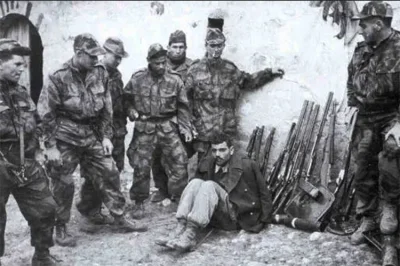
Continued French Denial Of Horrendous Colonial Crimes Does Not Benefit Bilateral Relations
French historian Jean-Michel Abati called on the French to revisit the truth of French colonial history in Algeria to understand the realities of the tragedies Paris caused Algerians, in his confrontation with MP Julien Odoul, the official spokesperson for the far-right “National Rally” party, known for defending French colonial crimes in Algeria. Jean-Michel Abati told Julien Odoul on the set of the French television channel “LCI” on Sunday, June 28, 2025, that France committed many heinous massacres over 132 years of colonialism, and that the French are ignorant of the truth of their bloody history in Algeria. However, he cited only two massacres that occurred in the second half of the twentieth century. شاهد المحتوى كاملا على الشروق أونلاين

Gouvernement américain : l’IA pour aider à la rédaction des documents
Le DHS utilisera les outils IA de Google pour recommander les informations à faire disparaître dans les demandes FOIA. Ascannio/Shutterstock Les redactions de documents ont été récemment mises sous les projecteurs grâce à la publication des dossiers Epstein par le ministère américain de la Justice, qui les a utilisés pour masquer des passages dans des millions de documents. Désormais, le gouvernement prévoit d’utiliser l’IA pour prendre en charge cette tâche de redaction pour les demandes d’accès à l’information (FOIA), selon des documents GitHub consultés par The Washington Post . Selon ces documents, le US Customs and Border Protection, qui fait partie du Department of Homeland Security, utilisera les outils d’IA de Google pour recommander les informations que les agents FOIA devraient rayer. D’ici la fin septembre, le DHS utilisera l’IA pour les documents qui représentent plus de 10 pour cent des demandes FOIA, soit environ 100 000 à 140 000 au total. À la suite de ces recommandations, les agents du DHS examineront les dossiers afin de s’assurer que le demandeur obtienne ce que le document appelle des informations « exactes et complètes », un terme intéressant compte tenu des éventuelles redactions. Dans le cadre de ses recherches, The Post a découvert des outils d’IA liés à la redaction utilisés ou en cours de développement par d’autres agences. Le Département de l’Intérieur utilise des outils Microsoft pour rayer des informations potentielles relatives à la relation avocat-client, tandis que le DoJ utilise un outil Veriton nommé aiWARE pour redacter des vidéos. La division Santé et Services sociaux (HHS) développe son propre outil, FRED, pour rayer des informations inconnues. « La FDA explore de manière responsable des usages limités de l’IA pour aider le personnel FOIA à traiter les dossiers plus efficacement », a déclaré un porte-parole au The Washington Post . Bien que le gouvernement présente ces outils comme un moyen de gagner du temps, cela pourrait conduire à encore plus de documents entièrement masqués ou manquants. « Je pense que nous devons surveiller très attentivement la manière dont le gouvernement utilise l’IA pour rayer des dossiers, car je pense que cela va devenir un outil extrêmement puissant pour le secret », a déclaré un expert FOIA de l’Université de Floride au The Washington Post .
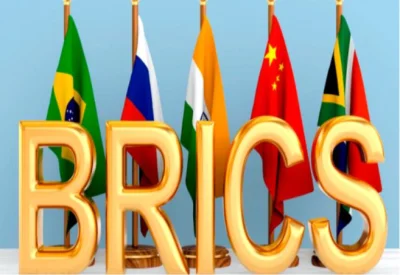
Les États-Unis face à l’Iran, aux BRICS et à la recomposition de l’ordre mondial
Les États-Unis occupent depuis plusieurs décennies une position centrale dans l’ordre international. Leur puissance économique, militaire, diplomatique et technologique leur confère une influence considérable sur les équilibres mondiaux. Cette influence ne fait cependant pas l’unanimité, y compris au sein de la société américaine elle-même. Une partie importante de la population s’interroge désormais sur les orientations de la politique étrangère des États-Unis, sur le coût de leurs engagements extérieurs et sur leur manière d’exercer leur puissance dans le monde. Cette évolution de l’opinion américaine mérite d’être soulignée. Selon une enquête du Pew Research Center, réalisée du 23 au 29 mars 2026 auprès de 3 507 adultes américains, 53 % des Américains estiment que les États-Unis ne prennent pas suffisamment, ou pas du tout, en considération les intérêts des autres pays lorsqu’ils élaborent leur politique étrangère. Plus significatif encore, 83 % considèrent que les États-Unis interviennent dans les affaires d’autres pays, dont 39 % estiment qu’ils le font « beaucoup ».¹ Ces chiffres ne signifient cependant pas que les Américains rejettent globalement le rôle international de leur pays. 57 % considèrent encore que les États-Unis contribuent à la paix et à la stabilité mondiales. Le débat porte donc moins sur l’existence de la puissance américaine que sur ses modalités d’exercice, ses objectifs, ses coûts et ses conséquences internationales.² L’Iran : un révélateur des limites de la puissance La confrontation avec l’Iran constitue, à cet égard, un cas particulièrement significatif. Elle permet d’observer concrètement les difficultés auxquelles se heurte une grande puissance lorsqu’elle entend utiliser la force pour atteindre des objectifs stratégiques. Une enquête du Pew Research Center réalisée du 16 au 22 mars 2026 auprès de 3 524 adultes américains montre que 59 % des Américains considéraient que les États-Unis avaient pris une mauvaise décision en recourant à la force militaire contre l’Iran, contre 38 % qui estimaient cette décision juste. Une autre enquête réalisée quelques semaines plus tard confirmait pratiquement ce rapport de forces : 59 % jugeaient toujours la décision mauvaise contre 38 % qui la jugeaient bonne.⁴ L’intérêt de ces données dépasse le seul cas iranien. Elles montrent qu’une intervention militaire extérieure peut faire l’objet d’un débat substantiel au sein même de la population du pays qui l’engage. Le conflit soulève également des questions de sécurité et de coût. Dans l’enquête de mars, 40 % des Américains estimaient que l’action militaire contre l’Iran rendrait les États-Unis moins sûrs à long terme, contre 22 % qui pensaient l’inverse. Concernant le monde, 33 % estimaient que cette action le rendrait moins sûr, contre 27 % qui pensaient qu’il serait plus sûr.⁵L’Iran devient ainsi un cas d’école pour une interrogation plus générale : la supériorité militaire suffit-elle à garantir l’atteinte des objectifs politiques poursuivis ? L’Iran, mais aussi les BRICS : un changement de contexte L’importance géopolitique de la question iranienne doit également être replacée dans un contexte plus large. L’Iran n’est plus seulement un acteur régional confronté à Washington : il appartient désormais au BRICS, dont l’élargissement constitue l’un des signes de la transformation de l’environnement international. Le BRICS compte actuellement onze membres : Brésil, Russie, Inde, Chine, Afrique du Sud, Arabie saoudite, Égypte, Émirats arabes unis, Éthiopie, Indonésie et Iran. L’Iran a intégré le groupe en 2024 et l’Indonésie en est devenue membre à part entière en janvier 2025.⁶ Le BRICS ne constitue pas une alliance militaire dirigée contre les États-Unis. Il s’agit d’un forum de coopération et de concertation politique, diplomatique et économique, dont les membres affirment notamment vouloir accroître la représentation et l’influence des pays du Sud global dans la gouvernance internationale.⁶ Cette distinction est importante. Présenter mécaniquement les BRICS comme un « bloc anti-américain » simplifierait une réalité beaucoup plus complexe. Les membres du groupe ont des intérêts, des régimes politiques, des stratégies économiques et des relations avec Washington très différents. Cependant, leur rapprochement constitue un élément significatif de la multipolarisation des relations internationales. Le groupe cherche notamment à renforcer la coopération économique et financière entre ses membres et à promouvoir une réforme des institutions internationales telles que l’ONU, le FMI, la Banque mondiale et l’OMC.⁶ La question de la domination du système international L’enjeu dépasse donc la confrontation entre Washington et Téhéran. Il concerne progressivement la structure même de l’ordre international. Pendant plusieurs décennies, les États-Unis ont occupé une position prépondérante dans les institutions politiques, financières et militaires internationales. La montée en puissance de nouveaux acteurs et l’élargissement des BRICS contribuent à poser une question nouvelle : le système international doit-il continuer à fonctionner principalement autour des centres de puissance hérités de l’après-Seconde Guerre mondiale, ou évoluer vers une représentation plus large des puissances émergentes et du Sud global ? Cette question ne reçoit pas une réponse unique. Elle constitue précisément l’un des grands débats géopolitiques contemporains Le BRICS affirme officiellement vouloir contribuer à une gouvernance mondiale « plus inclusive » et à une plus grande représentation des pays du Sud.⁶ Il ne dispose toutefois ni d’un traité constitutif, ni d’un budget propre, ni d’un secrétariat permanent.⁷ Son influence doit donc être appréciée à partir de sa capacité effective de coordination et de coopération, et non simplement à partir du nombre de ses membres. Un nouvel enjeu : la capacité des États-Unis à s’adapter L’un des enjeux majeurs pour Washington réside ainsi dans sa capacité à adapter sa politique étrangère à un environnement devenu plus complexe. La question n’est plus seulement celle de la supériorité militaire américaine. Elle concerne également la capacité des États-Unis à construire des coalitions, négocier, convaincre, coopérer et prendre en compte les intérêts d’autres puissances. Cette dimension est particulièrement importante à la lumière du sondage de Pew : 53 % des Américains interrogés considèrent que leur pays ne prend pas suffisamment en compte les intérêts des autres pays dans l’élaboration de sa politique étrangère.¹ Il existe donc une tension entre deux dimensions de la puissance : la capacité d’imposer ou de contraindre et la capacité de convaincre ou de rassembler. Or, dans un monde où se développent de nouveaux centres de puissance, la seconde dimension pourrait prendre une importance croissante. Les BRICS et la question de l’Algérie Cette évolution présente également un intérêt particulier pour les pays du Maghreb et, notamment, pour l’Algérie. L’Algérie avait été invitée dans le processus d’élargissement des BRICS comme candidate au statut de partenaire, mais elle ne figure pas parmi les membres ni parmi les partenaires officiellement retenus dans la liste publiée par la présidence brésilienne des BRICS.⁸ Cette situation illustre une réalité importante : le mouvement de recomposition du Sud global ne constitue pas un processus automatique. Il dépend de choix diplomatiques, économiques et stratégiques propres à chaque État. Pour l’Algérie, comme pour d’autres pays émergents, l’enjeu consiste dès lors à déterminer comment préserver son autonomie diplomatique, diversifier ses partenariats et défendre ses intérêts dans un système international où plusieurs pôles de puissance cherchent désormais à accroître leur influence. De l’unipolarité à une multipolarité disputée L’ensemble de ces éléments conduit à replacer la question américaine dans une perspective plus large. La montée des BRICS, l’affirmation de la Chine, le rôle de la Russie, l’importance croissante de l’Inde, les évolutions du Moyen-Orient et la place particulière occupée par l’Iran témoignent d’un environnement international dans lequel les États-Unis ne sont plus le seul centre de gravité des relations internationales. Il serait cependant excessif d’en conclure à la disparition de la puissance américaine. Les États-Unis demeurent une puissance majeure, disposant de capacités économiques, militaires, technologiques et diplomatiques considérables. L’enjeu est plutôt celui du passage d’une situation de prépondérance américaine à un système international davantage concurrentiel, pluralisé et multipolaire. Cette transformation pose une question fondamentale : les États-Unis chercheront-ils principalement à préserver leur prépondérance, ou adapteront-ils leur rôle à un monde dans lequel plusieurs puissances revendiquent une participation accrue à la définition des règles internationales ? Conclusion L’Iran et les BRICS permettent ainsi d’élargir considérablement l’analyse de la puissance américaine. L’Iran met en évidence les difficultés et les controverses liées à l’usage de la force. Les BRICS illustrent, quant à eux, la volonté de plusieurs pays du Sud global d’obtenir une représentation accrue dans la gouvernance internationale. Ces deux phénomènes ne sont pas réductibles l’un à l’autre, mais ils participent d’un même contexte : la remise en question des équilibres hérités de la période de domination incontestée des États-Unis. L’enjeu fondamental n’est donc pas de savoir quelle puissance « remplacera » les États-Unis. Il est de comprendre comment peut évoluer un ordre international dans lequel la puissance américaine demeure considérable, tandis que d’autres centres de décision et de coopération gagnent en importance. C’est cette recomposition, davantage que la simple opposition entre Washington et ses adversaires, qui constitue l’un des enjeux majeurs du XXIᵉ siècle. Farid Daoudi Notes et références : ¹ Richard Wike, Jonathan Schulman, Laura Clancy, Jordan Lippert et Sofia Hernandez Ramones, « Most Americans Now Say U.S. Foreign Policy Ignores the Interests of Other Countries », Pew Research Center, 28 avril 2026. Enquête menée auprès de 3 507 adultes américains, du 23 au 29 mars 2026. (Pew Research Center) ² Ibid. Le même sondage indique que 57 % des Américains considèrent que les États-Unis contribuent beaucoup ou assez à la paix et à la stabilité mondiales. (Pew Research Center) ³ Steven Shepard et Andrew Daniller, « Americans Broadly Disapprove of U.S. Military Action in Iran », Pew Research Center, 25 mars 2026. Enquête menée auprès de 3 524 adultes américains du 16 au 22 mars 2026. (Pew Research Center) ⁴ Andrew Daniller, « Americans Remain Critical of Trump’s Approach to Iran », Pew Research Center, 1er mai 2026. Enquête menée auprès de 5 103 adultes américains du 20 au 26 avril 2026. (Pew Research Center) ⁵ Pew Research Center, « On Balance, More Americans Say U.S. Action Against Iran Make the Country, and the World, Less Safe », 26 mars 2026. (Pew Research Center) ⁶ Gouvernement du Brésil, BRICS Brasil, « About the BRICS ». Le site officiel présente les onze membres et les objectifs du groupe, notamment la coopération entre pays du Sud global et la réforme de la gouvernance mondiale. (Brics) ⁷ Gouvernement du Brésil, BRICS Brasil, « Frequently Asked Questions about the BRICS ». Le BRICS est présenté comme un forum de coordination politique et diplomatique sans traité constitutif, budget propre ni secrétariat permanent. (Brics) ⁸ Gouvernement du Brésil, BRICS Brasil, « Frequently Asked Questions about the BRICS ». La page officielle distingue les onze États membres des États partenaires et précise les modalités d’adhésion au statut de partenaire. (Brics)

An Iranian-American deal under the table, mediated and sponsored by a third party
An Iranian-American deal under the table, mediated and sponsored by a third partyMohammed Nassar Hassan Nasrallah provided a set of “advice” and directives to the Palestinian resistance, and appeared in the image of a shaken and even defeated man, unable to move. He confirmed beyond any doubt that he needed a direct order from Tehran … ظهرت المقالة An Iranian-American deal under the table, mediated and sponsored by a third party أولاً على الجزائرية للأخبار .