
البحث
43 نتيجة لـ "washington-and-tehran-launch-a-new-diplomatic-phase-2894211ar"


Diplomatic Representations’ Expenditures and Missions’ Funds Under Scrutiny
The Ministry of Finance and the Ministry of Foreign Affairs have introduced a new framework governing the transfer and monitoring of public funds allocated to Algerian embassies and consulates abroad. A joint decree, recently published in the Official Gazette, establishes detailed accounting procedures aimed at strengthening financial oversight, transparency, and accountability in the management of […] The post Diplomatic Representations’ Expenditures and Missions’ Funds Under Scrutiny appeared first on الشروق أونلاين .
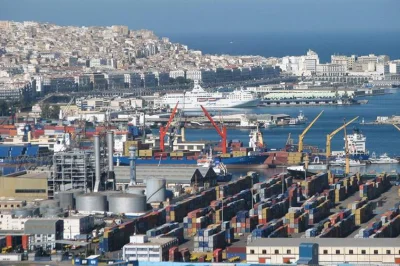
Algeria Heads Towards New Markets With Partnership Consultations With 9 Countries!
Algerian economic partnerships are no longer limited to traditional markets in Europe or some historical partners, but have clearly begun to move towards countries that were not among Algeria’s most prominent trade or investment partners in recent years, in a step that reflects a new orientation to diversify partners and open up promising markets for Algerian enterprises. This trend is highlighted by the intensive diplomatic and economic activity witnessed by the Algerian Chamber of Commerce and Industry during the months of May and June 2026, according to the program seen by “Echorouk”, as it turned into a platform for receiving ambassadors and economic delegations from Asian, African, and European countries, and discussing cooperation opportunities that go beyond traditional trade towards investment, technology transfer, training, and scientific research. شاهد المحتوى كاملا على الشروق أونلاين

What Algerians Expect from the New Parliament
The People’s National Assembly (APN) will open its tenth legislative term on Tuesday with its first session, devoted to formally installing newly elected MPs and electing a new president of the lower house of Parliament. The session comes amid political and institutional expectations that the assembly will restore greater weight to its legislative and oversight functions and turn the page on traditional parliamentary practices. The opening session will focus on completing constitutional and procedural requirements, including validating the membership of elected MPs and electing the president of the People’s National Assembly, its vice presidents and the members of its bureau. These steps will pave the way for the official launch of the tenth legislative term. It is still too early to assess the performance of the new assembly or its ability to bring about meaningful change in parliamentary practice, particularly since the first sitting will largely be ceremonial. The next parliamentary session is also expected to focus mainly on government-sponsored bills submitted for consideration. Moreover, most members of the tenth legislative term are newcomers who have been elected to Parliament for the first time. Nevertheless, attention will be firmly focused on how the assembly carries out its responsibilities in the period ahead. The real challenge, however, lies not in the launch of the new term but in the assembly’s ability to transform parliamentary performance. This is particularly important in light of criticism directed at political parties following the latest legislative elections, amid widespread voter abstention. The situation places pressure on lawmakers to move beyond traditional working methods, strengthen Parliament’s legislative and oversight roles, and restore at least some of the public’s confidence by bringing the institution closer to citizens’ concerns. In this context, political analyst Ali Hachani told Echorouk that the formation of the new People’s National Assembly, following the completion of the electoral process, marks the beginning of a new political and institutional phase. According to Hachani, political parties and elected MPs now face the responsibility of redefining Parliament’s role and transforming it from a conventional institution into a platform for initiative, legislation and effective oversight. Hachani said citizens now expect the legislature to keep pace with the country’s economic and social transformations, exercise meaningful oversight of government performance and reflect citizens’ concerns within the framework of the Constitution. The success of the new legislative term, he argued, will depend on the assembly’s ability to reclaim its position as an influential institution in political life. He identified three key tests facing the new Parliament. The first is legislative effectiveness: passing laws that serve as genuine tools for addressing problems rather than simply adding more legal texts to an already extensive legislative framework. The second is effective parliamentary oversight, including assessing the implementation of public policies, linking responsibility to outcomes and monitoring the government’s performance as an institution in a way that strengthens the principle of accountability. The most important test, however, will be restoring citizens’ confidence in Parliament, particularly after the high level of voter abstention recorded in the latest elections. Hachani stressed that citizens want a Parliament that is present in their everyday lives, gives voice to their concerns, takes the initiative and turns those concerns into legislation and policies with tangible, real-world impact. As for the key issues expected to dominate the new legislative term, Hachani pointed to the revision of a number of laws related to investment and the economy, as well as the completion of the legislative framework governing digitalisation and e-government. Other priorities will include continuing reforms of local authorities, reducing bureaucracy and examining legislation related to social policies, particularly employment and healthcare. Parliament is also expected to monitor implementation of the President of the Republic’s programme and the state’s major commitments, particularly in areas such as housing, food security and renewable energies. Hachani stressed that the true assessment of the tenth legislative term will not come at its outset, but at its conclusion. The key questions will be whether Parliament has succeeded in producing legislation with a tangible impact, exercising effective oversight and narrowing the gap between citizens and the legislative institution. The new legislative term, he concluded, is expected to be more effective than its predecessors and to establish a Parliament that is more visible, more influential and more actively involved in shaping public policy and decision-making.

Race for Parliament Leadership Underway as Parties Put Forward Candidates
Political parties that secured victories in the recent legislative elections have submitted their proposed lists of MPs for membership in the Bureau of the People’s National Assembly, alongside the names of parliamentary group leaders. The move comes ahead of this Tuesday’s inaugural session of the lower house of parliament, following an extraordinary meeting held Sunday by the assembly’s provisional bureau to finalize organizational arrangements for the opening session of the tenth parliamentary term. According to a statement issued by the assembly, the provisional bureau’s meeting focused on setting the agenda for the opening session, discussing procedures for forming the credentials verification committee, and agreeing on logistical arrangements for the smooth running of the assembly’s first post-election session. Under established procedures, the inaugural session will be chaired by the eldest elected member, assisted by the two youngest members, until a new speaker of the People’s National Assembly is elected. Once chosen, the newly elected speaker will oversee the installation of the assembly’s leadership structures—foremost among them the Bureau of the Assembly—in accordance with legal and regulatory frameworks. In this context, successful political parties have engaged in preparations for the installation session. Groups meeting the legal threshold to form parliamentary blocs have begun submitting their proposed candidates for leadership positions within the assembly, whether for group chairmanships or seats on the assembly bureau, ahead of the new term and the structuring of parliamentary bodies. According to information obtained by Echourouk, political parties belonging to the presidential majority—such as the National Liberation Front, the National Democratic Rally, the Front of the Future, and the National El-Binaa (construction) Movement—along with the Movement of Society for Peace and other qualified parties, have submitted their candidates for bureau membership. This paves the way for finalizing the composition of the lower house’s leadership bureau. Tuesday’s session is widely expected to see the election of a new speaker of the People’s National Assembly to succeed former speaker Ibrahim Boughali, amid high anticipation regarding who will helm the lower house for its tenth term. While no candidate has been officially confirmed yet, political consultations and parliamentary backchannels have circulated several names. These include figures who have previously held state responsibilities, female MPs, elected representatives from southern provinces, and public figures. Ultimately, however, the final selection remains tied to the stance of the parliamentary majority and the consensus among its components regarding the candidate who will secure backing. Immediately following the election of the speaker, the newly elected official is expected to initiate the process of establishing the assembly bureau. This will involve inviting eligible political parties to submit their candidates for designated bureau posts, in line with parliamentary representation rules and statutory thresholds. Available data indicates that the formation of the bureau is expected to be completed during the opening session itself, particularly given the approaching parliamentary recess. This makes finalizing the assembly’s structures essential for preparing ahead of the next legislative cycle and establishing the agenda for both legislative and oversight work. Amid ongoing preparations, most political groups opted for direct appointments rather than internal block elections to select vice-speakers and structural nominees. Because this marks the opening phase of the new legislative term, parties are currently focused on organizing their internal structures and distributing responsibilities based on parliamentary representation and prior political consensus.
Algerian Products Strengthen Their Presence in the Spanish Market
Algerian products are gaining increasing traction in the Spanish market, reflecting the country’s expanding export base and the growing momentum behind Algerian-Spanish economic cooperation, according to Jaber Ben Sedira, President of the Algerian Organization for Trade and Social Investment. Ben Sedira said Algeria has emerged as a significant economic partner for Spain, driven by the diversification of its exports. Products such as dates, olive oil, fresh fruit, and ceramics have established a stronger foothold in the Spanish market, reinforcing a bilateral trade relationship that is increasingly based on a mutually beneficial “win-win” approach. Speaking on the Multimedia Economy program of Algerian Radio, Ben Sedira said the steady growth of Algerian exports illustrates the transformation underway in commercial relations between the two countries and highlights Algeria’s rising status as a strategic economic partner. He also underscored the importance of Spanish Prime Minister Pedro Sánchez’s upcoming visit to Algeria, describing it as a pivotal moment in bilateral relations. The visit, he noted, comes after several years of diplomatic tensions and presents an opportunity to reset cooperation, particularly in the areas of trade, investment, and economic development. According to Ben Sedira, Spanish investors continue to play a key role in expanding commercial exchanges, encouraged by Algeria’s increasingly competitive investment environment. He pointed to a series of government incentives—including tax and customs exemptions, as well as streamlined export procedures—that have been positively received by Spanish businesses seeking to expand their operations in Algeria. Ben Sedira further revealed that several Spanish shipping companies have signed agreements with the Port of Algiers, recognizing its strategic position as a gateway to African markets. With maritime routes linking Algeria to Nouakchott, Nouadhibou, and Dakar, the port is expected to facilitate the movement of Spanish goods across West Africa while strengthening Algeria’s role as a regional logistics hub. Highlighting the growing interest of the Spanish business community, Ben Sedira noted that five Spanish chambers of commerce have recently conducted successive visits to Algeria to explore new opportunities in trade and investment. He concluded that Algerian-Spanish economic relations are entering a new phase marked by deeper strategic cooperation, greater complementarity of interests, and expanding prospects for long-term partnership.
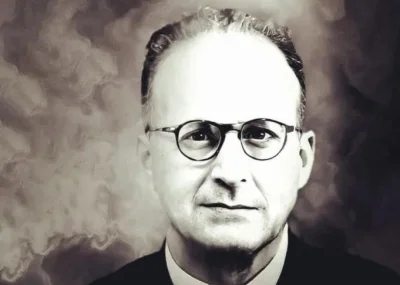
History, Hegemony and the Civilizations That Outlive Empires
There are moments when the decline of a power can be measured in statistics, military setbacks or shifting alliances. And there are moments when something deeper seems to be happening — something we recognize before we can fully measure it: an entire historical order begins to lose the confidence, coherence and authority that once allowed it to shape the world in its own image. For those of us who grew up in societies that experienced colonialism not as an abstraction in a history book but as a memory still carried by families, cities and generations, this question is inevitably more than academic. We have seen the extraordinary power of the West, learned from its knowledge, encountered its institutions and contradictions, and watched its promises of universality collide, too often, with the realities of power. Today, as the Middle East is again shaken by war, Gaza devastated, Iran confronted, American power tested and the international order increasingly contested, we find ourselves returning to a thinker who understood that civilizations cannot ultimately be measured by the weapons they possess or the wealth they accumulate. Long before “multipolarity” became the vocabulary of contemporary geopolitics, Malek Bennabi had offered another way of reading history: through man, time, ideas, moral energy and the mysterious moment when a society acquires the capacity to enter history — or begins to lose it. Perhaps this is why Bennabi speaks so directly to our present. Not because he predicted it. But because he gave us a language with which to think about it. The Equation of History In a timely and readable recent book titled “Why History Matters”1, Dr Yakoob Ahmed engages themes from theology and civilization to imagination and storytelling with a view to reviving historical consciousness as both an intellectual and spiritual imperative. In it, he reminds us of the oft-cited saying according to which history tends to repeat itself and the quote, widely attributed to American humorist Mark Twain suggesting that “history does not repeat itself, but it rhymes.2 One way to examine the idea that humans are destined to repeat the actions of the past, Ahmed says, is “through the rise and fall of states, the inevitable end of power, and the cyclical patterns of tyranny that ultimately come to a close.” He also rightly observed that Ibn Khaldun was not the only Muslim thinker who made the case of cycles in history, nor that simply Muslims wrote about cyclical theories. Indeed, during the 18th and 19th centuries, Ahmed adds, thinkers in Western Europe and the Ottoman 1 Yakoob Ahmed, Why History Matters: Reviving Faith Through the Lens of History, Ketebe Publishing, Istanbul, Türkiye, 2025. 2 Although the saying is almost universally attributed to Mark Twain, the earliest documented use of a similar phrasing appears in Theodor Reik’s 1965 essay The Unreachables, where he wrote: “It has been said that history repeats itself. This is perhaps not quite correct; it merely rhymes.” Twain did, however, express related ideas about historical repetition in his 1874 novel The Gilded Age: A Tale of To-Day, stating: “History never repeats itself, but the Kaleidoscopic combinations of the pictured present often seem to be constructed out of the broken fragments of antique legends”. This conveys a sense of historical echoes, though it does not use the rhyme metaphor. (Source: David J. Kent, in Word Hot White Snow, wordpress.com, April 2024). Empire examined Ibn Khaldun’s ideas to establish where and how nations tend to repeat themselves, and where lessons can be learned. He specifically mentioned the Scottish 18th century historian Alexander Fraser Tyler who claimed that democracies follow a predictable cyclical pattern, evolving from “having virtuous intentions to becoming corrupted, and later declining.” Conventional political science commonly diagnoses the deep and accelerating shift characterizing the modern landscape of global geopolitics — that is the transition away from a unipolar world anchored by Western hegemony toward a fragmented, multipolar reality— through macroeconomic volatility, demographic deficits, or logistical overreach. Such a view stems from a secular understanding of reality, typically supposed to be grounded in the scientific method, empirical evidence, rational enquiry, and experimentation, while totally excluding any religious interpretations. For his part, Malek Bennabi offered a profoundly different diagnosis. By way of a method reflective of his personal intellectual and religious culture — consisting essentially in bridging traditional Islamic sociology, mid-twentieth century Western historiography, and modern structural analysis — he approached history not as a sequence of random interactions or pure material accumulations, but as a rigorous biological and psychological cycle governed by structural laws. As outlined earlier, Bennabi treated sociology with the precision of mathematics through his famous triad: Civilization = Man + Soil + Time. These three fundamental elements, Bennabi explains, exist in every human group, yet they remain static, inert materials until they are vitalized by an ideological or spiritual catalyst. He mapped the lifecycle of any civilization across three psychological and chronological stages. Hence, when an intense moral breath tames the primal instincts of a society, it binds individuals into a unified social network (the Stage of the Spirit) turning raw human potential into an engine capable of historical creation of institutions, sciences, law, and physical architecture (the Stage of the Reason). Conversely, when that spiritual catalyst loses its active energy, the social network disintegrates and dissolves into individualism, hyper-consumerism, and a worship of material objects, thereafter initiating an irreversible slide into ethical decay, which in turn unavoidably leads to societal collapse (the Stage of the Instinct). How does Bennabi’s view compare to some other influential classical and contemporary civilizational theorists? During the classical and modern eras, two towering figures, Abdurrahman Ibn Khaldun and Arnold Toynbee, profoundly influenced the history of ideas concerning the study of the destiny of human civilizations, particularly through their monumental works, the “Muqaddimah” and ‘The Study of History”, respectively. It is therefore not surprising that Bennabi was considerably influenced by their theories. That being said, while Ibn Khaldun asserted that “Asabiyyah” (social bonds and group solidarity) naturally develops among rugged desert groups and nomadic states and is subsequently dissolved by urban luxury within a strict four-generation cycle, thus paving the way for the rise of a new group with a stronger asabiyyah, Bennabi deepened this observation. He posited that social cohesion is not generated spontaneously by environment or blood alone; rather, it is a secondary manifestation of a primary spiritual/religious catalyst. He further argued that luxury is not toxic because it is comfortable, but because it breaks the social network by shifting focus from transcendent duties to immediate individual instincts. Similarly, Bennabi’s framework closely parallels Arnold Toynbee’s concept of “Challenge and Response.” Both scholars rejected racial or strictly geographical explanations of historical primacy. Toynbee argued that when a “Creative Minority” stops offering innovative solutions to existential challenges, it degenerates into a “Dominant Minority” that can only govern through coercive violence. Bennabi provided the inner psychological anatomy for this transition: the loss of creativity is the direct consequence of a society entering the Stage of the Instinct, where its ideas turn into hollow cultural artifacts, leaving behind nothing but raw force. All Roads Lead to Rome In more recent times, thinkers like Paul Kennedy, Francis Fukuyama, Samuel Huntington and others provided diverging opinions but having in common a strongly-marked materialistic perspective. In his acclaimed book “The Rise and Fall of the Great Powers”3, historian Paul Kennedy traces the postures of the world’s leading nations over five centuries starting with the Habsburg Empire in the 16th century. In it, he argues that empires project military power according to their economic resources but eventually the high cost of maintaining military supremacy weakens their economic base. As a result, they tend to respond by spending more on defense and thus weaken themselves further by diverting essential resources away from new, productive investment. Bennabi would view Kennedy’s fundamentally materialist analysis of “imperial overstretch” as a symptom, not a cause, given that, for him, economic and military imbalances occur only after a civilization has entered its Stage of the Instinct, and also because a society rich in “moral capital” can survive material scarcity, whereas a morally bankrupt society will collapse regardless of its GDP or military spending. Huntington, argued that post-Cold War conflicts would trigger along cultural and religious fault lines. Bennabi anticipated this friction but offered a deeper diagnostic. He contended that the tension between the West and the Islamic world is not an inherent clash of civilizations, but a clash between a dying, over-materialized civilization (the West) and a stagnant, “colonizable” society (the Islamic world) that has yet to rekindle its original spiritual formula. Bennabi’s entire philosophy stands as a direct refutation of Francis Fukuyama’s thesis positing that Western liberal democracy was the final endpoint of human ideological evolution. Bennabi warned against confusing “civilization” with “accumulation”, considering that buying, copying, or implementing Western political institutions and consumer products does not make a society civilized. Without a living spiritual and moral anchor, he explained, consumerist democracy is merely the final, sterile stage of the Stage of the Instinct. Two decades before Fukuyama, Bennabi used the concept of the “end of history,” but from radically different civilizational lenses: while Fukuyama — who views history as a linear, evolutionary process — history “ends” because the ultimate political and ideological consensus (that is Western liberal democracy and market capitalism) has been reached, for Bennabi — who views history as a cyclical law of nature — history “ must end at some point” when a specific civilizational cycle has exhausted its psychological and spiritual momentum. History then does not stop permanently; it resets so that a “new point” of civilizational genesis can begin. As for the “Last Man”, Fukuyama — drawing from Friedrich Nietzsche — sees him as a secure, materially satisfied individual devoid of great passions, higher ideals, or willingness to struggle, in other words, a figure representing the psychological stagnation of a triumphant Western model. Conversely, Bennabi observed a similar stagnation in the 3 Paul Kennedy, The Rise and Fall of the Great Powers: Economic Change and Military Conflict from 1500 to 2000, Unwyn Hyman, London, 1988. Muslim world, which he termed the “colonizability” stage: when a civilization’s initial moral and spiritual impulse dies out, its people become passive consumers of other civilizations’ products, losing their agency in making history. Historian and demographer Emmanuel Todd famously predicted the collapse of the Soviet Union using mainly infant mortality rates. In his 2004 book first published in French “La Défaite de l’Occident” (The Defeat of the West) 4, he argues that the war in Ukraine (as well as the American nihilism exhibited in Gaza) acts as a revealer of the terminal decline of the West, triggered by internal self-destruction rather than just the power of its adversaries. Organized around demographic, industrial, and religious factors, Todd’s analysis concludes that the West in general and the United States in particular are in a deep state of social disintegration. Moreover, the total disappearance of Protestantism, which, he says, historically drove the strength of the Anglo-Saxon world (literacy, discipline, work ethic) left an ideological and moral vacuum. Thus, deprived of religious or collective guidance, the West has plummeted into a metaphysical void and a self-destructive impulse, resulting in a divorce between elites and the working class. In short, Todd is of the opinion that the Western bloc survives only through the aggressive expansion of an already hollow model. The concluding remark of the book is particularly grim: “If we want to anticipate America’s strategic choices, we must urgently abandon the axiom of rationality. The United States is not looking for gains by weighing costs. In the village of Washington, in the land of mass shootings, in the era of zero religion, the primary impulse is a need for violence.” Like Bennabi, Todd looks at the biological metrics of “Man” and “Time.” In particular, his observation of rising nihilism and declining birth rates in the West aligns precisely with Bennabi’s Stage of the Instinct, where individual gratification supersedes the generational transmission of civilization. In the same vein, jumping on the bandwagon of thinkers like Edward Gibbon5 in particular, historian Peter Heather and economist John Rapley contend, in their new book “Why Empires Fall”,6 that empires inevitably sow the seeds of their own destruction through an internal “imperial life cycle”. The authors show how an empire’s own success enriches and modernizes its geographic “periphery”, only to see these newly empowered outside regions rise up to challenge and overtake the imperial core. In such a pattern they find striking parallels between ancient Rome and the modern West (led by the United States), including — interestingly enough in light of the ongoing unjust US-Israeli war on Iran — in the fact that “the eventual revival of Persia as a peer competitor put unsustainable pressure on Rome’s declining fiscal and military capacities.”7 In concluding they stress that Western 4 Emmanuel Todd, La Défaite de l’Occident, Editions Gallimard, 2024. 5 Edward Gibbon (1737-1794) was a British historian, essayist, and politician best known for his six-volume The History of the Decline and Fall of the Roman Empire in which he analyzed the causes of Rome’s fall from 98 to 1590, emphasizing internal decay, barbarian invasions, and the role of Christianity. His skeptical analysis of Christianity sparked lasting controversy, but his narrative style and rigorous scholarship profoundly influenced later historians and writers. Among those is British historian Niall Ferguson who said in 2015 that Europe “has grown decadent in its shopping malls and sports stadiums” while letting in “outsiders who have coveted its wealth without renouncing their ancestral faith (…) Like the Roman Empire in the early fifth century, Europe has allowed its defenses to crumble (…) This is exactly how civilizations fall.” 6 Peter Heather and John Rapley, Why Empires Fall: Rome, America, and the Future of the West, Allen Lane, 2023. 7 Read in this respect: -the essay co-authored by Narges Bajoghli and Vali Nasr titled Iran’s New Grand Strategy, published in the July/August 2026 issue of Foreign Affairs magazine (https://www.foreignaffairs.com/iran/irans-new-grand-strategy). In it, the two scholars of Iranian origin examine how a new generation of Iranian leaders is reshaping the country’s domestic order, society, and regional policy. following recent conflicts; -Marc Lynch’s analysis titled The End of the American Middle East: Iran and the Last Gasp of a Failed Order, in the September/October 2026 issue of the same magazine, in which the Professor of Political Science and International Affairs global primacy cannot be recovered, but total collapse is not a foregone conclusion if leadership adapts. To preserve the West’s core interests, they say, Western leaders must stop trying to police the world and instead focus on creating a multipolar global framework. By doing so, “Not only would the form of the Western nation state — originally built on leveraged wealth flows from the rest of the planet — have managed to negotiate a moment of potentially existential crisis, but it would have generated a post-colonial legacy of real greatness, of which its citizens could be genuinely proud.” It is important to point out here that the literature on the historiography of how empires rise and fall, and more specifically the one on the parallel between the fate of ancient Rome and that of the modern West (under the leadership of the United States), has exploded in recent decades, especially following the fall of the Soviet Union and, consequently, the emergence of the United States of America as the sole “hyperpower,” to use the term coined by former French Foreign Minister Dominique de Villepin. Almost two decades before Heather and Hapley, the former editor-at-large of Vanity Fair magazine in the US, and previously managing editor of The Atlantic Monthly, Cullen Murphy, wrote a compelling book8 on this very subject. In it, he explores how the Roman and American populations saw their political elites, and their insular cultures; looks at the consequences of military overstretch and the widening gap between military and civilian society; sees both states weakened through “privatization” and vexed by the paradoxical issue of borders; and argues that America most resembles Rome in the “burgeoning corruption of its government and in its arrogant ignorance of the world”. With regard to this last point, he writes: “The Romans were aware, to be sure, that all previous empires had fallen. But they saw their own empire as the culminating work of creation. The torch had been passed, once and for all. Roma Aeterna! In the eyes of a Roman living in the empire’s Golden Age, Rome would never die.” Outside of academia, French President Emmanuel Macron was one of the few Western leaders to publicly acknowledge this historical shift. At a conference, on August 27, 2019, at the Élysée Palace, he delivered a significant speech to his ambassadors accredited worldwide, in which he notably declared: “We are undoubtedly witnessing the end of Western hegemony over the world,” due to Western errors and the emergence of new powers. The President analyzed the transition from an international order shaped since the 18th century by the West (France, the United Kingdom, and then the United States) to a new balance of power disrupted by geopolitical missteps and American choices.9 The fate of the “Jewish State”: Like Father like Son at George Washington University and author of America’s Middle East: The Ruination of a Region, argues that “The American Middle East is finished. The regional order that has prevailed since 1991 has been one of the many casualties of the U.S.-Israeli war with Iran. The American and Israeli failure to dislodge the regime in Tehran has proved the bankruptcy of decades of sanctions and violence (…) the old order is in fact giving way to something new (…) And assuming that the Iranian regime does not collapse any time soon — which it appears highly unlikely to do — an emboldened Tehran will hope to defend and expand its regional influence by bogging Washington down in the kinds of endless, borderless ‘gray zone’ conflicts in which it has always thrived.” 8 Cullen Murphy, The New Rome: The Fall of an Empire and the Fate of America, Houghton Mifflin Company, USA, 2007. 9 To read the full speech in French: https://www.elysee.fr/emmanuel- macron/2019/08/27/discours-du-president-de-la- republique-a-la-conference-des-ambassadeurs-1 In his recent book, The Monstrosity of Our Century 10, Amir Nour devoted an entire chapter to the complex issue of the fate of what Israelis call the “Jewish state.” He expressed his conviction that this “state” — created from scratch with the active complicity and multifaceted support of the West in 1948 in a geographical and civilizational area entirely different from the history, culture, and aspirations of the Zionist settlers who came primarily from Central and Eastern Europe — lacks both the legitimacy and the demographics necessary to guarantee its long-term survival. Nour offered his perspective on what he considers the only lasting solution to a conflict originating In World War I and whose dramatic consequences risk multiplying in the future absent an urgent and definitive settlement. Past and present upheavals throughout the West Asian region prove beyond a doubt that such a lasting solution could be nothing other than the creation of a democratic state (or confederation) in Palestine where Muslim, Jewish, Christian and other citizens will have the same constitutional rights and obligations, and share the common desire to achieve peace and prosperity in a “holly land”, transformed by an “unholy alliance” between a supremacist Zionist ideology and nihilist West only pursuing its vested interests, into a land of genocide and other tragedies, of which the Palestinians are the principal sin-offerings. This viewpoint, long considered by representatives of the said alliance as a chimera, or even anathema, is today increasingly shared and defended by figures who are authorities in Western academic circles and, more significantly, among young Jews and a significant fringe within the American Democratic Party, as evidenced by recent polls conducted by bodies known for their seriousness.11 To back up our point, we’ll share in the lines that follow some viewpoints similar to Nour’s, expressed by well-known personalities from different cultural and religious backgrounds. In his latest book12 “Israël. Une course vers l’abîme” (Israel. A Race to the Abyss), renowned Jewish historian, a specialist of Nazi Germany and the genocide of the Jews of Europe, Omer Bartov gives a searing critique of Israel’s trajectory from a post-Shoah refuge to what he describes as an ethno- nationalist regime engaged in “systematic war crimes, crimes against humanity, and genocidal acts” in Gaza. The grandson and son of fervent Zionist figures, the Israeli-American academician wonders what “went wrong” in the realization of the Zionist dream, an ideology, he says, that has now become “indefensible” and must be relegated to the dustbin of history.13 It is important to note here that in November 2023, Bartov believed that there was no evidence a genocide was happening in Gaza, and in an interview with Democracy Now! the same month he explained that neither the two-state solution nor a binational state is realistic, saying “A binational state wouldn’t work, and an independent Palestinian state has become practically impossible. The only solution is a confederation, two distinct but interdependent states, with shared institutions.” Without a political solution, he says, Israeli society will sink a little deeper into a moral and psychological abyss every day. He, therefore, places 10 See:https://www.claritypress.com/product/the-monstrosity-of-our-century-the-war-on-palestine-and-the-last-western- man/ 11 Read Bededict Vigers’ article “Israelis No Longer Ahead in Americans’ Middle East Sympathies” showing shifting public opinion in the United States, with 57% of Americans supporting an independent Palestinian state, and 41% expressing more sympathy for Palestinians compared to 36% for Israelis, especially among specific young adults: https://share.google/Sjb3Ar8563GxuAPWK 12 Omer Bartov, Israël. Une course vers l’abîme, (translated by Sibylle Grimbert), Editions du Seuil, May 2026. 13 For more insights about the Zionist ideology, read: Pr. Yakov Rapkin, Israel in Palestine: Jewish Rejection of Zionism, Aspect Editions, September 2025. his hope in international pressure, particularly from Germany, which would force Israel to accept the creation of a confederation based on openness and cooperation, linking two distinct states, one Palestinian and the other Israeli, separated by a border set along the “1967 Green Line” (the one that existed before the so-called Six-Day War). Pr. John Mearsheimer argues that history is not a neutral backdrop in international politics. It is “a living force that shapes perceptions, fuels grievances, and molds the behavior of states and societies. The Six-Day War of 1967 — which left Israel in control of Jerusalem, the West Bank, Gaza, and the Golan Heights — he rightly reminds us, was a humiliation for the Arab world and a turning point in regional memory. That defeat still echoes in Arab political culture, and the longer those territories remain occupied, the more deeply they entrench hostility toward Israel, not only among Palestinians but across the wider region. Beyond the Middle East, especially in Africa, Asia and Latin America, Mearsheimer adds, Israel is increasingly viewed through the lens of colonial history, and “in a multipolar world where the voices of the Global South carry more weight, this perception magnifies Israel’s isolation.” Moreover, resentment is not confined to the Arab-Muslim worlds and the other countries of the Global South. In Europe, Mearsheimer explains, memories of colonialism and guilt over the Holocaust initially produced strong sympathy for Israel, but “as the decades have passed, the sympathy has waned. This shift in European sentiment is significant because “Europe remains an important partner in international diplomacy, and its criticism adds to Israel’s isolation in global forums.” Even more significant is for Mearsheimer the fact that in the United Stated, “which has provided Israel with a unique combination of military aid, diplomatic cover, and economic assistance that no other state on earth has enjoyed for such an extended period of time — consensus is eroding as younger Americans evaluate Israel primarily through the lens of contemporary politics, namely respect for human rights and international law rather than Cold War ideologies and alliances. For them, “the narrative of eternal victimhood rings hollow when it conflicts with the lived reality of Palestinians under occupation.”. History, Mearsheimer concludes as a serious warning to Israel, “is full of examples where states dependent on external guarantees found themselves exposed when their patrons shifted course.” Concurring broadly with Mearsheimer’s views, Wadah Khanfar, a prominent Palestinian journalist and former Director of the Al Jazeera Network, explicitly compares the current contends that Western and Israeli strategists evaluate their conflicts in the Arab-Muslim world solely in terms of physical destruction and technological superiority. In doing so, they overlook the civilizational psychology of the region, and much like the Crusaders, the Mongols, Napoleon Bonaparte, and Western colonialists experienced in their entanglements with the peoples of the region, “bombing infrastructures does not erase a people’s will for dignity or their collective memory. The escalation against Iran and the siege of Gaza only entrench long-term resistance, turning Israel into a pariah state that is unmanageable for Washington.” For Khanfar, the war on Gaza and the strikes against Iran are not isolated events, but the convulsions of a dying Western order. Escaping the colonial era and Western hegemony in the Middle East, he says, relies on a dual dynamic: an internal impulse (the youth rejecting passive elites and rewriting the global narrative) and an external geopolitical coalition (i.e. an expanded Islamic alliance). Only through such a synergy will the region cease to be a playground for major powers and “once again become the author of its own history.”` Conclusion Only through such a synergy, Khanfar argues, will the region cease to be a playground for major powers and “once again become the author of its own history.” And perhaps this is where we should return, one final time, to Bennabi. Because the decline of one civilization is not the birth certificate of another. The weakening of Western hegemony, however profound it may become, will not by itself restore the historical agency of the Arab-Muslim world. Nor will American retreat, Israeli isolation, multipolarity, or the emergence of new powers automatically produce a new civilization. Bennabi would probably have regarded such expectations as another form of dependence: waiting for history to be delivered by the decline of others instead of creating it ourselves. This, ultimately, is why history matters to us. We come from a region that has known conquest and resistance, humiliation and renewal, colonization and independence. We have inherited both wounds and possibilities. And we have learned that military superiority can occupy territory, destroy cities and impose political orders — sometimes for generations — but it cannot indefinitely command memory, dignity or the human desire to recover agency. Empires eventually discover this. Peoples rarely forget it. Bennabi’s enduring lesson is therefore neither a prophecy of Western collapse nor a promise of Muslim renaissance. It is considerably more demanding: no civilization inherits the future simply because another civilization is losing its grip on the present. History does not reward those who wait beside the ruins of an exhausted order. It begins again with those capable of transforming Man, Soil and Time into meaning, responsibility and action. The question before us is therefore no longer merely whether an age is ending. It is whether we are ready to help write what comes next.

French Foreign Minister To A Le Pen’s Party MP: “You Are Obsessed With Algeria”
Algeria was dragged early into the propaganda campaign of the French far-right in anticipation of the upcoming presidential elections, causing trouble for Emmanuel Macron’s administration, which rushed through its Foreign Minister, Jean-Noel Barrot, to accuse this political current of being “obsessed with Algeria”, in response to a parliamentary question regarding recent statements by the French ambassador about the number of visas granted to Algerians. Despite admitting to reducing the number by 20%, the French government, under pressure from deputies of Marine Le Pen’s extremist party, rushed to distance itself from the decline in the number of visas granted to Algerians, and attempted to justify this decline by the repercussions of the political and diplomatic crisis that has plagued bilateral relations since 2024, and the resulting mutual expulsion of consular staff. In a premature election campaign on the backs of Algerians, Edwige Diaz, a member of Parliament and vice-president of the National Rally party, claimed in her question to the French Foreign Minister “that 40% of Algerians over the age of 15 do not work, do not study, and are not retired”, and represent “43% of those who receive medical care at the expense of the French government”. The French minister perceived an unjustified prejudice by the vice-president of the National Rally party against Algerians, responding to her by saying: “You are obsessed with Algeria and Algerians…”, he also defended the steps being taken by the French government regarding pending issues with Algeria, including the case of the citizen Christophe Gleizes, who is serving a seven-year prison sentence due to his involvement in cases related to supporting and praising terrorism. In the briefing provided by the French Foreign Minister, Jean-Noel Barrot, last Tuesday before the members of the French National Assembly (the lower house of parliament), he said that the number of visas granted to Algerians decreased by 20% since 2024, which corresponds to the beginning of the crisis caused by the French President, Emmanuel Macron, by his decision to support the Moroccan regime’s occupation of Western Sahara. Jean-Noel Barrot explained: “Regarding the issue of visas, I would like to start by saying that since the outbreak of the crisis with Algeria, the issuance of visas has decreased by 20%, last year compared to the year before, and this is primarily due to the restrictions imposed by the Algerian government on our diplomatic network”. The French official added: “Since then, we have engaged in a new dynamic with the Algerian authorities, in the service of the interests of France and its people, as we have interests to defend in matters of migration, security, and the fight against drug trafficking and terrorism. There are no specific numerical targets, as our policy is not based on quantity or quotas, but on assessing how to protect our interests. Re-engaging with Algeria is a gradual and reversible process, and depends on the results we achieve”. The head of French diplomacy attributed this decrease in granting visas to what he described as “the strict decisions taken by the Algerian government against our diplomatic network. But apart from that, we have not set specific numerical targets. Our policy is not based on quantity or quotas, but on an assessment of our interests and the evolving relationship”. The percentage of decline in the number of visas granted to Algerians constitutes one-fifth of the total number, as the number decreased from 250,000 visas per year to only 200,000, which is a large figure that cannot be justified by the expulsion of a number of French consular staff working in Algeria, or by the withdrawal of the French ambassador, because the three consulates (Algiers, Annaba, and Oran) continued their work normally without harassment. Confirming the lack of credibility of those statements, the French President, Emmanuel Macron, had previously called for reducing the number of visas granted to Algeria by 30%, before the outbreak of the crisis over the French position on the Western Sahara issue, which indicates that the justifications provided by the master of the “Quai d’Orsay” palace remain mere words.
French Minister of Moroccan Origin Risk Deepening Tensions with Algeria
The French government has found itself embroiled in yet another political controversy, this time triggered by reckless and irresponsible remarks made by Overseas Territories Minister Naïma Moutchou, who also holds Moroccan citizenship. In a striking stance for a member of the French government. Moutchou called for distinguishing between the Algerian people and the Algerian government—a political and diplomatic misstep that is likely to further strain already troubled bilateral relations. Speaking on a talk show broadcast jointly by CNews and Europe 1 on Tuesday, July 21, 2026, Moutchou was asked about “the dispute with Algeria” in relation to immigration. She replied: “I don’t like that characterization because it lumps the Algerian people together with the Algerian government. I prefer to use the term “the Algerian regime”,referring to the issue of undocumented Algerian migrants. Moutchou originated from Ouarzazate, in southern Morocco, and holds both Moroccan and French citizenship. This dual nationality raises questions about her remarks on Algeria, suggesting they could have been influenced (misinformation) by the Moroccan regime, whose diplomatic relations with Algeria remain severed. The French minister of Moroccan origin also rejected comments made by France’s ambassador to Algeria, Stéphane Romatet, who had spoken of plans to increase the number of visas issued to Algerian nationals to 250,000 annually. Moutchou dismissed those remarks, saying they reflected the ambassador’s own views rather than any policy under consideration by the French government. Although she distanced herself from the agenda pursued by former right-wing Interior Minister Bruno Retailleau, arguing that it had proven unsuccessful, Moutchou did not rule out a return to a tougher approach in relations with Algeria. In doing so, she appeared to go beyond the more conciliatory rhetoric adopted by other ministers in Prime Minister Sébastien Lecornu’s government. She also referred to negotiations with Algeria extending beyond the readmission of Algerian nationals facing deportation from France to include the revision of the 1968 Franco-Algerian migration agreement. The article argues that Moutchou’s remarks closely mirrored recent attacks on the French ambassador to Algeria following his comments on visa policy. Far-right leader Marine Le Pen, National Rally president Jordan Bardella, and Bruno Retailleau, leader of the Republicans party, had accused President Emmanuel Macron’s administration of yielding to Algeria. Those criticisms also prompted Benjamin Haddad, France’s Minister Delegate for Europe, to publicly distance himself from Ambassador Romatet’s remarks. In an interview with LCI, Haddad likewise rejected the ambassador’s statements, saying: “Let’s be clear: there are no numerical targets, quotas or defined roadmap regarding visas currently under discussion. As for Algeria, we have one of our citizens, Christophe Gleizes, who must be reunited with his family. Those are the clear priorities guiding our relationship with Algeria.” The French official also sought to avoid questions about whether the ambassador might face disciplinary action over his visa comments, instead emphasizing broad policy objectives such as defending France’s interests pragmatically, deporting undocumented migrants, combating drug trafficking, securing the release of Christophe Gleizes, and strengthening cooperation on security matters. For the first time in months a minister in Sébastien Lecornu’s government has made remarks viewed as provocative toward Algeria. The government had previously identified de-escalation as one of its priorities, abandoning the hard-line approach associated with the previous interior minister under the now-defunct François Bayrou government, suggesting that France may now be entering a new phase of escalation unless it chooses to distance itself from Moutchou’s comments. Moutchou’s statements were a blatant interference in Algeria’s internal affairs—an issue that has frequently provoked strong reactions from Algerian authorities. Her Moroccan nationality is likely to intensify that reaction, potentially leading to another setback in bilateral relations. Her remarks came at a time when Algeria has been strengthening ties with European countries seen as rivals to France, including Germany and Spain, following earlier progress with Italy, suggesting that Moutchou’s comments could be interpreted as a sign of French frustration, although it is France itself who chose to align with the Moroccan regime.
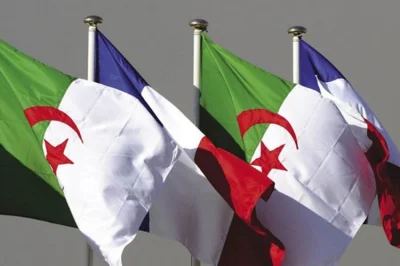
Paris Leans Toward Reason After Despairing Of Achieving Its Goals Through Leverage
After months of refusal and fleeing forward, French authorities have leaned toward the option of de-escalation with Algeria, hoping to dismantle mines obstructing the restoration of normal bilateral relations, since French President, Emmanuel Macron, decided nearly two years ago to bias flagrantly toward the Moroccan regime regarding the Western Sahara issue, despite his awareness of the sensitivity of this file for Algeria. In an unexpected position, the French prosecutor surprised the defense team and judges by requesting the release of the Algerian consular agent, who has been in prison in France outside of diplomatic and consular norms for over a year, on the grounds that his continued imprisonment “is no longer useful in reaching the truth”, which was considered a shift in this case that has prevented progress in bilateral relations despite mutual official visits between officials of the two countries. Based on what was reported by the French newspaper “Le Monde”, the request from the National Anti-Terrorism Prosecutor’s Office came following a release request submitted by defense lawyers, which was considered, according to the newspaper, a “clear retreat” in the prosecution’s position on this case, as the Anti-Terrorism Prosecutor’s Office had until now rejected all requests to release the consular employee. The newspaper questioned whether this data is considered a “new flexibility linked to efforts made behind the scenes between Paris and Algeria to resolve the crisis and secure the release of the French journalist, Christophe Gleizes, whom the Algerian authorities have refused to pardon to this day”, despite the preparation of conditions for that, according to the French narrative. Until now, the liberties and detention judge in charge of the Algerian consular employee’s case still refuses to release him, as happened in the session on June 18, but the refusal decision was appealed, and the decision is to be issued in a session held before July 13, according to “Le Monde” sources. Until recently, French officials justified the continued imprisonment of the Algerian consular employee, who was imprisoned in a plot orchestrated by former French Interior Minister, Bruno Retailleau, on April 12, 2025, by the independence of justice, a justification that did not convince the Algerian side, which insisted on the corruption of the procedures for imprisoning the consular employee who fell victim to the enmity of French political parties trying to employ the crisis with Algeria to achieve political and electoral gains. French leaks talk about signs of a French offer for a swap between the Algerian consular employee and the French journalist who is serving a seven-year prison sentence in a case related to supporting and praising terrorism, which collapses the narrative of French officials who argued for a long time about the independence of French justice, which proved false over time after the shift that occurred in the recent French prosecution position. Perhaps what reinforces this approach is that the organization “Reporters Without Borders” picked up on the change in the French prosecution’s position on the case of the Algerian consular employee and the demand for the release of the French journalist, whose fate remains hanging on the decision of French justice. According to what was reported by “Le Monde”, the French side became convinced that the continued imprisonment of the Algerian consular employee is considered a major obstacle to any normalization of relations between the two countries, rather it destroyed any hope for a pardon for the sports journalist Christophe Gleizes, for whom all Paris’s efforts to obtain a pardon failed, and some French practices even increased the complexity of his situation by trying to internationalize his case by involving the International Federation of Association Football in provoking Algeria. In the view of observers, the Algerian toughness in dealing with Paris’s pleas to release the French journalist is what pushed the French government to pressure “independent” justice in order to search for a solution that ends the imprisonment of the consular employee and his return to his family in Algeria. This is clearly evident through the timing of the French prosecution’s leaning toward requesting the release of the consular employee, which coincides with Independence Day in Algeria (July 5), on which the President of the Republic, Mr. Abdelmadjid Tebboune, usually issues pardons for prisoners. However, in light of the French side’s hesitation in releasing the consular employee, it is unlikely that a pardon will be issued for Christophe Gleizes on the occasion of Independence Day, because trust is lost between the two sides, and keeping the Algerian national without full release by depriving him of returning to his family will also apply to the French prisoner, who is not unlikely to receive the same treatment, meaning ending the procedures on both sides regardless of the justifications of the French side, which argues for the completion of litigation procedures for the French national, unlike the Algerian national. In a related context, the investigative newspaper “Mediapart” quoted a French diplomatic source expressing pessimism about the restoration of relations between Algeria and Paris due to their specific nature. It pointed out that the decision of French President, Emmanuel Macron, regarding the Western Sahara issue, caused an earthquake that almost led to a diplomatic rupture, and brought back to the forefront a series of sensitive files that diplomacy between Algeria and France was trying to hide, most notably the somber colonial legacy and historical memory.
Focus Turns to Algeria’s New Government as Continuity Appears Most Likely
With the Constitutional Court having officially validated the final results of Algeria’s legislative elections, attention is now turning to the formation of the country’s next government. President Abdelmadjid Tebboune is expected to decide in the coming days on the composition of the new cabinet and the future of the Prime Minister, amid growing speculation over whether he will retain members of the current government, appoint political figures, or once again rely on technocrats drawn from the public administration, academia and state institutions. Political and constitutional indicators suggest that continuity is the most likely outcome. Throughout President Tebboune’s two terms, successive governments have been shaped largely around senior civil servants, academics and technical experts, while political parties have played only a limited role in cabinet appointments. The latest parliamentary elections did little to alter that equation. Rather than producing a rival parliamentary majority capable of imposing a partisan government, the vote consolidated a presidential majority that remained broadly supportive of the President’s programme. The elections also reignited criticism of political parties, many of which were blamed for the low voter turnout, reinforcing the argument for maintaining a government built on expertise rather than party representation. Speaking to Echorouk, political analyst Ali Hachani said any discussion over the composition of the next government must first be understood through the constitutional framework governing executive appointments. “The Constitution provides for two distinct scenarios,” he explained. “If a parliamentary majority emerges that differs from the presidential majority, the President appoints a Head of Government from that bloc. However, when Parliament is dominated by parties supporting the President’s programme, the Constitution provides for the appointment of a Prime Minister. That is the situation Algeria has experienced in recent years.” According to Hachani, the results of the latest legislative elections clearly fall into the second category. The winning parties did not create an alternative parliamentary majority but instead strengthened the presidential coalition, which continues to command the majority of seats in the National People’s Assembly. Consequently, he believes the constitutional path points toward retaining the current model, with a Prime Minister heading the government, while leaving open the possibility that other political forces could eventually join the presidential majority. Against that backdrop, Hachani does not expect the incoming cabinet to take on a distinctly political or partisan character. Experience over the past several years, he argued, has shown that President Tebboune consistently prioritizes professional competence and administrative experience over party affiliation when selecting ministers, resulting in governments dominated by technocrats rather than politicians. He acknowledged that parties aligned with the presidential majority may submit names for ministerial positions, but stressed that such proposals remain purely consultative. Under the Constitution, the appointment of ministers is an exclusive presidential prerogative, leaving the final decision entirely in the hands of the Head of State. Hachani also expects the anticipated cabinet reshuffle to remain limited in scope. Rather than a sweeping overhaul, he believes any changes will likely affect only ministries that, in the President’s assessment, have fallen short of expectations or failed to adequately implement his programme. President Tebboune, he noted, has consistently favoured stability within the executive branch over frequent ministerial reshuffles, arguing that continuity in government has proven more effective than repeated changes in leadership. As for the future of the Prime Minister, Hachani considers his continuation the most probable outcome, given the existence of a parliamentary majority that supports the President’s agenda. As required by established constitutional practice, the Prime Minister may submit his resignation following the elections. Should the President decide to retain him, he would simply reappoint him; if not, the resignation would be accepted and a successor designated. Another possibility, Hachani added, is for the President to accept the resignation while asking the outgoing Prime Minister to remain in a caretaker capacity as consultations begin on the formation of a new government. Those consultations could take into account candidates proposed by parties within the presidential majority, alongside respected national experts, although the President would ultimately retain sole authority over the final appointments and could also consult the Prime Minister on setting the government’s priorities. Hachani concluded that President Tebboune now finds himself in a constitutional position that grants him broad discretion in appointing both the Prime Minister and cabinet ministers. As a result, he argued, the next phase is likely to be defined less by political bargaining over ministerial portfolios than by the government’s ability to implement state policies and deliver on the President’s programme. In his view, that reality offers the clearest indication of what the next government will look like: a cabinet built primarily on competence, professional expertise and institutional experience, tasked with meeting citizens’ expectations while advancing the President’s reform agenda.
Apple M6 vs M5 : Quelle vitesse pour le nouveau silicium ‘quotidien’ d’Apple ?
Apple réalise des gains de performance respectables grâce à un nouveau procédé en 2 nm, mais les utilisateurs du M5 ne devraient pas ressentir de FOMO. Apple Apple today announced its new M6 processor, launching first on the popular Mac Mini. It’s been clear for several years that Apple pulled off a rare coup when it switched away from Intel to its own, ARM-based silicon, so the real question has been the degree to which those initial efficiency gains would diminish generation-over-generation. How does the new M6 stack up against its predecessor, the M5? Avec la version de base du M6, Apple livre enfin une puce fabriquée selon un procédé de 2 nm, un saut en avant pour les utilisateurs de Mac, qu’ils ont longtemps espéré. La nouvelle puce reçoit également une augmentation de 10 à 12 cœurs CPU (deux cœurs « super », quatre cœurs de performance et six cœurs d’efficacité), et reçoit parallèlement un GPU de 12 cœurs accompagné d’une paire de NPU à 16 cœurs. La société affirme que le M6 possède « le cœur CPU le plus rapide du monde » et se vante d’une bande passante mémoire plus rapide, d’un GPU accéléré et d’une bande passante mémoire unifiée allant jusqu’à 170 Go/s. Néanmoins, Cupertino précise que le M6 est destiné à des usages quotidiens tels que l’école, le travail et l’IA amateur. At long last, the M6 has tinier transistors! Apple The biggest change the M6 brings compared to its predecessors is the shift to a 2nm process. The M3, M4 and M5 were defined by TSMC’s 3nm manufacture, and much of the new generation’s uplift can likely be attributed to the move forward to 2nm. Le changement le plus important apporté par le M6 par rapport à ses prédécesseurs est le passage à un procédé de 2 nm. Le M3, le M4 et le M5 étaient définis par la fabrication en 3 nm de TSMC, et une grande partie de l’amélioration de la nouvelle génération peut probablement être attribuée à cette avancée vers le 2 nm. Apple claims the M6 has 20 percent more multithreaded performance compared to the M5, a claim we’ll need to test out, though the company is usually accurate with its launch benchmarks. When it comes to single-threaded tasks, the comparisons are much more vague, with Apple claiming « the world’s fastest single-threaded performance. » We’ll need hands-on testing to see what that really means. Apple affirme que le M6 offre 20 pour cent de performances multithreadées en plus par rapport au M5; une affirmation que nous devrons tester, bien que l’entreprise soit généralement précise avec ses benchmarks de lancement. En ce qui concerne les tâches à thread unique, les comparaisons restent beaucoup plus vagues, Apple revendiquant « la performance à thread unique la plus rapide du monde ». Il faudra des tests pratiques pour déterminer ce que cela signifie réellement. Apple has boosted AI performance by a claimed 30 percent compared to the M5 on the back of a new « Dual 16-core Neural Engine » and a 12-core GPU. Each of those GPU cores contains a Neural Accelerator, and the focus on these upgrades underscores the success Apple has found in positioning the Mac Mini as an AI machine. The unified design of M-series silicon has proven an efficient and cost-effective way to run local models, and you can run a cluster of them for even more power, leading to increased demand until Apple axed the cheapest Mac Mini model in May 2026. Despite the increased power on the M6, you’ll be paying a higher cost relative to that performance. Apple revendique une hausse des performances en IA de 30 pour cent par rapport au M5, grâce à un nouveau « Dual 16-core Neural Engine » et à un GPU de 12 cœurs. Chacun de ces cœurs GPU contient un Neural Accelerator, et l’orientation vers ces améliorations souligne le succès qu’Apple a rencontré en positionnant le Mac Mini comme une machine IA. La conception unifiée des puces de la série M s’est avérée être une manière efficace et rentable de faire tourner des modèles locaux, et vous pouvez faire fonctionner un cluster d’entre eux pour encore plus de puissance, ce qui a entraîné une demande croissante jusqu’à ce qu’Apple supprime le modèle Mac Mini le moins cher en mai 2026. Malgré l’augmentation de puissance du M6, vous devrez payer un coût plus élevé par rapport à ces performances. A 10 percent increase in memory bandwidth over the M5 up to 170GB/s with a base RAM configuration of 16GB (configurable up to 32GB) are welcome upgrades for video editors and gamers, especially in tandem with the GPU improvements. Une augmentation de 10 pour cent de la bande passante mémoire par rapport au M5, atteignant 170 Go/s avec une configuration RAM de base de 16 Go (configurable jusqu’à 32 Go), constitue une amélioration bien accueillie pour les monteurs vidéo et les joueurs, surtout en tandem avec les améliorations du GPU. Should M5 owners upgrade to the M6 Mac Mini? Apple If you’re currently using a Mac computer with an M5, you may be wondering whether the M6 gives you a reason to upgrade. For the vast majority of users, the answer is absolutely not. While Apple has eked out some reasonable gains compared to last generation, largely thanks to the move from a 3nm to a 2nm process, it’s not enough to compel an upgrade from the M5, which remains an extremely capable system. Si vous utilisez actuellement un Mac équipé d’un M5, vous vous demandez peut-être si le M6 vous donne une raison de faire la mise à niveau. Pour la grande majorité des utilisateurs, la réponse est absolument non. Bien qu’Apple ait obtenu des gains raisonnables par rapport à la génération précédente, principalement grâce au passage du 3 nm au 2 nm, ce n’est pas suffisant pour pousser à la mise à niveau depuis le M5, qui reste un système extrêmement capable. Even if you’re using an M4, it’s hard to think of a reason why you should buy an entirely new computer. The increased horsepower is unlikely to be noticeable in day-to-day use, and even in demanding tasks the difference won’t be night and day. Apple claims the M6 is a 40% CPU uplift over the M4, with four times the speed for AI tasks, but that could still be a matter of seconds. If you’re the sort of M4 user who finds yourself bottlenecked, you might be better served by upgrading to the new M5 Pro Mac Mini or even the refreshed Mac Studio. Même si vous utilisez un M4, il est difficile d’imaginer une raison d’acheter un nouvel ordinateur. L’augmentation de la puissance ne serait probablement pas perceptible dans l’usage quotidien, et même dans les tâches exigeantes, la différence ne sera pas du jour au lendemain. Apple affirme que le M6 offre une amélioration de 40 % du CPU par rapport au M4, avec un quadruplement de la vitesse pour les tâches d’IA, mais cela pourrait encore rester une question de secondes. Si vous êtes du genre d’utilisateur M4 qui se retrouve limité, il vaut peut-être mieux envisager la mise à niveau vers le nouveau M5 Pro Mac Mini ou même le Mac Studio rafraîchi. If you’re a creative or tech professional using an M2 or M3, especially if it’s saddled with 8GB of RAM, an upgrade path to the M5 begins to look a lot more compelling. While those systems still remain quite useful for students and office workers, they’re beginning to show their age for GPU-bound tasks like video editing, gaming and AI work. Si vous êtes un créatif ou un professionnel de la tech utilisant un M2 ou un M3, surtout s’il est équipé de 8 Go de RAM, une voie de mise à niveau vers le M5 devient beaucoup plus convaincante. Bien que ces systèmes restent tout à fait utiles pour les étudiants et les travailleurs de bureau, ils commencent à montrer leur âge pour les tâches dépendantes du GPU telles que le montage vidéo, les jeux et les travaux d’IA.
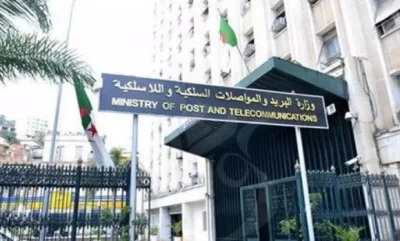
Le ministère de la Poste et des Télécommunications appelle à soutenir les projets algériens qualifiés au concours des Prix du Sommet mondial sur la société de l'information
ALGER - Le ministère de la Poste et des Télécommunications a appelé, mercredi dans un communiqué, à soutenir les projets algériens qualifiés à la phase pré-finale du concours des Prix du Sommet mondial sur la société de l'information 2025. Le ministère rappelle qu'il ne reste que quelques heures avant la clôture des votes en faveur des projets algériens qualifiés à cette phase du concours annuel organisé par l'Union internationale des télécommunications. Le communiqué précise qu'il s'agit de trois (3) projets dans le domaine des technologies de l'information et de la communication (TIC), qui "mettent en valeur l'innovation algérienne et reflètent les capacités de notre jeunesse et de nos institutions dans le domaine numérique". Le ministère appelle à "soutenir ces projets pour leur permettre d'être sélectionnés dans leurs catégories respectives, en votant et en encourageant les autres à participer massivement au vote, avant le 30 avril à 22h00 heure locale, via la plateforme officielle du concours : https://www.itu.int/net4/wsis/stocktaking/Prizes/2025 ". Le premier projet (A New Cryptographic Algorithm) est élaboré par la société civile. Il concourt dans la catégorie "Renforcement de la confiance et de la sécurité dans l'utilisation des TIC". Le deuxième projet (Contribution to the fight against the drawdown of groundwater in the Algerian arid regions by geophysics, GIS and ICT) est élaboré par le Centre de recherche scientifique et technique sur les régions arides (CRSTRA). Il concourt dans la catégorie "Applications TIC-Environnement électronique". Développé par Algérie Télécom, le troisième projet (Autism Intelligent Teaching Assistant) concourt, quant à lui, dans la catégorie "Dimensions éthiques de la société de l'information".
Parties Eye Key Parliamentary Posts Ahead of New Assembly’s First Session
With just 10 days remaining before newly elected members of the National People’s Assembly are sworn in, political parties that secured seats in the recent legislative elections have begun preparations to select their representatives for the parliament’s leadership and internal bodies. Discussions are underway over candidates for key positions, most notably the Speaker of the Assembly and the deputy speakers, as well as the heads of parliamentary groups, standing committees, and committee rapporteurs, amid growing anticipation over the outcome of political consultations and internal party deliberations. While the election of the Speaker of the National People’s Assembly is governed by constitutional provisions, parliamentary regulations, and the political balance resulting from the legislative elections, the formation of the Assembly’s remaining structures—including deputy speakers, parliamentary group leaders, committee chairs, deputy committee chairs, and rapporteurs—is largely determined by each party’s internal rules, the composition of the new parliament, and the distribution of seats among political forces. The selection process within parties and parliamentary groups typically relies on either appointments by party leadership or internal elections conducted by a ballot. Days after the Constitutional Court announced the final results of the legislative elections, and ahead of the inaugural session of the new National People’s Assembly—expected to take place on August 2—several political parties have already begun preparing for the next phase by discussing potential nominees for leadership positions within the new parliamentary structures. Particular attention is being given to the deputy speakers, who, together with the Speaker, make up the Assembly’s Bureau, the first governing body to be established at the start of the new parliamentary term. The positions of deputy speaker carry particular significance at this stage because they are central to the formation of the Assembly’s Bureau before the establishment of the remaining parliamentary bodies, including the standing committees and their executive offices, as well as the parliamentary groups and their leadership. Each political party represented in the Assembly is seeking to secure representation within these structures in proportion to the number of seats it holds. Alongside consultations among the various political parties over the allocation of key positions, each party is expected to launch internal discussions to select its representatives for the different parliamentary bodies. In the early stages of the new term, appointments are likely to be made directly by party leadership, although some positions may be opened to internal competition, particularly where multiple candidates seek the same office. As the parliamentary term progresses and legislative work becomes more established, parties are expected to rely increasingly on internal elections. By then, lawmakers will have become more familiar with one another, paving the way for greater competition over positions within parties and parliamentary groups, especially committee chairmanships and membership of committee executive offices. The formation of the new parliamentary structures is expected to begin with the Assembly’s Bureau, followed by the establishment of parliamentary groups and the election of their leaders. Attention will then turn to the composition of the standing committees and their executive offices, including committee chairs, deputy chairs, and rapporteurs. The allocation of these positions will largely reflect each party’s parliamentary strength, while also taking into account internal political considerations and party dynamics. Standing committees—including those responsible for finance, legal affairs, foreign affairs, and economic affairs—play a pivotal role in the legislative process. They are tasked with examining draft legislation, reviewing legislative proposals, and overseeing issues within their respective jurisdictions. As a result, committee chairmanships are among the most sought-after positions in parliament, granting their holders significant influence over committee proceedings and the direction of debate on key legislative and policy matters.
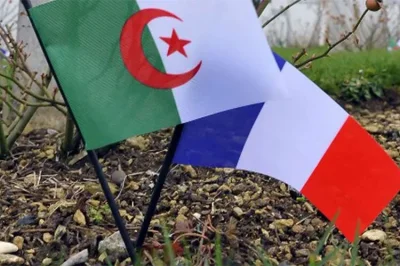
New French Provocation Threatens Fragile Rapprochement with Algeria
French authorities have once again demonstrated that they are not genuinely committed to pursuing a path of de-escalation with Algeria or restoring bilateral relations, which have been mired in an unprecedented political and diplomatic crisis for nearly two years. Recent actions by officials in Paris—widely seen as enjoying the backing of the Élysée Palace—suggest a recurring pattern of undermining positive momentum whenever signs of reconciliation begin to emerge. The latest episode centers on the administration of French President Emmanuel Macron, which continues to pursue policies viewed as favoring certain partners in the western Mediterranean over others, while showing little regard for Algeria’s geopolitical interests. This approach comes despite France’s awareness of the sensitivity of the issue and its potential consequences for relations that have only recently shown signs of recovery. Shortly after presenting his credentials on July 1, and even before receiving formal approval from the Moroccan royal palace to officially assume his duties, France’s newly appointed ambassador to Morocco, Philippe Lalliot, traveled to the occupied Western Sahara city of Laayoune. The visit is expected to cast a shadow over the tentative rapprochement achieved between Algeria and France in recent months. شاهد المحتوى كاملا على الشروق أونلاين

A Preemptive Blow Shatters the Moroccan Regime’s Dreams
With Algeria’s announcement of the launch of construction works on the new section of the trans-Saharan Algeria–Nigeria gas pipeline through Niger, the Moroccan regime’s propaganda surrounding its own alleged project has effectively reached its end. A preemptive strike is often decisive, and that is precisely what happened on Thursday, June 4. For a considerable period, […] The post A Preemptive Blow Shatters the Moroccan Regime’s Dreams appeared first on الشروق أونلاين .
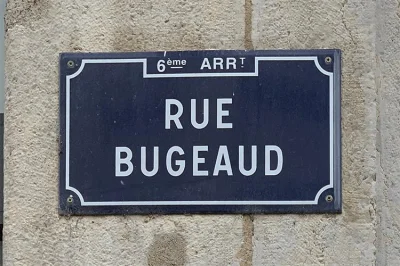
The Memory and History Committee drops Bugeaud’s name from a street in Lyon
The “History and Memory Committee” in Lyon, France’s third-largest city, approved by a majority a recommendation to withdraw the name “Rue Bugeaud” from the city, after much debate between supporters and opponents of this decision. The decision was put into effect by the city authorities, who in turn decided to remove this designation amidst political disagreements among elected officials. The elected and ruling authorities in Lyon (from the Green Party) decided to launch consultations to search for new names for the street, according to “La Tribune de Lyon” on its website on Tuesday, June 23. Opponents criticized the decision for not being subject to consultations, while the committee asserts that a petition was launched against changing the street’s name but only garnered two thousand signatures. The “History and Memory Committee” based its decision on the history of the French Marshal who was appointed Governor-General of Algeria during the early years of the occupation of Algeria (1841 / 1847 AD), a period characterized by colonial invasion campaigns of Algeria and violent warfare methods against the Algerian population during the nineteenth century. The committee, consisting of 45 members from universities, institutions, associations, and experts, estimated that honoring Bugeaud by naming a street after him is no longer compatible with “contemporary values” due to his role in the occupation of Algeria and the massacres and widespread brutal repression he committed in Algeria. The decision came after years of debate and demands from associations and citizens, including associations representing French people of Algerian origin, who believed that continuing to honor Bugeaud represents a disregard for the suffering of Algerians during the brutal colonial era. The committee held the bloody Marshal responsible for adopting methods of war described as extremely violent against Algerians, as Governor-General of Algeria and a military leader who advocated repressive methods during the war of occupation. Among the most infamous brutal practices associated with his name against unarmed Algerians was burning them in caves after they sought refuge there to escape the brutality of the French occupation army, in massacres that many historians today view as among the cruelest chapters of the colonial war. The committee also justified its decision by stating that the honor was inconsistent with the committee’s current values, and said that it was “not compatible with contemporary values.” It also considered that continuing to honor this criminal affects a segment of the city’s population (which includes a large Algerian community), and there are French-Algerian associations and civil society organizations that said the presence of Bugeaud’s name in public spaces is viewed by a number of residents, especially those of Algerian origin, as a constant reminder of colonial violence and the suffering of their ancestors, which creates a feeling of exclusion instead of building a shared memory. In response to those who rejected the decision, the History and Memory Committee of the city of Lyon affirmed that “changing the street’s name does not mean removing Marshal Bugeaud from history books or preventing the study of his biography, but rather it only means ceasing to honor him in the public sphere. History remains in books, universities, and museums, while street names are forms of official recognition and honor”. The committee also justified its decision by the existence of similar cases, where French cities have begun reviewing the names of figures associated with colonialism, and that the decision is not an exceptional case, as names involved in colonial crimes have been removed in other French cities, followed by a process of explaining and clarifying history. Meanwhile, opponents of the decision criticized it, believing that changing the street’s name might be understood as removing or hiding a part of history. They suggested keeping the name while adding historical plaques and explanations to clarify Bugeaud’s role in the French colonization of Algeria and the controversy surrounding it, so that people can learn about the historical facts of the French state. They also expressed their rejection of judging Marshal Bugeaud by present-day standards, and voiced concerns that the process might extend to other historical names. This decision comes at a time when Algerian-French relations are experiencing a period of calm after nearly two years of an unprecedented political and diplomatic crisis, which can be seen as a gesture from the French side towards Algeria, which has expressed its rejection of addressing the memory file with partial decisions that do not reflect the reality of the horrendous colonial crimes that extended over 132 years.
Algerian Air Conditioners Surge with 250,000 European Orders, shipped in 48 Hours
Algeria’s non-hydrocarbon exports received a fresh boost on Tuesday with the launch of three major export operations from the province of Bordj Bou Arreridj, eastern Algiers, to European and North African markets. The shipments included the first export of portable air conditioners manufactured by Condor to Spain, as well as a consignment of fixed split-system air conditioners destined for Tunisia, comprising 46 containers. A first shipment of Midea refrigerators and freezers, produced by the Arcodym Group, also got underway, bound for the Tunisian and Libyan markets. The operations underscore the growing presence of Algerian home appliances in international markets and highlight the expanding reach of the country’s domestic manufacturing sector. The launch was overseen by Foreign Trade and Export Promotion Minister Kamel Rezig during a working visit to Bordj Bou Arreridj, alongside the province’s governor and local authorities. The minister officially inaugurated Algeria’s first export operation of portable air conditioners to Europe, specifically Spain, following an initial commercial order from major European purchasing centers for this category of appliances. During the same visit, Rezig also oversaw the shipment of fixed split-system air conditioners to Tunisia, as part of a 46-container consignment. During the second leg of his visit, he gave the go-ahead for the shipment of Midea refrigerators and freezers, manufactured by the Arcodym Group, to the Tunisian and Libyan markets. According to Rezig, the export drive reflects the results of the economic policy pursued by President Abdelmadjid Tebboune, which focuses on supporting domestic production, encouraging industrial investment and assisting exporters. He said the policy is beginning to deliver tangible results, as Algerian products gain an increasingly visible foothold in foreign markets. The minister revealed that major European purchasing centers are now sourcing Algerian products, a development he said reflects growing confidence in the capabilities of the country’s industrial companies. He added that export orders for Condor’s portable air conditioners have so far exceeded 250,000 units, highlighting the scale of the opportunities available to Algerian manufacturers in the European market. “This is not simply the export of an industrial product,” Rezig said in substance, stressing that the operation sends a broader message: Algerian industry is now capable of entering some of the world’s most competitive markets. Algerian products, he noted, have demonstrated compliance with European standards in terms of quality, safety and performance. The minister also highlighted Algeria’s geographical proximity to Europe as a major competitive advantage. Maritime shipments can reach European destinations in just 48 hours, compared with the considerably longer transit times associated with imports from Asian markets. This proximity gives Algerian manufacturers an edge in terms of faster delivery, lower transportation costs and greater flexibility in responding to customer demand. Turning to the export of refrigerators and freezers, Rezig said the operation demonstrated the qualitative progress achieved by Algeria’s home-appliance industry. The sector, he noted, has developed the capacity to manufacture equipment that meets international standards of quality and competitiveness, positioning Algerian companies to enter new foreign markets and strengthen the presence of locally made products across regional and international markets. The minister reaffirmed that the Foreign Trade sector would continue working to expand the international presence of Algerian products, with a particular focus on higher-value-added goods. The strategy forms part of the government’s broader effort, under President Tebboune’s directives, to increase non-hydrocarbon exports, diversify the national economy and strengthen the position of “Made in Algeria” in global markets.