
البحث
20 نتيجة لـ "algiers-international-fair-an-investment-plateform-4014976ar"
SUPPLY CHAIN DIRECTOR | Healthcare
The Supply Chain Director is the senior executive accountable for all procurement, inventory, warehousing, logistics, and vendor management activities at HAQA Hospital. During the pre-opening phase the role carries additional executive responsibility for establishing the entire supply chain function from zero: contracting with Algerian and international suppliers, configuring the SAP Materials Management module, securing the initial equipment and consumable inventory required for regulatory inspection and opening-day operations, and integrating supply chain workflows into the hospital's ORAT commissioning program. Post-opening, the role drives cost efficiency, supply continuity, and compliance across all clinical and non-clinical departments. 2. SCOPE AND CONTEXT HAQA Hospital is a 300-bed greenfield tertiary hospital in Sidi Abdellah, Algiers, targeting a mid-2027 opening under a Construction and Management Agreement between the Algerian Ministry of Health and Elegancia Healthcare (Estithmar Holding, Qatar). The Supply Chain Director joins during the pre-operations phase and must build a function that does not yet exist - supplier base, contracts, policies, processes, technology configuration, and a trained team - before the first patient arrives. The role operates in a complex supply chain environment because: Algeria's import regime imposes specific rules on medical device and pharmaceutical importation, requiring AAPI investment registration alignment and Préférence Nationale compliance (Décret 15-247, Art. 83 / Loi 23-12). The hospital must maintain dual supplier strategies (international + local) to satisfy Algerian regulatory requirements while maintaining clinical quality standards. Nine contractually mandated niche clinical services (cardiac surgery, transplantation, Gamma Knife, neuroradiology, BMT, spinal surgery, ortho-oncology, rehabilitation) require highly specialized consumables, implants, and equipment that are not commercially available in Algeria and must be imported under specific customs procedures. BEA financing and AAPI investment registration create specific obligations around equipment sourcing, import duty management, and asset capitalization that the Supply Chain Director must navigate in coordination with the CFO. The hospital targets JCI accreditation, which requires documented supply chain controls for medical devices, pharmaceuticals, and sterile goods. 3. KEY ACCOUNTABILITIES 3.1 Pre-Operations: Supply Chain Function Build-Out The highest-priority accountability during the pre-opening phase. The Supply Chain Director must: Develop the HAQA Supply Chain Strategy document aligned to the Target Operating Model (TOM) and approved by the CEO before opening. Design and implement all supply chain policies, procedures, and governance frameworks (procurement authority matrix, vendor qualification, contract management, inventory control, returns management). Lead the SAP MM (Materials Management) module configuration in coordination with the IT/ERP team: chart of accounts alignment, material master setup, vendor master, purchase order workflows, and warehouse management. Establish the hospital's approved vendor list (AVL) - qualifying both international and Algerian suppliers for all product categories including pharmaceuticals, medical devices, surgical consumables, capital equipment, facilities management, catering, linen, and security. Execute all pre-opening procurement contracts: capital equipment, furniture, IT hardware, medical consumables, and services required for ORAT readiness. Ensure the hospital's opening-day inventory is in place, stored correctly, and fully documented for MoH regulatory inspection. Participate in the ORAT readiness scorecard reporting to the CEO - supply chain readiness is a go/no-go gate criterion. 3.2 Procurement Strategy and Vendor Management Develop and implement a comprehensive procurement strategy covering all spend categories, balancing quality, cost, lead time, and Algerian regulatory compliance. Lead strategic sourcing and contract negotiation for all major spend categories - medical devices, pharmaceuticals, capital equipment, facilities management, food services, linen, and security. Establish and maintain the Approved Vendor List; conduct annual vendor qualification reviews and performance assessments against agreed KPIs. Implement a Total Cost of Ownership (TCO) framework for all major procurement decisions, presenting business cases to the CEO and CFO for Board-level approvals per the Delegation of Authority matrix. Manage all supplier contracts through their full lifecycle: negotiation, execution, performance monitoring, renewal, and termination. Drive annual cost reduction targets through competitive tendering, volume consolidation, and renegotiation. Ensure all procurement activities comply with Algerian public procurement principles where applicable, AAPI investment conditions, and Préférence Nationale regulations. 3.3 Niche Service Supply Chain - Specialized Procurement The nine contractually mandated niche services require dedicated supply chain planning. The Supply Chain Director must: Niche Service Key Supply Chain Requirement Regulatory / Import Consideration Cardiac & Vascular Surgery Cardiac implants, stents, perfusion consumables, cath lab disposables Class III medical devices - requires ANDPME/importation authorization Pediatric & Adult BMT Stem cell processing reagents, apheresis consumables, HEPA-filtered sterile supplies Cold chain management; controlled substances protocols Pediatric Liver Transplantation Organ preservation solutions, immunosuppressants, surgical disposables Pharmaceutical importation license required; cold chain critical Gamma Knife / Neurosurgery Cobalt source management, stereotactic accessories, neurosurgical implants Nuclear material handling - requires COMENA authorization Neuroradiology - Embolization Embolic agents, microcatheters, contrast media, angio suite consumables Class III devices - single-use only; no reprocessing Scoliosis / Spinal Deformity Spinal fixation systems, rods, screws, interbody cages, neuromonitoring disposables Consignment stock model with implant suppliers Bone Tumor / Ortho-Oncology Custom prostheses, bone cement, oncological surgical kits Long lead time; custom manufacturing may apply Pediatric Cardiac Surgery Pediatric-specific perfusion lines, miniaturized implants, PICU consumables Pediatric-specific sizing - limited Algerian availability Rehab / Physical Medicine Rehabilitation equipment consumables, orthotics, prosthetics Local supplier development opportunity For each niche service, establish a dedicated supply chain plan covering: supplier identification, importation pathway, customs clearance strategy, storage requirements, and minimum stock level. Implement consignment stock agreements for high-value implantables (cardiac, spinal, orthopaedic) to optimize working capital. Coordinate with the CMO and department heads to validate clinical specifications before supplier contracting. 3.4 Inventory Management and Warehouse Operations Design and operationalize the hospital's central warehouse, pharmacy store, sterile stores, and department-level satellite stores. Implement demand forecasting and par-level management for all clinical and non-clinical consumables. Establish cold chain management protocols for pharmaceuticals, blood products, and biological materials - compliant with Algerian pharmaceutical storage regulations. Define and enforce stock rotation (FEFO/FIFO), expiry management, and wastage reduction programs. Maintain inventory accuracy at ≥ 98% through cycle counts, periodic audits, and SAP MM reconciliation. Develop a pharmaceutical inventory management system in coordination with the Chief Pharmacist, ensuring compliance with Algerian narcotic and controlled substance regulations. Build the hospital's Business Continuity inventory: minimum 30-day strategic stock of critical consumables and pharmaceuticals from Day 1 of operations. 3.5 Algerian Regulatory Compliance and Import Management Navigate and manage all Algerian importation regulations applicable to medical devices, pharmaceuticals, capital equipment, and consumables. Maintain alignment with AAPI investment registration conditions - ensure imported equipment and materials are consistent with the approved equipment list to preserve import duty advantages under Law 22-18. Ensure Préférence Nationale compliance (Loi 23-12 / Décret 15-247 Art. 83): document local sourcing analysis for all procurement decisions; maintain records for regulatory audit. Manage customs clearance processes - coordinate with freight forwarders, the AAPI, and customs authorities to minimize lead times and duty costs. Liaise with the Direction de Wilaya de Santé and ANDPME on product registration and importation authorizations for medical devices. Maintain a Regulatory Compliance Register for all imported product categories, updated quarterly. 3.6 Logistics, Distribution, and Transport Manage all inbound logistics from international and local suppliers: freight, customs, last-mile delivery to the hospital. Oversee the hospital's internal logistics operations: inter-departmental distribution, linen management, waste management coordination, and sterile supply chain. Develop a fleet management strategy (buy vs. lease analysis completed - coordinate implementation with CFO per approved model). Implement track-and-trace capabilities for high-value, temperature-sensitive, and controlled shipments. Manage third-party logistics providers - define SLAs, monitor performance, and conduct quarterly reviews. 3.7 Technology, Data, and Reporting Own the SAP MM module as the system of record for all procurement and inventory transactions; ensure data integrity and user adoption. Define and monitor supply chain KPIs - procurement cycle time, inventory turnover, fill rate, supplier on-time delivery, cost per procedure - reported monthly to CEO and CFO. Implement e-procurement tools for high-frequency, low-value procurement to reduce administrative burden. Develop a Supply Chain Dashboard for executive reporting, covering spend analytics, vendor performance, inventory health, and savings tracking. Leverage AI-assisted demand forecasting tools where available to optimize stock levels and reduce wastage. 3.8 Team Leadership and Algerian Talent Development Build, lead, and develop the Supply Chain team from initial hire through operational maturity. Define team structure, role profiles, and grading for all supply chain positions, aligned to the HAQA Grading Framework. Establish a knowledge transfer plan ensuring Algerian supply chain professionals are progressively developed to take on leadership roles within the function. Foster a culture of continuous improvement, compliance, and cost consciousness within the team. Represent the supply chain function in the HAQA Executive Committee and cross-functional workstreams. 4. QUALIFICATIONS AND EXPERIENCE Category Requirement Education - Primary Bachelor's degree in Supply Chain Management, Logistics, Business Administration, or Engineering from an accredited institution Education - Preferred Master's degree (MBA, MSc Supply Chain, or equivalent) is strongly preferred for this role given the strategic complexity Professional Certification CIPS (Chartered Institute of Procurement & Supply), APICS CSCP, or equivalent supply chain certification is advantageous Total Experience Minimum 12 years in supply chain, procurement, or logistics roles Senior Leadership Experience Minimum 5 years in a senior supply chain leadership role (Director, Head of Supply Chain) in a complex organization Healthcare Supply Chain Minimum 5 years in a hospital or healthcare organization supply chain - non-negotiable; general commercial supply chain alone is insufficient for this role Greenfield / Pre-opening Experience Demonstrated experience setting up a supply chain function from scratch in a new hospital, facility, or business unit is strongly preferred SAP MM Experience Hands-on SAP MM configuration and user experience is required; must be able to lead the ERP supply chain module implementation Medical Device / Pharmaceutical Procurement Direct experience procuring Class II/III medical devices, implantables, and/or pharmaceuticals including importation management GCC / MENA Experience Minimum 3 years in GCC or MENA region preferred; Algeria or North Africa experience is an asset given importation regulatory complexity Algerian Regulatory Knowledge Working knowledge of Algerian importation regulations, customs procedures, AAPI, and Préférence Nationale requirements (or demonstrated ability to acquire quickly) Languages Arabic and/or French essential for vendor and regulatory engagement; English required for international supplier management and executive reporting 5. LEADERSHIP COMPETENCIES Competency Definition Level Strategic Procurement Leadership Develops and executes category strategies that balance quality, cost, supply security, and regulatory compliance across a complex tertiary hospital Expert Materials and Inventory Management Designs and operates inventory systems that maintain service levels while minimizing working capital and wastage Expert Total Cost of Ownership (TCO) Applies TCO methodology to all major procurement decisions; quantifies and presents cost-benefit cases to executives and Board Expert Risk Management Identifies supply chain disruption risks, single-source dependencies, and regulatory risks; develops and maintains mitigation plans Expert Build Process and Systems Designs supply chain workflows, governance frameworks, and technology configurations from a blank page Expert E-Procurement and Digital Tools Implements and operates e-procurement platforms, ERP MM modules, and analytics tools to drive efficiency and visibility High Vendor Relationship Management Builds strategic supplier partnerships while maintaining competitive tension and contractual discipline Expert Regulatory Compliance Ensures all procurement activities meet Algerian importation law, AAPI investment conditions, and healthcare product regulations Expert Financial Acumen Understands budget management, capital vs. opex procurement classification, and supply chain's contribution to hospital EBITDA Proficient Build High-Performing Teams Recruits, develops, and retains a supply chain team capable of operating a JCI-compliant tertiary hospital High Speed of Execution Delivers commissioning-phase procurement on compressed timelines without compromising quality or compliance High AI Fluency Applies AI-assisted forecasting, spend analytics, and contract intelligence tools to improve supply chain performance Proficient 6. KEY INTERFACES Interface Nature of Engagement CEO (Direct Report) Strategic supply chain direction; major contract approvals per DOA; ORAT readiness reporting CFO Procurement budgets, capital expenditure management, AAPI equipment list compliance, working capital optimization, fleet model implementation CMO / Department Heads Clinical specification validation, niche service supply plans, formulary management, medical device selection Chief Pharmacist Pharmaceutical supply chain, formulary procurement, cold chain management, controlled substance inventory COO / Pre-Ops Director ORAT commissioning supply chain workstream; opening-day inventory readiness; department activation sequencing CIO / HIT Director SAP MM configuration and integration, e-procurement tools, inventory system interfaces with HIS HR Director Supply chain team structure, grading, recruitment, Algerian counterpart development Quality & Compliance Director JCI supply chain standards, vendor qualification audit, medical device traceability, incident-related product recall EPC Contractor / PMO Construction-phase equipment procurement coordination; MEP and biomedical equipment commissioning alignment AAPI / Customs Authorities Investment registration compliance, equipment importation authorizations, duty management Ministry of Health / ANDPME Medical device registration, pharmaceutical importation licenses, product authorization International Suppliers Contract negotiation, delivery management, quality assurance, regulatory documentation Local Algerian Suppliers Vendor development, Préférence Nationale compliance, capacity building Board / Shareholder Committee Quarterly supply chain performance and savings reporting; major contract approval submissions 7. KEY PERFORMANCE INDICATORS KPI Target / Benchmark Supply chain function build-out - ORAT readiness score ≥ 90% by commissioning go/no-go gate (pre-opening) Opening-day inventory completeness 100% of critical consumables and pharmaceuticals in stock before MoH licensing inspection SAP MM go-live Fully configured and user-trained 3 months before hospital opening Approved Vendor List - completion 100% of opening-day spend categories covered by qualified vendors before go-live Procurement cycle time - standard purchase orders ≤ 5 working days from requisition to PO issue post-opening Inventory accuracy (SAP vs. physical) ≥ 98% at all cycle count events Supplier on-time delivery rate ≥ 95% of orders delivered on confirmed delivery date Stock-out incidents for critical clinical items Zero stock-outs for Category A (life-critical) items in Year 1 Inventory turnover - consumables 12–18x per year (aligned to tertiary hospital benchmark) Cost savings vs. budget (Year 1) ≥ 5% procurement savings against approved budget through competitive tendering Préférence Nationale compliance 100% documentation compliance on all applicable procurement categories AAPI equipment list alignment Zero discrepancies between imported equipment and AAPI-approved list Algerian counterpart development At least one Algerian deputy/senior manager identified and active in the supply chain function within 12 months of opening
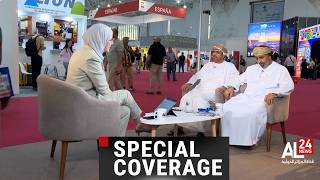

A Strong Comeback For The Spanish Partner And Details Of The Upcoming Algiers International Fair
The 57th edition of the Algiers International Fair will open next Monday at the Palais des Expositions, Pins Maritimes (SAFEX), under the high patronage of the President of the Republic, Mr. Abdelmadjid Tebboune. This prominent economic event is expected to attract more than 700 exhibitors representing over 32 countries, with an anticipated 700,000 visitors, reflecting […] The post A Strong Comeback For The Spanish Partner And Details Of The Upcoming Algiers International Fair appeared first on الشروق أونلاين .

German Auto Delegation Explores Algeria’s Growing Automotive Industry
The German delegation specializing in the automotive industry concluded its three-day visit to Algeria on Wednesday evening, following a program that spanned Algiers and Oran and highlighted the country’s accelerating ambitions in vehicle manufacturing and industrial integration. During the visit, the delegation met with approximately 135 Algerian professionals active in the automotive and auto parts sectors. Most participants expressed strong interest in establishing partnerships and cooperation with German companies. The delegation was also received by officials from Algeria’s Ministry of Industry and was briefed on the government’s strategy to develop the automotive sector. Delegates later toured industrial facilities to assess Algeria’s progress firsthand, including visits to the Fiat manufacturing plant and two component factories in Oran, western Algeria, specializing in electrical systems and exhaust technologies. According to presentations delivered by Stellantis Algeria officials, the local supplier ecosystem currently includes 22 subcontractors working directly with the company and 16 operators in after-sales services. Local integration rates have already exceeded 20% and are expected to rise to 30% before the end of the year. Rachid Bakhchi, President of the Western Algeria Subcontracting and Partnership Exchange, told Echorouk that the visit reflected growing interest among German manufacturers in the Algerian market, particularly as Algeria’s automotive and component industries undergo significant transformation. Bakhchi added that the visit began with an Automotive Industry Business Day held in Algiers last Sunday, organized by the Algerian-German Chamber of Industry and Commerce (AHK) in cooperation with the Subcontracting and Partnership Exchange and the presence of the German delegation. The event attracted nearly 135 Algerian participants—exceeding expectations—driven by strong interest from local companies seeking direct engagement with German counterparts and opportunities for investment and industrial cooperation. Strong Participation Signals Growing Interest The opening session was attended by Oliver Blank, Director General of the Algerian-German Chamber of Industry and Commerce, alongside Germany’s Deputy Minister for Economic Affairs at the German Embassy in Algiers and senior German officials, underscoring Berlin’s commitment to expanding industrial cooperation with Algeria. Throughout the business forum, the Algerian Investment Promotion Agency presented an overview of the country’s business climate and investment opportunities in the automotive sector. Meanwhile, the Automotive Subcontracting Committee of the Algerian Economic Renewal Council (CREA) outlined the current state of the industry and its future outlook. Seven German companies also presented their industrial expertise, technologies, and partnership proposals for collaboration with Algerian firms. Algeria Positions Itself as an Emerging Industrial Hub Bakhchi noted that the Subcontracting and Partnership Exchange introduced participants to Algeria’s industrial subcontracting framework and its role in building an integrated automotive industry. He emphasized that the message delivered to German investors was clear: Algeria has become a genuine investment destination. Foreign companies are entering the market following careful assessment of its opportunities and industrial potential, positioning the country as an emerging platform for broader manufacturing development. Fiat Algeria also presented its experience since launching operations, highlighting the factory’s expansion and job creation potential as a strategic industrial project. Additionally, one of Stellantis’ local suppliers specializing in electrical wiring systems shared its experience working within the company’s supply chain and contributing to higher local integration rates. Industrial Progress Observed Firsthand in Oran At the conclusion of the Algiers program, the German delegation met with senior officials from Algeria’s Ministry of Industry, including the Director General for SMEs and the Director General for Industrial Development, who presented the government’s roadmap for strengthening vehicle manufacturing and attracting foreign investment. On Monday evening, the delegation traveled to Oran, where the first stop was the Fiat plant. Delegates toured production lines and observed the various manufacturing stages, gaining direct insight into Algeria’s advances in automotive production. They also visited the section dedicated to locally manufactured components. Stellantis representatives explained that the company currently works with 22 local suppliers and 16 after-sales service partners, while local integration has surpassed 20% and is projected to reach 30% by year-end. The delegation also visited Aptiv’s facility, which specializes in electrical cable manufacturing. Visitors observed the full production cycle—from raw material processing to final assembly—as well as quality-control laboratories and development systems designed to meet international standards. Delegates expressed particular appreciation for the scale of the workforce, the number of technicians and engineers, and the company’s strong emphasis on training and workforce development. The tour included the company’s training center, which prepares young people from the region and develops qualified labor not only for the factory itself but also for other cable manufacturing facilities. Bakhchi described the initiative as a successful example of the broader economic and social impact of major industrial projects in job creation and skills transfer. German Investment Expands Beyond Vehicle Assembly The final stop of the visit was the Reichhart logistik plant—an existing German investment in Algeria currently preparing for production launch. Delegates reviewed the installation of industrial equipment ahead of manufacturing operations. The facility is expected to begin supplying components to Stellantis starting next year. According to Bakhchi, the German delegation left Algeria with highly positive impressions after witnessing firsthand the transformation taking place in the country’s industrial sector. He said the visit had opened new prospects for expanding industrial partnerships and attracting additional German investment into automotive manufacturing and component production. The delegation included representatives from several leading industrial and technology companies active across the automotive value chain, including specialists in industrial materials, vehicle engineering and development, industrial systems, logistics, tooling technologies, and automotive expertise. The German delegation included representatives from several leading industrial and technology companies operating across the automotive value chain. Participants included Allod Werkstoff, specializing in industrial materials; AVL Germany, focused on vehicle engineering and development; Compound Engineering; INFICON International; the LMT Group – Fette Compacting; LMT Tools Systems; Moviniti GmbH; Reichhart Logistik; and Tech Solution, in addition to representatives from the Automotive Experts Circle of the Algerian-German Chamber of Industry and Commerce. Participating companies held business-to-business (B2B) meetings with Algerian operators to explore investment opportunities, industrial partnerships, technology transfer, and expertise exchange in automotive manufacturing and components production. Bakhchi concluded that this visit represents only the first phase of bilateral cooperation. The next stage will involve additional B2B meetings between German and Algerian economic operators aimed at deepening discussions initiated during the visit and converting early contacts into concrete investment projects—particularly in subcontracting, automotive components manufacturing, and transferring technology and industrial know-how to Algeria.
Why Skechers Selected Algeria for Its First Factory in Africa and the Arab World
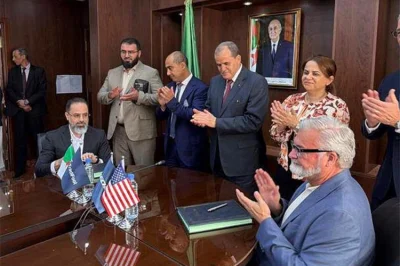
Officials from the global American brand Skechers and its Algerian partner Tradifoot agreed that selecting Algeria to host the company’s first manufacturing plant in Africa and the Arab world was far from coincidental. The decision was driven by improvements in the country’s business climate, a more favorable investment environment, and Algeria’s strategic geographic position, which enables it to serve as an industrial and export hub for African, Arab, and even European markets. Both parties emphasized that the project reflects a shared vision centered on strengthening local production, increasing national integration rates, and opening new opportunities for exports beyond Algeria’s borders. During the partnership agreement signing ceremony held Monday evening at the Sheraton Hotel in Algiers, Tradifoot’s CEO, Walid Ben Ahmed, stated that the project represents the culmination of more than 17 years of experience and development in the Algerian market. He described Skechers’ decision to partner with an Algerian company for its first industrial investment in Africa and the Arab world as recognition of Algerian expertise and its ability to meet international standards. Ben Ahmed explained that the new factory will be built in the Baba Ali industrial zone on a total area of 22,000 square meters. Operations are scheduled to begin in the first quarter of 2027, with an annual production capacity of up to 2 million pairs of shoes. The facility is also expected to create at least 1,500 direct jobs and manufacture 16 different footwear models. In the same context, Skechers’ Vice President for Finance, Douglas Parker, highlighted Algeria’s strong growth and expansion potential. He noted that the company generated sales of $9.6 billion in 2025, with projections exceeding $10 billion in 2026. He added that 65% of Skechers’ revenue comes from markets outside the United States, making expansion into Africa and the Arab world a strategic priority for the company. Parker further revealed that the local integration rate will start at 40% when operations begin and gradually increase to 70% by 2031. During the initial phase, production will primarily meet domestic market demand before expanding into exports across African markets. The long-term target is to export 1 million pairs of shoes annually to Africa and the Middle East, with potential future expansion into Southern European markets. Earlier, Algeria’s Minister of Foreign Trade and Export Promotion, Kamel Rezig, oversaw the signing of the partnership agreement between the American company Skechers and Algeria’s Tradifoot to establish the brand’s first manufacturing facility in Africa in the Baba Ali area of Algiers. The factory is expected to become operational in the first quarter of 2027 with an annual output of 2 million pairs of shoes. The agreement was signed following the minister’s meeting with a Skechers delegation that included Vice President for Finance Douglas Parker and Vice President for International Sales Daniel Levy, in the presence of representatives from Tradifoot. The project aims to establish the American brand’s first industrial base on the African continent, reinforcing Algeria’s position as a destination for foreign industrial investment and as a production platform serving both domestic and international markets. Beyond the factory’s production figures, the project reflects Algeria’s broader ambition to attract international manufacturers and strengthen its industrial base. The investment could contribute to the development of local supply chains, skills transfer, and job creation while positioning the country as a regional manufacturing platform. If export targets are achieved, the facility may also reinforce Algeria’s role in connecting African, Middle Eastern, and European markets.
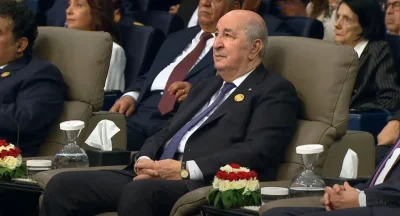
President Tebboune opens 4th Intra-African Trade Fair in Algiers
President of the Republic, Abdelmadjid Tebboune, kicked off on Thursday, at the International Centre of Conferences (CIC) “Abdelatif Rahal,” the works of the 4th Intra-African Trade Fair (IATF 2025). The official opening ceremony was attended by participating Heads of State and delegations’ leaders, senior government officials, and the government’s members. The first day’s agenda at […] The post President Tebboune opens 4th Intra-African Trade Fair in Algiers appeared first on جريدة اللقاء الجزائرية .

Algerian Products Strengthen Their Presence in the Spanish Market
Algerian products are gaining increasing traction in the Spanish market, reflecting the country’s expanding export base and the growing momentum behind Algerian-Spanish economic cooperation, according to Jaber Ben Sedira, President of the Algerian Organization for Trade and Social Investment. Ben Sedira said Algeria has emerged as a significant economic partner for Spain, driven by the diversification of its exports. Products such as dates, olive oil, fresh fruit, and ceramics have established a stronger foothold in the Spanish market, reinforcing a bilateral trade relationship that is increasingly based on a mutually beneficial “win-win” approach. Speaking on the Multimedia Economy program of Algerian Radio, Ben Sedira said the steady growth of Algerian exports illustrates the transformation underway in commercial relations between the two countries and highlights Algeria’s rising status as a strategic economic partner. He also underscored the importance of Spanish Prime Minister Pedro Sánchez’s upcoming visit to Algeria, describing it as a pivotal moment in bilateral relations. The visit, he noted, comes after several years of diplomatic tensions and presents an opportunity to reset cooperation, particularly in the areas of trade, investment, and economic development. According to Ben Sedira, Spanish investors continue to play a key role in expanding commercial exchanges, encouraged by Algeria’s increasingly competitive investment environment. He pointed to a series of government incentives—including tax and customs exemptions, as well as streamlined export procedures—that have been positively received by Spanish businesses seeking to expand their operations in Algeria. Ben Sedira further revealed that several Spanish shipping companies have signed agreements with the Port of Algiers, recognizing its strategic position as a gateway to African markets. With maritime routes linking Algeria to Nouakchott, Nouadhibou, and Dakar, the port is expected to facilitate the movement of Spanish goods across West Africa while strengthening Algeria’s role as a regional logistics hub. Highlighting the growing interest of the Spanish business community, Ben Sedira noted that five Spanish chambers of commerce have recently conducted successive visits to Algeria to explore new opportunities in trade and investment. He concluded that Algerian-Spanish economic relations are entering a new phase marked by deeper strategic cooperation, greater complementarity of interests, and expanding prospects for long-term partnership.
Algerian Air Conditioners Surge with 250,000 European Orders, shipped in 48 Hours
Algeria’s non-hydrocarbon exports received a fresh boost on Tuesday with the launch of three major export operations from the province of Bordj Bou Arreridj, eastern Algiers, to European and North African markets. The shipments included the first export of portable air conditioners manufactured by Condor to Spain, as well as a consignment of fixed split-system air conditioners destined for Tunisia, comprising 46 containers. A first shipment of Midea refrigerators and freezers, produced by the Arcodym Group, also got underway, bound for the Tunisian and Libyan markets. The operations underscore the growing presence of Algerian home appliances in international markets and highlight the expanding reach of the country’s domestic manufacturing sector. The launch was overseen by Foreign Trade and Export Promotion Minister Kamel Rezig during a working visit to Bordj Bou Arreridj, alongside the province’s governor and local authorities. The minister officially inaugurated Algeria’s first export operation of portable air conditioners to Europe, specifically Spain, following an initial commercial order from major European purchasing centers for this category of appliances. During the same visit, Rezig also oversaw the shipment of fixed split-system air conditioners to Tunisia, as part of a 46-container consignment. During the second leg of his visit, he gave the go-ahead for the shipment of Midea refrigerators and freezers, manufactured by the Arcodym Group, to the Tunisian and Libyan markets. According to Rezig, the export drive reflects the results of the economic policy pursued by President Abdelmadjid Tebboune, which focuses on supporting domestic production, encouraging industrial investment and assisting exporters. He said the policy is beginning to deliver tangible results, as Algerian products gain an increasingly visible foothold in foreign markets. The minister revealed that major European purchasing centers are now sourcing Algerian products, a development he said reflects growing confidence in the capabilities of the country’s industrial companies. He added that export orders for Condor’s portable air conditioners have so far exceeded 250,000 units, highlighting the scale of the opportunities available to Algerian manufacturers in the European market. “This is not simply the export of an industrial product,” Rezig said in substance, stressing that the operation sends a broader message: Algerian industry is now capable of entering some of the world’s most competitive markets. Algerian products, he noted, have demonstrated compliance with European standards in terms of quality, safety and performance. The minister also highlighted Algeria’s geographical proximity to Europe as a major competitive advantage. Maritime shipments can reach European destinations in just 48 hours, compared with the considerably longer transit times associated with imports from Asian markets. This proximity gives Algerian manufacturers an edge in terms of faster delivery, lower transportation costs and greater flexibility in responding to customer demand. Turning to the export of refrigerators and freezers, Rezig said the operation demonstrated the qualitative progress achieved by Algeria’s home-appliance industry. The sector, he noted, has developed the capacity to manufacture equipment that meets international standards of quality and competitiveness, positioning Algerian companies to enter new foreign markets and strengthen the presence of locally made products across regional and international markets. The minister reaffirmed that the Foreign Trade sector would continue working to expand the international presence of Algerian products, with a particular focus on higher-value-added goods. The strategy forms part of the government’s broader effort, under President Tebboune’s directives, to increase non-hydrocarbon exports, diversify the national economy and strengthen the position of “Made in Algeria” in global markets.
Russia Calls on Mali to Revive the 2015 Algiers Peace and Reconciliation Accord
The unexpected diplomatic reconciliation between Algeria and Mali continues to attract attention and spark interest among observers because of its implications for the security situation in the strategically sensitive Sahel region, which has become an arena for competition among major powers seeking to expand their influence in the former colonies of a weakened French state. France appears to have been among the countries most unsettled by the rapprochement, which is seen as running counter to Paris’s interests in the region. French officials had reportedly counted on their ally, the Moroccan regime, to maintain strained relations with the regimes of the Sahel. However, the sudden reconciliation between Algeria and Mali disrupted those calculations, prompting French policymakers to examine the circumstances behind the breakthrough and reassess their approach in light of the changing regional dynamics. According to an investigation by the French newspaper Le Monde, the reconciliation dealt a significant blow to France’s already diminished presence in the Sahel. The restoration of ties between Algeria and Mali is viewed as strengthening Algerian influence alongside that of Russia, further eroding France’s traditional role in a region long regarded as strategically important to Paris. Citing unnamed sources, Le Monde reported that the de-escalation between Algiers and Bamako has also helped stabilize Russia’s position in Mali and the wider region. Following setbacks suffered by the Russian Africa Corps—which has been supporting the Malian armed forces since last spring—Moscow reportedly concluded that resolving the crisis would require Algeria to play a central role, given its longstanding ability to influence the conflict and its repeated mediation efforts over several decades. Russian authorities have ultimately come to believe that the conflict in Mali cannot be brought to an end without reviving the 2015 Algiers Peace and Reconciliation Agreement, signed under United Nations auspices and facilitated by Algeria. The conclusion reportedly reflects growing recognition that a purely military solution is unlikely to succeed—an assessment Algeria has consistently advocated. Le Monde quoted a source in Mali as saying that Russian Foreign Minister Sergey Lavrov reiterated this position during a summit with his counterparts from the Sahel states in Niamey, Niger, on July 8—two days before the reconciliation with Algeria was publicly announced. Lavrov told the ministers that “a purely military solution is not a good solution” and that “Mali needs reconciliation with Algeria.” The reported shift in both Russian and Malian positions is said to have followed a series of military setbacks suffered by the Africa Corps and Malian regular forces since last spring during fighting on the outskirts of Bamako. The clashes reportedly resulted in the deaths of Mali’s defense minister and intelligence chief. Fighting resumed earlier this month across several cities in central, northern, and northeastern Mali, with armed opposition groups capturing a number of towns and taking control of strategic routes leading to major urban centers such as Timbuktu. Commenting on these developments, Toufik Bougaada, a professor of political science and international relations at the University of Algiers 3, argued that if Le Monde’s reporting is accurate, Moscow’s renewed interest in the peace agreement reflects a recognition that continued instability in Mali undermines Russia’s own regional interests. He suggested that a prolonged conflict would impose mounting costs on both the Russian Africa Corps and the Malian armed forces. Bougaada noted that the Algiers Agreement, brokered under UN auspices, had contributed to stability in northern Mali. However, he argued that its provisions were never fully implemented, particularly following the political changes in Bamako after the military coups that began in 2020, which disrupted efforts to carry out the accord. He further suggested that Russia may have gradually concluded that Algeria—drawing on decades of experience mediating between the Azawad movements in northern Mali and successive governments in Bamako—is uniquely positioned to bridge the divide between the Malian authorities and the Tuareg-led opposition. Algeria has sponsored a series of peace initiatives dating back to the 1960s, including the 1991 accords and culminating in the 2015 Accord for Peace and Reconciliation in Mali. According to Bougaada, Algeria remains the only actor capable of helping resolve the deep political disagreements between the Malian government and the Azawad movements, which seek greater participation in state governance as well as a more equitable distribution of national wealth and development resources. He concluded that the reconciliation reached approximately a week ago between Algeria and Mali was ultimately predictable given the failure of an exclusively security-based approach to a crisis rooted in political grievances. In his view, the Malian conflict should have been addressed through dialogue from the outset, building on the lessons of previous crises that were ultimately resolved through negotiation rather than military force.
15 GW in Nine Years: Algeria Bets Big on Solar Power
The government has already launched the first phase of the program, targeting 3.2 GW through the development of up to 20 utility-scale solar projects across 12 provinces. The expansion is designed to meet rapidly growing domestic electricity demand, reduce carbon emissions, and free up larger volumes of natural gas for export. Industry stakeholders say achieving these objectives will require accelerating investment and transitioning to an Independent Power Producer (IPP) model, opening the electricity market to private investors and international developers. شاهد المحتوى كاملا على الشروق أونلاين
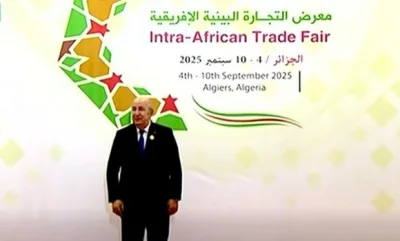
IATF 2025: President Tebboune welcomes leaders and heads of delegations
President of the Republic, Abdelmadjid Tebboune, welcomed on Thursday, at the International Centre of Conferences (CIC) Abdelatif-Rahal, in Algiers, the leaders and heads of the delegations participating in the 4th Intra-African Trade Fair (IATF 2025). This edition, held from 4 to 10 September, is organized under the slogan “Gateway to New Opportunities.” The post IATF 2025: President Tebboune welcomes leaders and heads of delegations appeared first on جريدة اللقاء الجزائرية .
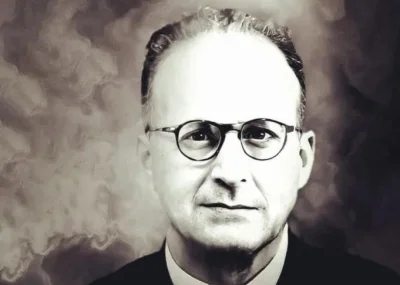
History, Hegemony and the Civilizations That Outlive Empires
There are moments when the decline of a power can be measured in statistics, military setbacks or shifting alliances. And there are moments when something deeper seems to be happening — something we recognize before we can fully measure it: an entire historical order begins to lose the confidence, coherence and authority that once allowed it to shape the world in its own image. For those of us who grew up in societies that experienced colonialism not as an abstraction in a history book but as a memory still carried by families, cities and generations, this question is inevitably more than academic. We have seen the extraordinary power of the West, learned from its knowledge, encountered its institutions and contradictions, and watched its promises of universality collide, too often, with the realities of power. Today, as the Middle East is again shaken by war, Gaza devastated, Iran confronted, American power tested and the international order increasingly contested, we find ourselves returning to a thinker who understood that civilizations cannot ultimately be measured by the weapons they possess or the wealth they accumulate. Long before “multipolarity” became the vocabulary of contemporary geopolitics, Malek Bennabi had offered another way of reading history: through man, time, ideas, moral energy and the mysterious moment when a society acquires the capacity to enter history — or begins to lose it. Perhaps this is why Bennabi speaks so directly to our present. Not because he predicted it. But because he gave us a language with which to think about it. The Equation of History In a timely and readable recent book titled “Why History Matters”1, Dr Yakoob Ahmed engages themes from theology and civilization to imagination and storytelling with a view to reviving historical consciousness as both an intellectual and spiritual imperative. In it, he reminds us of the oft-cited saying according to which history tends to repeat itself and the quote, widely attributed to American humorist Mark Twain suggesting that “history does not repeat itself, but it rhymes.2 One way to examine the idea that humans are destined to repeat the actions of the past, Ahmed says, is “through the rise and fall of states, the inevitable end of power, and the cyclical patterns of tyranny that ultimately come to a close.” He also rightly observed that Ibn Khaldun was not the only Muslim thinker who made the case of cycles in history, nor that simply Muslims wrote about cyclical theories. Indeed, during the 18th and 19th centuries, Ahmed adds, thinkers in Western Europe and the Ottoman 1 Yakoob Ahmed, Why History Matters: Reviving Faith Through the Lens of History, Ketebe Publishing, Istanbul, Türkiye, 2025. 2 Although the saying is almost universally attributed to Mark Twain, the earliest documented use of a similar phrasing appears in Theodor Reik’s 1965 essay The Unreachables, where he wrote: “It has been said that history repeats itself. This is perhaps not quite correct; it merely rhymes.” Twain did, however, express related ideas about historical repetition in his 1874 novel The Gilded Age: A Tale of To-Day, stating: “History never repeats itself, but the Kaleidoscopic combinations of the pictured present often seem to be constructed out of the broken fragments of antique legends”. This conveys a sense of historical echoes, though it does not use the rhyme metaphor. (Source: David J. Kent, in Word Hot White Snow, wordpress.com, April 2024). Empire examined Ibn Khaldun’s ideas to establish where and how nations tend to repeat themselves, and where lessons can be learned. He specifically mentioned the Scottish 18th century historian Alexander Fraser Tyler who claimed that democracies follow a predictable cyclical pattern, evolving from “having virtuous intentions to becoming corrupted, and later declining.” Conventional political science commonly diagnoses the deep and accelerating shift characterizing the modern landscape of global geopolitics — that is the transition away from a unipolar world anchored by Western hegemony toward a fragmented, multipolar reality— through macroeconomic volatility, demographic deficits, or logistical overreach. Such a view stems from a secular understanding of reality, typically supposed to be grounded in the scientific method, empirical evidence, rational enquiry, and experimentation, while totally excluding any religious interpretations. For his part, Malek Bennabi offered a profoundly different diagnosis. By way of a method reflective of his personal intellectual and religious culture — consisting essentially in bridging traditional Islamic sociology, mid-twentieth century Western historiography, and modern structural analysis — he approached history not as a sequence of random interactions or pure material accumulations, but as a rigorous biological and psychological cycle governed by structural laws. As outlined earlier, Bennabi treated sociology with the precision of mathematics through his famous triad: Civilization = Man + Soil + Time. These three fundamental elements, Bennabi explains, exist in every human group, yet they remain static, inert materials until they are vitalized by an ideological or spiritual catalyst. He mapped the lifecycle of any civilization across three psychological and chronological stages. Hence, when an intense moral breath tames the primal instincts of a society, it binds individuals into a unified social network (the Stage of the Spirit) turning raw human potential into an engine capable of historical creation of institutions, sciences, law, and physical architecture (the Stage of the Reason). Conversely, when that spiritual catalyst loses its active energy, the social network disintegrates and dissolves into individualism, hyper-consumerism, and a worship of material objects, thereafter initiating an irreversible slide into ethical decay, which in turn unavoidably leads to societal collapse (the Stage of the Instinct). How does Bennabi’s view compare to some other influential classical and contemporary civilizational theorists? During the classical and modern eras, two towering figures, Abdurrahman Ibn Khaldun and Arnold Toynbee, profoundly influenced the history of ideas concerning the study of the destiny of human civilizations, particularly through their monumental works, the “Muqaddimah” and ‘The Study of History”, respectively. It is therefore not surprising that Bennabi was considerably influenced by their theories. That being said, while Ibn Khaldun asserted that “Asabiyyah” (social bonds and group solidarity) naturally develops among rugged desert groups and nomadic states and is subsequently dissolved by urban luxury within a strict four-generation cycle, thus paving the way for the rise of a new group with a stronger asabiyyah, Bennabi deepened this observation. He posited that social cohesion is not generated spontaneously by environment or blood alone; rather, it is a secondary manifestation of a primary spiritual/religious catalyst. He further argued that luxury is not toxic because it is comfortable, but because it breaks the social network by shifting focus from transcendent duties to immediate individual instincts. Similarly, Bennabi’s framework closely parallels Arnold Toynbee’s concept of “Challenge and Response.” Both scholars rejected racial or strictly geographical explanations of historical primacy. Toynbee argued that when a “Creative Minority” stops offering innovative solutions to existential challenges, it degenerates into a “Dominant Minority” that can only govern through coercive violence. Bennabi provided the inner psychological anatomy for this transition: the loss of creativity is the direct consequence of a society entering the Stage of the Instinct, where its ideas turn into hollow cultural artifacts, leaving behind nothing but raw force. All Roads Lead to Rome In more recent times, thinkers like Paul Kennedy, Francis Fukuyama, Samuel Huntington and others provided diverging opinions but having in common a strongly-marked materialistic perspective. In his acclaimed book “The Rise and Fall of the Great Powers”3, historian Paul Kennedy traces the postures of the world’s leading nations over five centuries starting with the Habsburg Empire in the 16th century. In it, he argues that empires project military power according to their economic resources but eventually the high cost of maintaining military supremacy weakens their economic base. As a result, they tend to respond by spending more on defense and thus weaken themselves further by diverting essential resources away from new, productive investment. Bennabi would view Kennedy’s fundamentally materialist analysis of “imperial overstretch” as a symptom, not a cause, given that, for him, economic and military imbalances occur only after a civilization has entered its Stage of the Instinct, and also because a society rich in “moral capital” can survive material scarcity, whereas a morally bankrupt society will collapse regardless of its GDP or military spending. Huntington, argued that post-Cold War conflicts would trigger along cultural and religious fault lines. Bennabi anticipated this friction but offered a deeper diagnostic. He contended that the tension between the West and the Islamic world is not an inherent clash of civilizations, but a clash between a dying, over-materialized civilization (the West) and a stagnant, “colonizable” society (the Islamic world) that has yet to rekindle its original spiritual formula. Bennabi’s entire philosophy stands as a direct refutation of Francis Fukuyama’s thesis positing that Western liberal democracy was the final endpoint of human ideological evolution. Bennabi warned against confusing “civilization” with “accumulation”, considering that buying, copying, or implementing Western political institutions and consumer products does not make a society civilized. Without a living spiritual and moral anchor, he explained, consumerist democracy is merely the final, sterile stage of the Stage of the Instinct. Two decades before Fukuyama, Bennabi used the concept of the “end of history,” but from radically different civilizational lenses: while Fukuyama — who views history as a linear, evolutionary process — history “ends” because the ultimate political and ideological consensus (that is Western liberal democracy and market capitalism) has been reached, for Bennabi — who views history as a cyclical law of nature — history “ must end at some point” when a specific civilizational cycle has exhausted its psychological and spiritual momentum. History then does not stop permanently; it resets so that a “new point” of civilizational genesis can begin. As for the “Last Man”, Fukuyama — drawing from Friedrich Nietzsche — sees him as a secure, materially satisfied individual devoid of great passions, higher ideals, or willingness to struggle, in other words, a figure representing the psychological stagnation of a triumphant Western model. Conversely, Bennabi observed a similar stagnation in the 3 Paul Kennedy, The Rise and Fall of the Great Powers: Economic Change and Military Conflict from 1500 to 2000, Unwyn Hyman, London, 1988. Muslim world, which he termed the “colonizability” stage: when a civilization’s initial moral and spiritual impulse dies out, its people become passive consumers of other civilizations’ products, losing their agency in making history. Historian and demographer Emmanuel Todd famously predicted the collapse of the Soviet Union using mainly infant mortality rates. In his 2004 book first published in French “La Défaite de l’Occident” (The Defeat of the West) 4, he argues that the war in Ukraine (as well as the American nihilism exhibited in Gaza) acts as a revealer of the terminal decline of the West, triggered by internal self-destruction rather than just the power of its adversaries. Organized around demographic, industrial, and religious factors, Todd’s analysis concludes that the West in general and the United States in particular are in a deep state of social disintegration. Moreover, the total disappearance of Protestantism, which, he says, historically drove the strength of the Anglo-Saxon world (literacy, discipline, work ethic) left an ideological and moral vacuum. Thus, deprived of religious or collective guidance, the West has plummeted into a metaphysical void and a self-destructive impulse, resulting in a divorce between elites and the working class. In short, Todd is of the opinion that the Western bloc survives only through the aggressive expansion of an already hollow model. The concluding remark of the book is particularly grim: “If we want to anticipate America’s strategic choices, we must urgently abandon the axiom of rationality. The United States is not looking for gains by weighing costs. In the village of Washington, in the land of mass shootings, in the era of zero religion, the primary impulse is a need for violence.” Like Bennabi, Todd looks at the biological metrics of “Man” and “Time.” In particular, his observation of rising nihilism and declining birth rates in the West aligns precisely with Bennabi’s Stage of the Instinct, where individual gratification supersedes the generational transmission of civilization. In the same vein, jumping on the bandwagon of thinkers like Edward Gibbon5 in particular, historian Peter Heather and economist John Rapley contend, in their new book “Why Empires Fall”,6 that empires inevitably sow the seeds of their own destruction through an internal “imperial life cycle”. The authors show how an empire’s own success enriches and modernizes its geographic “periphery”, only to see these newly empowered outside regions rise up to challenge and overtake the imperial core. In such a pattern they find striking parallels between ancient Rome and the modern West (led by the United States), including — interestingly enough in light of the ongoing unjust US-Israeli war on Iran — in the fact that “the eventual revival of Persia as a peer competitor put unsustainable pressure on Rome’s declining fiscal and military capacities.”7 In concluding they stress that Western 4 Emmanuel Todd, La Défaite de l’Occident, Editions Gallimard, 2024. 5 Edward Gibbon (1737-1794) was a British historian, essayist, and politician best known for his six-volume The History of the Decline and Fall of the Roman Empire in which he analyzed the causes of Rome’s fall from 98 to 1590, emphasizing internal decay, barbarian invasions, and the role of Christianity. His skeptical analysis of Christianity sparked lasting controversy, but his narrative style and rigorous scholarship profoundly influenced later historians and writers. Among those is British historian Niall Ferguson who said in 2015 that Europe “has grown decadent in its shopping malls and sports stadiums” while letting in “outsiders who have coveted its wealth without renouncing their ancestral faith (…) Like the Roman Empire in the early fifth century, Europe has allowed its defenses to crumble (…) This is exactly how civilizations fall.” 6 Peter Heather and John Rapley, Why Empires Fall: Rome, America, and the Future of the West, Allen Lane, 2023. 7 Read in this respect: -the essay co-authored by Narges Bajoghli and Vali Nasr titled Iran’s New Grand Strategy, published in the July/August 2026 issue of Foreign Affairs magazine (https://www.foreignaffairs.com/iran/irans-new-grand-strategy). In it, the two scholars of Iranian origin examine how a new generation of Iranian leaders is reshaping the country’s domestic order, society, and regional policy. following recent conflicts; -Marc Lynch’s analysis titled The End of the American Middle East: Iran and the Last Gasp of a Failed Order, in the September/October 2026 issue of the same magazine, in which the Professor of Political Science and International Affairs global primacy cannot be recovered, but total collapse is not a foregone conclusion if leadership adapts. To preserve the West’s core interests, they say, Western leaders must stop trying to police the world and instead focus on creating a multipolar global framework. By doing so, “Not only would the form of the Western nation state — originally built on leveraged wealth flows from the rest of the planet — have managed to negotiate a moment of potentially existential crisis, but it would have generated a post-colonial legacy of real greatness, of which its citizens could be genuinely proud.” It is important to point out here that the literature on the historiography of how empires rise and fall, and more specifically the one on the parallel between the fate of ancient Rome and that of the modern West (under the leadership of the United States), has exploded in recent decades, especially following the fall of the Soviet Union and, consequently, the emergence of the United States of America as the sole “hyperpower,” to use the term coined by former French Foreign Minister Dominique de Villepin. Almost two decades before Heather and Hapley, the former editor-at-large of Vanity Fair magazine in the US, and previously managing editor of The Atlantic Monthly, Cullen Murphy, wrote a compelling book8 on this very subject. In it, he explores how the Roman and American populations saw their political elites, and their insular cultures; looks at the consequences of military overstretch and the widening gap between military and civilian society; sees both states weakened through “privatization” and vexed by the paradoxical issue of borders; and argues that America most resembles Rome in the “burgeoning corruption of its government and in its arrogant ignorance of the world”. With regard to this last point, he writes: “The Romans were aware, to be sure, that all previous empires had fallen. But they saw their own empire as the culminating work of creation. The torch had been passed, once and for all. Roma Aeterna! In the eyes of a Roman living in the empire’s Golden Age, Rome would never die.” Outside of academia, French President Emmanuel Macron was one of the few Western leaders to publicly acknowledge this historical shift. At a conference, on August 27, 2019, at the Élysée Palace, he delivered a significant speech to his ambassadors accredited worldwide, in which he notably declared: “We are undoubtedly witnessing the end of Western hegemony over the world,” due to Western errors and the emergence of new powers. The President analyzed the transition from an international order shaped since the 18th century by the West (France, the United Kingdom, and then the United States) to a new balance of power disrupted by geopolitical missteps and American choices.9 The fate of the “Jewish State”: Like Father like Son at George Washington University and author of America’s Middle East: The Ruination of a Region, argues that “The American Middle East is finished. The regional order that has prevailed since 1991 has been one of the many casualties of the U.S.-Israeli war with Iran. The American and Israeli failure to dislodge the regime in Tehran has proved the bankruptcy of decades of sanctions and violence (…) the old order is in fact giving way to something new (…) And assuming that the Iranian regime does not collapse any time soon — which it appears highly unlikely to do — an emboldened Tehran will hope to defend and expand its regional influence by bogging Washington down in the kinds of endless, borderless ‘gray zone’ conflicts in which it has always thrived.” 8 Cullen Murphy, The New Rome: The Fall of an Empire and the Fate of America, Houghton Mifflin Company, USA, 2007. 9 To read the full speech in French: https://www.elysee.fr/emmanuel- macron/2019/08/27/discours-du-president-de-la- republique-a-la-conference-des-ambassadeurs-1 In his recent book, The Monstrosity of Our Century 10, Amir Nour devoted an entire chapter to the complex issue of the fate of what Israelis call the “Jewish state.” He expressed his conviction that this “state” — created from scratch with the active complicity and multifaceted support of the West in 1948 in a geographical and civilizational area entirely different from the history, culture, and aspirations of the Zionist settlers who came primarily from Central and Eastern Europe — lacks both the legitimacy and the demographics necessary to guarantee its long-term survival. Nour offered his perspective on what he considers the only lasting solution to a conflict originating In World War I and whose dramatic consequences risk multiplying in the future absent an urgent and definitive settlement. Past and present upheavals throughout the West Asian region prove beyond a doubt that such a lasting solution could be nothing other than the creation of a democratic state (or confederation) in Palestine where Muslim, Jewish, Christian and other citizens will have the same constitutional rights and obligations, and share the common desire to achieve peace and prosperity in a “holly land”, transformed by an “unholy alliance” between a supremacist Zionist ideology and nihilist West only pursuing its vested interests, into a land of genocide and other tragedies, of which the Palestinians are the principal sin-offerings. This viewpoint, long considered by representatives of the said alliance as a chimera, or even anathema, is today increasingly shared and defended by figures who are authorities in Western academic circles and, more significantly, among young Jews and a significant fringe within the American Democratic Party, as evidenced by recent polls conducted by bodies known for their seriousness.11 To back up our point, we’ll share in the lines that follow some viewpoints similar to Nour’s, expressed by well-known personalities from different cultural and religious backgrounds. In his latest book12 “Israël. Une course vers l’abîme” (Israel. A Race to the Abyss), renowned Jewish historian, a specialist of Nazi Germany and the genocide of the Jews of Europe, Omer Bartov gives a searing critique of Israel’s trajectory from a post-Shoah refuge to what he describes as an ethno- nationalist regime engaged in “systematic war crimes, crimes against humanity, and genocidal acts” in Gaza. The grandson and son of fervent Zionist figures, the Israeli-American academician wonders what “went wrong” in the realization of the Zionist dream, an ideology, he says, that has now become “indefensible” and must be relegated to the dustbin of history.13 It is important to note here that in November 2023, Bartov believed that there was no evidence a genocide was happening in Gaza, and in an interview with Democracy Now! the same month he explained that neither the two-state solution nor a binational state is realistic, saying “A binational state wouldn’t work, and an independent Palestinian state has become practically impossible. The only solution is a confederation, two distinct but interdependent states, with shared institutions.” Without a political solution, he says, Israeli society will sink a little deeper into a moral and psychological abyss every day. He, therefore, places 10 See:https://www.claritypress.com/product/the-monstrosity-of-our-century-the-war-on-palestine-and-the-last-western- man/ 11 Read Bededict Vigers’ article “Israelis No Longer Ahead in Americans’ Middle East Sympathies” showing shifting public opinion in the United States, with 57% of Americans supporting an independent Palestinian state, and 41% expressing more sympathy for Palestinians compared to 36% for Israelis, especially among specific young adults: https://share.google/Sjb3Ar8563GxuAPWK 12 Omer Bartov, Israël. Une course vers l’abîme, (translated by Sibylle Grimbert), Editions du Seuil, May 2026. 13 For more insights about the Zionist ideology, read: Pr. Yakov Rapkin, Israel in Palestine: Jewish Rejection of Zionism, Aspect Editions, September 2025. his hope in international pressure, particularly from Germany, which would force Israel to accept the creation of a confederation based on openness and cooperation, linking two distinct states, one Palestinian and the other Israeli, separated by a border set along the “1967 Green Line” (the one that existed before the so-called Six-Day War). Pr. John Mearsheimer argues that history is not a neutral backdrop in international politics. It is “a living force that shapes perceptions, fuels grievances, and molds the behavior of states and societies. The Six-Day War of 1967 — which left Israel in control of Jerusalem, the West Bank, Gaza, and the Golan Heights — he rightly reminds us, was a humiliation for the Arab world and a turning point in regional memory. That defeat still echoes in Arab political culture, and the longer those territories remain occupied, the more deeply they entrench hostility toward Israel, not only among Palestinians but across the wider region. Beyond the Middle East, especially in Africa, Asia and Latin America, Mearsheimer adds, Israel is increasingly viewed through the lens of colonial history, and “in a multipolar world where the voices of the Global South carry more weight, this perception magnifies Israel’s isolation.” Moreover, resentment is not confined to the Arab-Muslim worlds and the other countries of the Global South. In Europe, Mearsheimer explains, memories of colonialism and guilt over the Holocaust initially produced strong sympathy for Israel, but “as the decades have passed, the sympathy has waned. This shift in European sentiment is significant because “Europe remains an important partner in international diplomacy, and its criticism adds to Israel’s isolation in global forums.” Even more significant is for Mearsheimer the fact that in the United Stated, “which has provided Israel with a unique combination of military aid, diplomatic cover, and economic assistance that no other state on earth has enjoyed for such an extended period of time — consensus is eroding as younger Americans evaluate Israel primarily through the lens of contemporary politics, namely respect for human rights and international law rather than Cold War ideologies and alliances. For them, “the narrative of eternal victimhood rings hollow when it conflicts with the lived reality of Palestinians under occupation.”. History, Mearsheimer concludes as a serious warning to Israel, “is full of examples where states dependent on external guarantees found themselves exposed when their patrons shifted course.” Concurring broadly with Mearsheimer’s views, Wadah Khanfar, a prominent Palestinian journalist and former Director of the Al Jazeera Network, explicitly compares the current contends that Western and Israeli strategists evaluate their conflicts in the Arab-Muslim world solely in terms of physical destruction and technological superiority. In doing so, they overlook the civilizational psychology of the region, and much like the Crusaders, the Mongols, Napoleon Bonaparte, and Western colonialists experienced in their entanglements with the peoples of the region, “bombing infrastructures does not erase a people’s will for dignity or their collective memory. The escalation against Iran and the siege of Gaza only entrench long-term resistance, turning Israel into a pariah state that is unmanageable for Washington.” For Khanfar, the war on Gaza and the strikes against Iran are not isolated events, but the convulsions of a dying Western order. Escaping the colonial era and Western hegemony in the Middle East, he says, relies on a dual dynamic: an internal impulse (the youth rejecting passive elites and rewriting the global narrative) and an external geopolitical coalition (i.e. an expanded Islamic alliance). Only through such a synergy will the region cease to be a playground for major powers and “once again become the author of its own history.”` Conclusion Only through such a synergy, Khanfar argues, will the region cease to be a playground for major powers and “once again become the author of its own history.” And perhaps this is where we should return, one final time, to Bennabi. Because the decline of one civilization is not the birth certificate of another. The weakening of Western hegemony, however profound it may become, will not by itself restore the historical agency of the Arab-Muslim world. Nor will American retreat, Israeli isolation, multipolarity, or the emergence of new powers automatically produce a new civilization. Bennabi would probably have regarded such expectations as another form of dependence: waiting for history to be delivered by the decline of others instead of creating it ourselves. This, ultimately, is why history matters to us. We come from a region that has known conquest and resistance, humiliation and renewal, colonization and independence. We have inherited both wounds and possibilities. And we have learned that military superiority can occupy territory, destroy cities and impose political orders — sometimes for generations — but it cannot indefinitely command memory, dignity or the human desire to recover agency. Empires eventually discover this. Peoples rarely forget it. Bennabi’s enduring lesson is therefore neither a prophecy of Western collapse nor a promise of Muslim renaissance. It is considerably more demanding: no civilization inherits the future simply because another civilization is losing its grip on the present. History does not reward those who wait beside the ruins of an exhausted order. It begins again with those capable of transforming Man, Soil and Time into meaning, responsibility and action. The question before us is therefore no longer merely whether an age is ending. It is whether we are ready to help write what comes next.
L’ESPAGNE N’A PAS ANNONCÉ REMPLACER LE DOLLAR PAR LE YUAN CHINOIS DANS SES ÉCHANGES INTERNATIONAUX
es relations se sont tendues ces derniers mois entre les Etats-Unis et l’Espagne, autour du sujet de la guerre en Iran. Après de nouvelles déclarations critiques du président américain Donald Trump début juillet, des internautes affirment sur les réseaux sociaux que Madrid aurait décidé de remplacer le dollar américain, devise privilégiée dans le commerce international, par le yuan chinois. Mais les autorités espagnoles ont démenti avoir pris une telle décision. Le Premier ministre espagnol Pedro Sanchez est l’un des rares dirigeants européens à s’être fermement opposé à la guerre que mènent Israël et les Etats-Unis en Iran. Dès le 6 mars 2026, soit la semaine suivant l’attaque surprise israélo-américaine, le dirigeant résumait sa position par le slogan “non à la guerre”. Quelques jours plus tard, il qualifiait le conflit au Moyen-Orient de “bien pire” que “la guerre illégale en Irak” de 2003, déjà initiée par les États-Unis. Depuis cette prise de position, les relations entre les deux pays se sont tendues. En mars, Donald Trump a menacé de rompre les relations commerciales avec Madrid, après que les autorités espagnoles ont empêché les EtatsUnis d’utiliser des bases militaires situées en Andalousie pour mener des attaques aériennes contre l’Iran. Le président américain a de nouveau vivement fustigé l’Espagne mi-juillet, lors du sommet annuel de l’Otan organisé en Turquie. Il a accusé Madrid de ne pas participer aux dépenses de défense de l’alliance et a qualifié le pays de “cause perdue”, avec qui les Etats-Unis vont selon lui “cesser tout échange commercial” (lien archivé ici). Même si le Premier ministre espagnol a par la suite assuré que les relations avec Washington étaient “très positives”, des internautes affirment depuis mi-juillet que Madrid aurait pris des mesures de rétorsion à l’égard de la puissance américaine. “Urgent. L’Espagne annonce qu’elle utilisera le yuan chinois au lieu du dollar américain”, affirme ainsi une page basée au Mali, dans une post Facebook qui cumule plus de 4.600 mentions “J’aime” depuis sa publication le 15 juillet. L’Espagne, comme une grande partie des membres de l’Union européenne, a officiellement adopté l’euro comme monnaie en 1999 et l’utilise dans les faits depuis 2002 pour tous les échanges qui se font sur son territoire (lien archivé ici). Les internautes africains affirmant que Madrid aurait annoncé privilégier le yuan au dollar, comme ici en République démocratique du Congo ou là en Côte d’Ivoire, sous-entendent certainement que cette annonce concerne les échanges internationaux, où le dollar reste effectivement une monnaie de référence. C’est ce que disent plus clairement des publications légèrement différentes, assurant que Madrid aurait annoncé “encourager le commerce avec la Chine en utilisant le yuan au lieu du dollar américain” dans ses échanges internationaux. “Une décision qui remet sur la table le débat sur la dédollarisation du commerce international”, affirme le 8 août la publication d’une page nommée “Brics géopolitique”, selon qui cela “suscite des réactions sur les marchés et dans le domaine géopolitique”. Des affirmations similaires concernant la future utilisation du yuan en lieu et place du dollar circulent aussi en Chinois and Turc sur X, ainsi qu’en anglais sur Facebook, YouTube, Instagram et TikTok. Mais ces affirmations sont fausses, l’Espagne n’a pas annoncé remplacé le dollar américain par le yuan, dont le nom officiel est le “renminbi”. Nous essayons tout d’abord de retrouver où et quand le gouvernement espagnol aurait pu faire une telle annonce. Des recherches sur le site officiel du ministère de l’Economie et sur ses réseaux sociaux (X, Facebook, TikTok) ne nous conduisent vers rien de probant. Il en va de même sur les réseaux sociaux officiels du Premier ministre espagnol Pedro Sanchez (liens archivés ici, ici, ici, ici et ici). Nous ne trouvons pas non plus de trace d’une prétendue annonce en faveur du yuan dans les titres de presse les plus réputés du pays, comme El Païs ou El Mundo. Contacté par AFP Factuel, le ministère espagnol de l’Économie, du Commerce et des Entreprises a démenti avoir émis une quelconque directive imposant une devise particulière pour le commerce international. “Il n’existe aucune directive d’une autorité européenne ou nationale comme le suggère l’allégation, ni aucun accord commercial de l’UE qui contiendrait des dispositions sur la devise de facturation” dans les échanges internationaux impliquant l’Espagne, a indiqué son service de presse à l’AFP le 24 juillet. Le ministère de l’Economie espagnol a par ailleurs rappelé à l’AFP que “le choix” de la devise dans laquelle s’effectue les échanges internationaux “est entièrement laissé aux parties de chaque contrat, en fonction de leurs intérêts commerciaux”. C’est ce que confirme le professeur Chong Tai-leung, directeur exécutif de l’Institut Lau Chor Tak d’économie et de finance mondiale, au sein de l’Université chinoise de Hong Kong. Les gouvernements n’ont pas autorité sur la devise utilisée par les entreprises dans le commerce international, rappelle-t-il dans un entretien accordé à l’AFP le 31 juillet. Celle-ci est déterminée d’un commun accord entre les parties, une pratique courante dans le monde. En revanche, “si le gouvernement vend quelque chose, il peut choisir ce qu’il accepte [comme devise, NDLR], c’est son choix”, a-t-il expliqué à l’AFP le 31 juillet. Mais le gouvernement espagnol a démenti avoir donné pour indication de privilégier le yuan au détriment du dollar. La dédollarisation de l’économie internationale est un thème récurrent dans les pays dits du “Sud global”, qui cherchent à échapper à la toute-puissance de cette devise dans les échanges internationaux. Les Brics, une alliance économique qui réunit Brésil, Russie, Inde, Chine et Afrique du Sud, en fait depuis des années son cheval de bataille. Ces pays ont exprimé dès leur premier sommet en 2009 leur souhait de se passer du dollar dans les échanges commerciaux entre eux, mais sans y parvenir pour le moment. Sur la scène internationale, la Chine en particulier cherche à pousser sa devise. En février 2026, le président chinois Xi Jinping avait ainsi appelé son pays à se doter d’une “monnaie forte”, largement utilisée dans “le commerce international, les investissements et les marchés des changes” et bénéficiant du statut de monnaie de réserve mondiale. L’importance du yuan “devrait progresser” à l’avenir dans les échanges commerciaux et les investissements “liés à la Chine”, estime Gary Ng, économiste spécialiste la région Asie-Pacifique chez Natixis Corporate and Investment Bank. Mais cette devise est encore bien “loin de contester” le statut international du dollar américain et de l’euro, met en garde l’analyste. “Pékin devra ouvrir bien davantage ses marchés financiers avant de pouvoir concurrencer l’euro et le dollar américain sur la scène internationale”, affirme-t-il. A titre d’exemple, la Banque d’Espagne détenait en effet fin 2025 une petite quantité de renminbis parmi ses devises étrangères, mais cela représentait 70 fois moins que ses avoirs en dollars américains et presque 10 fois moins que ceux en dollars canadiens ou en livres sterling (comptes annuels de la Banque d’Espagne disponibles ici, détails p.22). Les fausses informations sur la dédollarisation de l’économie sont souvent vastement reprises en Afrique francophone par des comptes proBrics, où l’influence géopolitique de cette alliance se fait grandissante. De nombreux internautes africains affirmaient ainsi à tort il y a un an que les Brics auraient lancé une monnaie commune “pour échapper à la domination du dollar”.

Un défenseur international A’ vers Le Havre
Le défenseur international A’, Zineddine Belaid est convoité par Le Havre. 🇩🇿 French Ligue 2 club Le Havre has made an offer to USM Algiers for Algeria A’ defender Zinedine Belaid, who is currently at the #CHAN2022 Le Havre is one of many European clubs that had scouts in Algeria to follow the #CHAN2022 pic.twitter.com/mIi5FUg7yI […] L’article Un défenseur international A’ vers Le Havre est apparu en premier sur DZBallon L'actu du football Algérien . https://twitter.com/Algeria_FC/status/1620415652191404032
Géopolitique des matières premières
Washington mise 500 millions, la Chine en dépense 25 milliards
Face à trois décennies d’avance chinoise en Afrique, les États-Unis tentent un pari audacieux. Leur nouvel U.S.-Africa Strategic Investment Program mise sur l’effet de levier plutôt que sur le volume pour sécuriser l’approvisionnement en minerais critiques. De la RDC au Niger, en passant par le Gabon et la Guinée, une bataille s’engage pour le contrôle des ressources indispensables aux batteries, aux éoliennes et au nucléaire. Question subsidiaire que gagne les pays africains? Une unité de raffinage des terres rares est-elle envisagée sur place ? Le 23 juillet 2026, les États-Unis ont officiellement lancé un programme d’investissement de 500 millions de dollars ciblant les minerais stratégiques africains. Cette somme paraît dérisoire au regard des 25 milliards de dollars dépensés par la Chine en 2023 pour la seule année. Pourtant, derrière ce montant modeste se cache une stratégie de levier financier. Cette stratégie vise à attirer les capitaux privés, sur le modèle d’initiatives passées. Mais dans la course aux ressources indispensables à la transition énergétique, les États-Unis jouent-ils la carte du rattrapage ou simplement celle du freinage ? Les ressources concernées sont le cobalt, le manganèse, la bauxite et l’uranium. Un programme américain né des cendres de l’USAID Le 23 juillet 2026, le Bureau des affaires africaines du Département d’État américain a dévoilé le U.S.-Africa Strategic Investment Program. Ce programme est un dispositif d’investissement stratégique. Il reprend une partie des anciens projets africains de l’USAID. L’USAID était l’Agence des États-Unis pour le développement international. Il s’agissait de la principale institution américaine d’aide humanitaire et de développement à l’étranger. Cette agence a été démantelée en 2025. Ses compétences ont été intégrées au Département d’État, le ministère américain des Affaires étrangères. Le programme se structure autour d’une dizaine de subventions. Chaque subvention est comprise entre 5 et 50 millions de dollars. Les projets s’étalent sur 12 à 36 mois. Aucune contrepartie financière n’est exigée des bénéficiaires. Cela signifie que les pays ou entreprises partenaires ne sont pas tenus de rembourser ces fonds. Ils n’ont pas non plus à apporter une quote-part équivalente. Deux priorités claires : minerais et diplomatie commerciale Le programme poursuit deux objectifs principaux. Le premier est l’investissement direct dans les minerais critiques. Les minerais critiques sont des métaux et minéraux essentiels pour les technologies de pointe. Ils servent dans les batteries, l’électronique et l’aéronautique. Ils sont aussi indispensables à la transition énergétique, comme l’éolien, le solaire et les véhicules électriques. Leur approvisionnement est jugé stratégique et vulnérable. Le second axe vise à accélérer la diplomatie commerciale. La diplomatie commerciale consiste à renforcer les accords économiques avec les gouvernements africains. Elle vise à faciliter les affaires américaines sur le continent. Des minerais stratégiques concentrés dans les pays francophones Les ressources les plus convoitées par Washington et Pékin se trouvent dans des pays africains francophones. Cette concentration géographique n’est pas anodine. Elle reflète l’histoire coloniale et les réseaux d’influence hérités de la France. Elle reflète aussi la réalité géologique du continent. La République démocratique du Congo produit plus de 70 % du cobalt mondial. C’est davantage que tous les autres pays réunis, selon l’U.S. Geological Survey. Cet institut est l’organisme américain de référence en géosciences. Le cobalt est un composant indispensable des batteries lithium-ion. Ces batteries équipent les smartphones, les ordinateurs et les véhicules électriques. Le Gabon représente environ 23 % de la production mondiale de manganèse. Le manganèse est un métal utilisé dans la fabrication de l’acier et des alliages légers. Il entre aussi dans certaines chimies de batteries. La Guinée fournit près de 25 % de la bauxite mondiale. La bauxite est le minerai à partir duquel on produit l’aluminium. L’aluminium est un métal léger et conducteur. Il est massivement employé dans les câbles électriques, les châssis de voitures et les infrastructures énergétiques. Le Niger n’extrait qu’environ 5 % de l’uranium mondial. Auparavant, le Niger fournissait près d’un quart des importations d’uranium de l’Union européenne mais cela a changé avec le nouveau pouvoir. L’uranium est le combustible principal des centrales nucléaires. Il est donc un pilier de la stratégie énergétique de nombreux pays. Ces quatre pays francophones occupent des positions clés. Chacun est proche du sommet d’une chaîne d’approvisionnement mondiale. Cela signifie qu’ils sont parmi les premiers maillons de la production. Ils interviennent avant la transformation et la commercialisation. Cette chaîne est incontournable pour la transition énergétique. Sans ces minerais, pas de batteries, pas d’éoliennes, pas de réseaux électriques modernisés. Le Corridor de Lobito : un exemple concret d’investissement alternatif Posséder des minerais ne suffit pas. Il faut encore les faire sortir d’Afrique. L’exportation dépend des infrastructures de transport. Un projet concret montre déjà ce que ce type de programme américain peut financer. Il s’agit du Corridor de Lobito. Un corridor est un axe de transport stratégique qui relie une zone de production à un port ou à un marché. Le Corridor de Lobito est une ligne ferroviaire d’environ 1 300 kilomètres de long. Cette voie ferrée relie le port angolais de Lobito aux régions minières du sud de la République démocratique du Congo et de la Zambie. Le port de Lobito est situé sur l’océan Atlantique. Il offre un débouché direct vers l’ouest, contrairement aux routes traditionnelles qui partent vers l’est. Ce corridor a attiré plus de 10 milliards de dollars de promesses d’investissement. Ces promesses émanent des États-Unis et de leurs partenaires européens. Un investissement est un engagement de capitaux en échange d’un retour économique futur. Une promesse d’investissement est un engagement ferme, mais pas encore un versement effectif des fonds. Ces fonds sont destinés à construire, moderniser et exploiter la ligne ferroviaire. L’objectif est de désenclaver les mines de cobalt, de cuivre et d’autres métaux stratégiques. Désenclaver signifie sortir une région de son isolement géographique en lui donnant un accès facile aux voies de commerce international. Le corridor a été conçu explicitement comme une alternative aux routes d’exportation contrôlées par la Chine. Ces routes passent par des ports de l’océan Indien. Elles empruntent aussi des chemins de fer financés par Pékin. L’enjeu est stratégique. Maîtriser les voies de sortie des minerais, c’est aussi maîtriser leur commerce et leur prix. Un « Nouveau Grand Jeu » où le capital et la force comptent autant que la diplomatie Cet affrontement pour les matières premières est souvent qualifié de Nouveau Grand Jeu. Cette expression fait référence au « Grand Jeu » du XIXe siècle. À cette époque, l’empire britannique et l’empire russe se disputaient le contrôle de l’Asie centrale. Aujourd’hui, le terrain de jeu est africain. Les armes sont multiples. Il s’agit des capitaux financiers, des contrats d’exploitation et des concessions minières. Les concessions minières sont des droits d’extraction accordés pour des décennies. Le positionnement militaire compte aussi, avec des bases ou des accords de défense. La diplomatie traditionnelle n’est plus le seul levier. 500 millions de dollars : un levier, pas une réponse quantitative Ces 500 millions de dollars ne visent pas à rivaliser en volume avec les dépenses chinoises. La Chine a dépensé 25 fois plus en une seule année. L’objectif est plutôt de réduire le risque pour les investisseurs privés. Concrètement, l’État américain apporte une subvention ou une garantie publique. Cela rassure les banques et les fonds d’investissement. Ces acteurs se sentent alors plus enclins à engager leurs propres capitaux. Ce mécanisme s’inspire de l’initiative Prosper Africa. Cette initiative avait été lancée sous l’administration Trump. Elle avait réussi à transformer une garantie de 10 millions de dollars en près d’un milliard de dollars d’investissements privés. C’est un effet de levier de 1 pour 100. Trois décennies d’avance chinoise : peut-on encore inverser la tendance ? La Chine est présente en Afrique depuis les années 1990. Sa stratégie est globale. Elle mêle prêts sans conditions, construction d’infrastructures et accords d’achat de minerais sur le long terme. Les infrastructures incluent des routes, des hôpitaux et des stades. Sa puissance de feu financière se compte en milliards de dollars par an. Ses entreprises publiques ou semi-publiques bénéficient d’un soutien étatique sans équivalent. Face à cet écart, la question est double. 500 millions de dollars de subventions peuvent-ils réellement changer la donne ? Ou s’agit-il surtout d’un geste politique ? Ce geste viserait à ralentir l’élan de Pékin. Il offrirait des alternatives crédibles aux pays africains. Mais il ne comblerait pas véritablement l’écart. La réponse dépendra moins du montant que de la capacité des États-Unis à mobiliser rapidement des partenaires privés. Elle dépendra aussi de leur capacité à offrir des conditions plus attractives que leurs concurrents chinois. Ces conditions portent sur le plan juridique, environnemental et social. A Savoir Définitions Minerais critiques : ce sont des métaux et des minéraux dont l’approvisionnement est jugé essentiel pour les technologies stratégiques. Ces technologies concernent la défense, l’énergie et le numérique. La chaîne d’approvisionnement de ces minerais est concentrée dans quelques pays. Cette concentration crée une vulnérabilité géopolitique. USAID : ce sigle désigne l’Agence des États-Unis pour le développement international. C’était l’organisme fédéral américain chargé de l’aide civile à l’étranger. L’agence a été démantelée en 2025. Ses missions ont été reprises par le Département d’État. Département d’État : c’est le ministère américain des Affaires étrangères. Il est dirigé par le secrétaire d’État. Il conduit la politique diplomatique des États-Unis. Subvention sans contrepartie : c’est une somme d’argent accordée sans obligation de remboursement. Le bénéficiaire n’a pas non plus à apporter un apport financier égal. Cela réduit les coûts pour les pays partenaires. Cobalt : c’est un métal gris-argenté qui résiste très bien à la chaleur. Il est utilisé dans les alliages métalliques. Il sert surtout dans les cathodes des batteries lithium-ion. Plus de 70 % de la production mondiale vient de la République démocratique du Congo. Manganèse : c’est un métal essentiel dans la métallurgie. Il entre dans la fabrication de l’acier inoxydable. Il est aussi utilisé dans certaines batteries. Le Gabon est l’un des premiers exportateurs mondiaux de manganèse. Bauxite : c’est une roche sédimentaire. On en extrait l’alumine, puis l’aluminium par un procédé électrolytique. La Guinée possède les plus grandes réserves mondiales de bauxite. Uranium : c’est un élément radioactif. Il est utilisé comme combustible dans les réacteurs nucléaires. Le Niger était un fournisseur historique de l’Europe. Sa production a chuté après le coup d’État de 2023. Transition énergétique : c’est le processus de remplacement des énergies fossiles par des énergies bas carbone. Les énergies fossiles sont le charbon, le pétrole et le gaz. Les énergies bas carbone incluent le solaire, l’éolien, le nucléaire et l’hydrogène. Ce processus nécessite des métaux spécifiques. Corridor de Lobito : c’est un projet ferroviaire et logistique. Il vise à désenclaver les régions minières du Katanga en RDC et de la Zambie. Il les relie à l’océan Atlantique. Il permet de contourner les ports de l’océan Indien, qui sont sous influence chinoise. Lobito : c’est une ville portuaire d’Angola, située sur la côte atlantique. Son port est l’un des plus profonds d’Afrique, ce qui permet d’accueillir de grands navires marchands. Il constitue une porte de sortie naturelle pour les minerais venant de l’intérieur du continent. Effet de levier : en finance, c’est la capacité d’un petit apport public à débloquer de grands volumes d’investissements privés. Cela fonctionne en réduisant le risque perçu par les investisseurs. Prosper Africa : c’est une initiative américaine lancée en 2018. Son objectif était de doubler les échanges commerciaux et les investissements entre les États-Unis et l’Afrique. Elle utilisait des garanties et des assurances pour rassurer les entreprises. Nouveau Grand Jeu : c’est une expression empruntée à l’histoire du XIXe siècle. Elle décrit la rivalité actuelle entre grandes puissances pour le contrôle des ressources et des routes commerciales. Ces puissances sont les États-Unis, la Chine et la Russie. Le terrain de jeu est aujourd’hui l’Afrique et l’Asie. Concession minière : c’est un droit accordé par un État à une entreprise. Ce droit permet d’explorer et d’exploiter des gisements sur une zone donnée. La concession est généralement accordée pour une longue durée, de 20 à 50 ans. Diplomatie commerciale : c’est un ensemble d’actions diplomatiques. Ces actions visent à faciliter les échanges économiques. Elles cherchent à lever des barrières douanières. Elles protègent aussi les intérêts des entreprises nationales à l’étranger. Corridor de transport : c’est un axe logistique majeur qui combine des voies ferrées, des routes, des pipelines ou des voies navigables. Il relie une zone de production à un port, un aéroport ou une frontière. Son but est de faciliter le commerce et d’abaisser les coûts de transport. République démocratique du Congo (RDC) : c’est un pays d’Afrique centrale, riche en minerais comme le cobalt, le cuivre et le diamant. Sa région du Katanga, dans le sud, est l’une des zones minières les plus importantes au monde. Zambie : c’est un pays d’Afrique australe, voisin de la RDC. Il est connu pour ses vastes gisements de cuivre et de cobalt. Ses mines sont parmi les plus productives du continent. Promesse d’investissement : c’est un engagement officiel d’une entreprise, d’un État ou d’une institution financière à apporter des fonds pour un projet. Cet engagement est souvent conditionné à des études de faisabilité, à des autorisations administratives ou à des accords politiques. Tant que l’argent n’est pas versé, il ne s’agit que d’une intention, mais elle a une valeur de signal pour d’autres investisseurs. Désenclaver : c’est l’action de briser l’isolement géographique d’une région. Cela passe par la construction de routes, de voies ferrées ou de ports. Le but est de permettre l’écoulement des marchandises et des personnes, et de stimuler le développement économique local.
Géopolitique des matières premières Washington mise 500 millions, la Chine en dépense 25 milliards
Face à trois décennies d’avance chinoise en Afrique, les États-Unis tentent un pari audacieux. Leur nouvel U.S.-Africa Strategic Investment Program mise sur l’effet de levier plutôt que sur le volume pour sécuriser l’approvisionnement en minerais critiques. De la RDC au Niger, en passant par le Gabon et la Guinée, une bataille s’engage pour le contrôle des ressources indispensables aux batteries, aux éoliennes et au nucléaire. Question subsidiaire que gagne les pays africains? Une unité de raffinage des terres rares est-elle envisagée sur place ? Le 23 juillet 2026, les États-Unis ont officiellement lancé un programme d’investissement de 500 millions de dollars ciblant les minerais stratégiques africains. Cette somme paraît dérisoire au regard des 25 milliards de dollars dépensés par la Chine en 2023 pour la seule année. Pourtant, derrière ce montant modeste se cache une stratégie de levier financier. Cette stratégie vise à attirer les capitaux privés, sur le modèle d’initiatives passées. Mais dans la course aux ressources indispensables à la transition énergétique, les États-Unis jouent-ils la carte du rattrapage ou simplement celle du freinage ? Les ressources concernées sont le cobalt, le manganèse, la bauxite et l’uranium. Un programme américain né des cendres de l’USAID Le 23 juillet 2026, le Bureau des affaires africaines du Département d’État américain a dévoilé le U.S.-Africa Strategic Investment Program. Ce programme est un dispositif d’investissement stratégique. Il reprend une partie des anciens projets africains de l’USAID. L’USAID était l’Agence des États-Unis pour le développement international. Il s’agissait de la principale institution américaine d’aide humanitaire et de développement à l’étranger. Cette agence a été démantelée en 2025. Ses compétences ont été intégrées au Département d’État, le ministère américain des Affaires étrangères. Le programme se structure autour d’une dizaine de subventions. Chaque subvention est comprise entre 5 et 50 millions de dollars. Les projets s’étalent sur 12 à 36 mois. Aucune contrepartie financière n’est exigée des bénéficiaires. Cela signifie que les pays ou entreprises partenaires ne sont pas tenus de rembourser ces fonds. Ils n’ont pas non plus à apporter une quote-part équivalente. Deux priorités claires : minerais et diplomatie commerciale Le programme poursuit deux objectifs principaux. Le premier est l’investissement direct dans les minerais critiques. Les minerais critiques sont des métaux et minéraux essentiels pour les technologies de pointe. Ils servent dans les batteries, l’électronique et l’aéronautique. Ils sont aussi indispensables à la transition énergétique, comme l’éolien, le solaire et les véhicules électriques. Leur approvisionnement est jugé stratégique et vulnérable. Le second axe vise à accélérer la diplomatie commerciale. La diplomatie commerciale consiste à renforcer les accords économiques avec les gouvernements africains. Elle vise à faciliter les affaires américaines sur le continent. Des minerais stratégiques concentrés dans les pays francophones Les ressources les plus convoitées par Washington et Pékin se trouvent dans des pays africains francophones. Cette concentration géographique n’est pas anodine. Elle reflète l’histoire coloniale et les réseaux d’influence hérités de la France. Elle reflète aussi la réalité géologique du continent. La République démocratique du Congo produit plus de 70 % du cobalt mondial. C’est davantage que tous les autres pays réunis, selon l’U.S. Geological Survey. Cet institut est l’organisme américain de référence en géosciences. Le cobalt est un composant indispensable des batteries lithium-ion. Ces batteries équipent les smartphones, les ordinateurs et les véhicules électriques. Le Gabon représente environ 23 % de la production mondiale de manganèse. Le manganèse est un métal utilisé dans la fabrication de l’acier et des alliages légers. Il entre aussi dans certaines chimies de batteries. La Guinée fournit près de 25 % de la bauxite mondiale. La bauxite est le minerai à partir duquel on produit l’aluminium. L’aluminium est un métal léger et conducteur. Il est massivement employé dans les câbles électriques, les châssis de voitures et les infrastructures énergétiques. Le Niger n’extrait qu’environ 5 % de l’uranium mondial. Auparavant, le Niger fournissait près d’un quart des importations d’uranium de l’Union européenne mais cela a changé avec le nouveau pouvoir. L’uranium est le combustible principal des centrales nucléaires. Il est donc un pilier de la stratégie énergétique de nombreux pays. Ces quatre pays francophones occupent des positions clés. Chacun est proche du sommet d’une chaîne d’approvisionnement mondiale. Cela signifie qu’ils sont parmi les premiers maillons de la production. Ils interviennent avant la transformation et la commercialisation. Cette chaîne est incontournable pour la transition énergétique. Sans ces minerais, pas de batteries, pas d’éoliennes, pas de réseaux électriques modernisés. Le Corridor de Lobito : un exemple concret d’investissement alternatif Posséder des minerais ne suffit pas. Il faut encore les faire sortir d’Afrique. L’exportation dépend des infrastructures de transport. Un projet concret montre déjà ce que ce type de programme américain peut financer. Il s’agit du Corridor de Lobito. Un corridor est un axe de transport stratégique qui relie une zone de production à un port ou à un marché. Le Corridor de Lobito est une ligne ferroviaire d’environ 1 300 kilomètres de long. Cette voie ferrée relie le port angolais de Lobito aux régions minières du sud de la République démocratique du Congo et de la Zambie. Le port de Lobito est situé sur l’océan Atlantique. Il offre un débouché direct vers l’ouest, contrairement aux routes traditionnelles qui partent vers l’est. Ce corridor a attiré plus de 10 milliards de dollars de promesses d’investissement. Ces promesses émanent des États-Unis et de leurs partenaires européens. Un investissement est un engagement de capitaux en échange d’un retour économique futur. Une promesse d’investissement est un engagement ferme, mais pas encore un versement effectif des fonds. Ces fonds sont destinés à construire, moderniser et exploiter la ligne ferroviaire. L’objectif est de désenclaver les mines de cobalt, de cuivre et d’autres métaux stratégiques. Désenclaver signifie sortir une région de son isolement géographique en lui donnant un accès facile aux voies de commerce international. Le corridor a été conçu explicitement comme une alternative aux routes d’exportation contrôlées par la Chine. Ces routes passent par des ports de l’océan Indien. Elles empruntent aussi des chemins de fer financés par Pékin. L’enjeu est stratégique. Maîtriser les voies de sortie des minerais, c’est aussi maîtriser leur commerce et leur prix. Un « Nouveau Grand Jeu » où le capital et la force comptent autant que la diplomatie Cet affrontement pour les matières premières est souvent qualifié de Nouveau Grand Jeu. Cette expression fait référence au « Grand Jeu » du XIXe siècle. À cette époque, l’empire britannique et l’empire russe se disputaient le contrôle de l’Asie centrale. Aujourd’hui, le terrain de jeu est africain. Les armes sont multiples. Il s’agit des capitaux financiers, des contrats d’exploitation et des concessions minières. Les concessions minières sont des droits d’extraction accordés pour des décennies. Le positionnement militaire compte aussi, avec des bases ou des accords de défense. La diplomatie traditionnelle n’est plus le seul levier. 500 millions de dollars : un levier, pas une réponse quantitative Ces 500 millions de dollars ne visent pas à rivaliser en volume avec les dépenses chinoises. La Chine a dépensé 25 fois plus en une seule année. L’objectif est plutôt de réduire le risque pour les investisseurs privés. Concrètement, l’État américain apporte une subvention ou une garantie publique. Cela rassure les banques et les fonds d’investissement. Ces acteurs se sentent alors plus enclins à engager leurs propres capitaux. Ce mécanisme s’inspire de l’initiative Prosper Africa. Cette initiative avait été lancée sous l’administration Trump. Elle avait réussi à transformer une garantie de 10 millions de dollars en près d’un milliard de dollars d’investissements privés. C’est un effet de levier de 1 pour 100. Trois décennies d’avance chinoise : peut-on encore inverser la tendance ? La Chine est présente en Afrique depuis les années 1990. Sa stratégie est globale. Elle mêle prêts sans conditions, construction d’infrastructures et accords d’achat de minerais sur le long terme. Les infrastructures incluent des routes, des hôpitaux et des stades. Sa puissance de feu financière se compte en milliards de dollars par an. Ses entreprises publiques ou semi-publiques bénéficient d’un soutien étatique sans équivalent. Face à cet écart, la question est double. 500 millions de dollars de subventions peuvent-ils réellement changer la donne ? Ou s’agit-il surtout d’un geste politique ? Ce geste viserait à ralentir l’élan de Pékin. Il offrirait des alternatives crédibles aux pays africains. Mais il ne comblerait pas véritablement l’écart. La réponse dépendra moins du montant que de la capacité des États-Unis à mobiliser rapidement des partenaires privés. Elle dépendra aussi de leur capacité à offrir des conditions plus attractives que leurs concurrents chinois. Ces conditions portent sur le plan juridique, environnemental et social. A Savoir Définitions Minerais critiques : ce sont des métaux et des minéraux dont l’approvisionnement est jugé essentiel pour les technologies stratégiques. Ces technologies concernent la défense, l’énergie et le numérique. La chaîne d’approvisionnement de ces minerais est concentrée dans quelques pays. Cette concentration crée une vulnérabilité géopolitique. USAID : ce sigle désigne l’Agence des États-Unis pour le développement international. C’était l’organisme fédéral américain chargé de l’aide civile à l’étranger. L’agence a été démantelée en 2025. Ses missions ont été reprises par le Département d’État. Département d’État : c’est le ministère américain des Affaires étrangères. Il est dirigé par le secrétaire d’État. Il conduit la politique diplomatique des États-Unis. Subvention sans contrepartie : c’est une somme d’argent accordée sans obligation de remboursement. Le bénéficiaire n’a pas non plus à apporter un apport financier égal. Cela réduit les coûts pour les pays partenaires. Cobalt : c’est un métal gris-argenté qui résiste très bien à la chaleur. Il est utilisé dans les alliages métalliques. Il sert surtout dans les cathodes des batteries lithium-ion. Plus de 70 % de la production mondiale vient de la République démocratique du Congo. Manganèse : c’est un métal essentiel dans la métallurgie. Il entre dans la fabrication de l’acier inoxydable. Il est aussi utilisé dans certaines batteries. Le Gabon est l’un des premiers exportateurs mondiaux de manganèse. Bauxite : c’est une roche sédimentaire. On en extrait l’alumine, puis l’aluminium par un procédé électrolytique. La Guinée possède les plus grandes réserves mondiales de bauxite. Uranium : c’est un élément radioactif. Il est utilisé comme combustible dans les réacteurs nucléaires. Le Niger était un fournisseur historique de l’Europe. Sa production a chuté après le coup d’État de 2023. Transition énergétique : c’est le processus de remplacement des énergies fossiles par des énergies bas carbone. Les énergies fossiles sont le charbon, le pétrole et le gaz. Les énergies bas carbone incluent le solaire, l’éolien, le nucléaire et l’hydrogène. Ce processus nécessite des métaux spécifiques. Corridor de Lobito : c’est un projet ferroviaire et logistique. Il vise à désenclaver les régions minières du Katanga en RDC et de la Zambie. Il les relie à l’océan Atlantique. Il permet de contourner les ports de l’océan Indien, qui sont sous influence chinoise. Lobito : c’est une ville portuaire d’Angola, située sur la côte atlantique. Son port est l’un des plus profonds d’Afrique, ce qui permet d’accueillir de grands navires marchands. Il constitue une porte de sortie naturelle pour les minerais venant de l’intérieur du continent. Effet de levier : en finance, c’est la capacité d’un petit apport public à débloquer de grands volumes d’investissements privés. Cela fonctionne en réduisant le risque perçu par les investisseurs. Prosper Africa : c’est une initiative américaine lancée en 2018. Son objectif était de doubler les échanges commerciaux et les investissements entre les États-Unis et l’Afrique. Elle utilisait des garanties et des assurances pour rassurer les entreprises. Nouveau Grand Jeu : c’est une expression empruntée à l’histoire du XIXe siècle. Elle décrit la rivalité actuelle entre grandes puissances pour le contrôle des ressources et des routes commerciales. Ces puissances sont les États-Unis, la Chine et la Russie. Le terrain de jeu est aujourd’hui l’Afrique et l’Asie. Concession minière : c’est un droit accordé par un État à une entreprise. Ce droit permet d’explorer et d’exploiter des gisements sur une zone donnée. La concession est généralement accordée pour une longue durée, de 20 à 50 ans. Diplomatie commerciale : c’est un ensemble d’actions diplomatiques. Ces actions visent à faciliter les échanges économiques. Elles cherchent à lever des barrières douanières. Elles protègent aussi les intérêts des entreprises nationales à l’étranger. Corridor de transport : c’est un axe logistique majeur qui combine des voies ferrées, des routes, des pipelines ou des voies navigables. Il relie une zone de production à un port, un aéroport ou une frontière. Son but est de faciliter le commerce et d’abaisser les coûts de transport. République démocratique du Congo (RDC) : c’est un pays d’Afrique centrale, riche en minerais comme le cobalt, le cuivre et le diamant. Sa région du Katanga, dans le sud, est l’une des zones minières les plus importantes au monde. Zambie : c’est un pays d’Afrique australe, voisin de la RDC. Il est connu pour ses vastes gisements de cuivre et de cobalt. Ses mines sont parmi les plus productives du continent. Promesse d’investissement : c’est un engagement officiel d’une entreprise, d’un État ou d’une institution financière à apporter des fonds pour un projet. Cet engagement est souvent conditionné à des études de faisabilité, à des autorisations administratives ou à des accords politiques. Tant que l’argent n’est pas versé, il ne s’agit que d’une intention, mais elle a une valeur de signal pour d’autres investisseurs. Désenclaver : c’est l’action de briser l’isolement géographique d’une région. Cela passe par la construction de routes, de voies ferrées ou de ports. Le but est de permettre l’écoulement des marchandises et des personnes, et de stimuler le développement économique local.

Boukadoum: “Algeria Will Continue To Play Leading Role In Settlement Of Libyan Crisis”
Algeria will continue to play a “leading role” in the settlement “as soon as possible” of the Libyan crisis, Foreign Minister Sabri Boukadoum said Thursday in Brazzaville (Republic of Congo). “Algeria will continue to play a leading role in the resolution of the crisis in Libya as early as possible. The essential principles of the Algerian approach are known. The solution can only be political and peaceful and can only come from the Libyans themselves with the help of the international community and in particular the neighboring countries,” Mr. Boukadoum said in a statement to the APS. Mr. Boukadoum is accompanying Prime Minister Abdelaziz Djerrad, representative of the President of the Republic, Abdelmadjid Tebboune, at the 8th Summit of the African Union’s High-Level Committee on Libya, which opens this Thursday. He stressed that Algeria has, as part of its sustained efforts to thrash out a solution to the Libyan crisis, “reacted to several mechanisms, particularly that of Libya’s neighboring countries as well as Mali, in view of the adverse fallout of the Libyan conflict on this country. On 23rd January, Algiers hosted a broad-based meeting of the foreign ministers of Libya’s neighbors (Algeria, Tunisia, Egypt, Chad, Sudan, Niger and Mali) to establish coordination and consultation among these countries and international players in order to support the Libyans in reviving the process of political settlement of the crisis through an inclusive dialogue between the various Libyan parties at issue. Mr. Boukadoum also said that “Algeria takes part in all events with all good will that can help resolve the Libyan conflict”, recalling, in this sense, the “active” participation of Algeria in the international conference in Berlin (Germany) held on 19th January and attended by President Abdelmadjid Tebboune. With regard to the 8th summit of the AU High-Level Committee on Libya, the head of Algerian diplomacy explained that Algeria’s participation aims “to give an even more important role to the African Union in the resolution of the lingering Libyan crisis”. Mr. Sabri Boukadoum said, in this regard, that “many actors are waiting for the expression of the salutary Algerian position on the Libyan issue”, adding that “people are listening to us, now, much better than before”.

AG élective : quatre candidats se lancent à la présidence du COA
ALGER- Quatre candidats sont en course pour la présidence du Comité olympique et sportif algérien (COA), dont l'assemblée générale élective (AGE) aura lieu samedi au siège de l'instance olympique à Ben-Aknoun (Alger). Les quatre candidats sont: Abderrahmane Hammad, médaillé de bronze aux JO-2000 de Sydney, Soumia Fergani, ex-députée à l'Assemblée populaire nationale (APN) et première arbitre internationale de football, Sid-Ali Lebib, ancien ministre de la Jeunesse et des Sports et Mabrouk Kerboua, ex-président de la Fédération algérienne de cyclisme (FAC). Les quatre candidats qui ont occupé par le passé plusieurs postes de responsabilité au sein des instances sportives nationales et internationales, sont des personnalités connues dans le mouvement sportif algérien et leur décision de se lancer dans la course à la présidence, a été motivée par leur désir de contribuer à l'achèvement du mandat olympique et accompagner les athlètes en vue des Jeux olympiques 2021 à Tokyo. Le prochain président élu deviendra le 14e président du COA depuis sa création en 1963 avec à sa tête feu docteur Mohand Maouche (1963-1965). Depuis cette date-là, se sont succédé à ce poste: Hadj Omar Darmoun (1965-1968), Mohamed Zerguini (1968-1983), Abdenour Bekka (1983-1984), Mohamed Salah Mentouri (1984-1988), Si Mohamed Baghdadi (1988-1989), Mohamed Salah Mentouri (1989-1993), Sid- Ali Lebib (1993-1996), Mustapha Berraf (1996-1998), Mustapha Larfaoui (1998-2001), Mustapha Berraf (2001-2009), Rachid Hanifi (2009-2013), Mustapha Berraf (2013-2020). D'ailleurs, parmi ces anciens présidents du COA, figure le candidat Sid-Ali Lebib, ancien athlète et ancien président de la Fédération algérienne de judo (FAJ). "L'une de mes principales actions et qui sont par essence celles du Comité olympique, consistera à veiller à instaurer le fair-play et la lutte contre la violence dans le sport national à tous les niveaux. Il faut un énorme travail sur ces deux importants aspects dans le monde du sport. D'autre part, le temps presse, il faudra se retrousser les manches et se mettre au travail. On est à un an des Jeux olympiques et à quelques encablures des Jeux méditerranéens d’Oran. Il faut absolument faire en sorte que les zizanies qui pourrissent et ternissent l’image de notre sport cessent.", a déclaré Lebib à la presse nationale.Deuxième vice-président du COA, plusieurs fois champions d'Afrique et médaillé de bronze aux JO-2000 de Sydney, Abderrahmane Hammad a décidé également de se porter candidat à la présidence du COA. "J'ai décidé de présenter ma candidature pour le poste de président du COA pour ramener la cohésion et la stabilité à notre instance olympique qui a traversé dernièrement des moments difficiles", a déclaré à l'APS Hamad, exprimant sa détermination à contribuer au "retour à la sérénité" au sein de l'instance olympique et à "conférer une harmonie" aux relations avec l'ensemble des partenaires du mouvement sportif national. Il a également mis l'accent sur le travail qui sera entrepris à la tête de l'instance olympique en direction des athlètes, en vue des Jeux olympiques 2021 de Tokyo ainsi que les Jeux méditerranéens 2022 d'Oran. Hammad préside également la Commission des athlètes du COA depuis 2013 avant d'être élu en 2018 membre de la commission technique du Conseil international des Jeux méditerranéens (CIJM).De son côté, Mabrouk Kerboua, troisième candidat à la présidence du COA, avait occupé le poste de président de la Ligue de cyclisme de Mascara avant d'être élu à la tête de la Fédération algérienne de cyclisme (FAC). Lire aussi: COA: "nous veillerons à l'application de la réglementation" Actuellement membre du bureau exécutif du COA, Kerboua ambitionne de donner une nouvelle impulsion à l'instance olympique à travers une révision des textes régissant les fédérations sportives nationales. "Le président d'une fédération nationale doit être protégé par les pouvoirs publics pour qu'il soit à la hauteur des attentes de ceux qui l'ont propulsé à la tête de l'instance fédérale. Aujourd'hui, un président ne peut achever un mandat sans qu'il soit inquiété par les membres de son propre bureau fédéral ou de l'assemblée générale.", a déclaré à l'APS Mabrouk Kerboua. Première arbitre internationale de football et ex-députée à l'Assemblée populaire nationale (APN), Fergani Soumia figure parmi les quatre candidats pour le poste de président après avoir réussi à intégrer l'assemblée générale du COA en 2016, avant de se lancer dans la bataille de la présidentielle. Fergani compte aller jusqu'au bout et elle croit sérieusement en ses chances dans cette course à la présidence et ambitionne même de devenir la première femme algérienne à occuper le poste de président du Comité olympique. "Je suis membre de l'assemblée générale du COA depuis 2016. Je connais parfaitement la maison. Par ailleurs, j'estime avoir un parcours assez riche dans le monde du sport, une riche expérience et un bagage intellectuel assez conséquent me permettant de prétendre à ce poste.", a-t-elle dit. Il est à rappeler qu'après la démission de Mustapha Berraf, entérinée le 12 mai dernier par le bureau exécutif, la présidence par intérim du COA avait été confiée, en application des statuts de l'instance, à Mohamed Meridja, chargé de la gestion des affaires courantes du COA et de préparer la prochaine assemblée générale élective.