
Recherche
6 553 résultats pour "1-in-a-million-corner-kick-moments-1022777fr"



Man City : Le penalty manqué de Rayan Aït Nouri fait réagir
Three penalties missed in a row 😳 Enzo Maresca's first game in charge of Man City ended in a defeat on penalties against Inter Milan ❌ pic.twitter.com/PAgyZCGmlM — Match of the Day (@BBCMOTD) August 1, 2026 Lors du match amical de présaison entre Manchester City et l’Inter Milan à Hong Kong, Rayan Aït Nouri a manqué son tir au but dans la séance décisive. Entré à la mi-temps, Aït Nouri a vu sa tentative s’envoler au-dessus de la barre transversale. Après un score de parité un partout au terme du temps réglementaire, cet échec lors de la séance a précipité la défaite des siens (1-3). Un simple accroc sans conséquence en amical.

Vol d’une montre à 1 million de dollars à Paris : 4 hommes condamnés, dont des Algériens
Le tribunal correctionnel de Paris a condamné, vendredi dernier, quatre hommes âgés de 32 à 37 ans pour le vol avec violence d’une montre de […] L’article Vol d’une montre à 1 million de dollars à Paris : 4 hommes condamnés, dont des Algériens est apparu en premier sur .
Has the Undeclared Truce Between Algeria And Paris Ended?
The Algerian side was forced to come out with affirmations that helped put many dots on the i’s, regarding what has been raised for over a week of debate among some French officials, in which Algeria was implicated, through the words of more than one official in the government of Sébastien Lecornu, and concluded with the Élysée Palace entering the fray / The Algerian clarification came from President Abdelmadjid Tebboune, in a video clip on the Presidency of the Republic account on the “Facebook” platform, through which he confirmed that he had never requested a visa “quota”. He said: “I emphasize three things to Algerians before our French friends, that the Algerian President never requested a ‘quota’ for visas or a certain number of visas, rather we never talked about this file at all. Also, I never requested an apology or compensations”, from the French side. For over a week, Algeria was dragged into discussions among the French against its will, and members of the French government excelled in giving the impression that Algeria had entered into discussions or negotiations with Paris to increase the number of visas, since the interview given by the French Ambassador to Algeria, Stéphane Romatet, through which he expressed his hope to increase the number of visas for Algerians to reach 250,000. This interview left a strange stir within French political circles, which was fueled by ministers in the current government, such as Naïma Moutchou, Minister of Overseas Territories, and the Minister Delegate to the Ministry of Foreign Affairs, in charge of Europe, Benjamin Haddad, and Foreign Minister Jean-Noël Barrot, and the matter even reached the Élysée Palace, which discussed the issue in the Council of Ministers meeting last Wednesday, during which Emmanuel Macron tasked the French government spokesperson, Maud Bregeon, with emphasizing that France “will not falter” on the visa file, in a hostile and gratuitous stance. Despite the Algerian side’s commitment to silence to avoid fueling political bickering, however, with the recurrence of provocative statements by French officials, it was forced to clarify that the matter is nothing more than a storm fabricated by the French in which they drowned, and that Algeria has no role in it, as stated by President Abdelmadjid Tebboune. So, are we facing the end of the undeclared truce between Algeria and Paris, which began with the visit of the French Interior Minister, Laurent Nuñez, in February 2026, and was followed by other visits by French officials, such as the Minister of Justice, Keeper of the Seals, Gérald Moussa Darmanin last May, and before him in the same month, the Minister Delegate to the French Ministry of the Armed Forces, Alice Rufo. Commenting on what is happening at the level of relations between Algeria and France these days, a former official at the Ministry of Foreign Affairs believes that the two countries have not been able to turn the page on accumulated differences enough to build on them in order to overcome the crisis, and confirmed that French intransigence in some files cannot lead to a result that satisfies both parties. The diplomatic source said in a statement to “Echorouk” that “relations between Algeria and Paris have not improved in a way that allows them to develop, because the French side sought in an excessively pragmatic way to obtain what it was looking for, in exchange for ignoring Algerian demands that cannot be compromised in any peer-to-peer relations”. He pointed out here that the visits of French ministers to Algeria had a clear goal, which was to seek gains in terms of migration, security information exchange, and restoring cooperation in this framework, embodied by the visit of Interior Minister Laurent Nuñez, as well as fighting organized crime, embodied by the visit of Justice Minister Gérald Moussa Darmanin, which are visits that have not resulted in anything tangible so far, due to the French side’s lack of commitment to the concerns raised by the Algerian side, such as recovering looted funds and handing over those involved and wanted by Algerian justice. The latter noted that the visa card played by the French side cannot be considered an effective card, because it is only on the table with Paris, while Algerians can resort to other options in the Schengen area which are available as he said, by virtue of the quality of Algeria’s relations with other European countries in the Schengen area, which led him to say that “French intransigence cannot bring any benefit”. The source expected that bilateral relations would gradually overcome their crisis in the future, while observers believe that the differences may extend until the end of French President Emmanuel Macron’s term, which ends next spring at the earliest.
The French Ambassador Received A Mandate From His Superiors To Speak About Visas
The state of nervousness that characterized the positions of French officials regarding the statements made by the French Ambassador to Algeria, Stephane Romatet, while discussing visas granted to Algerians, revealed that something unknown to the public lies behind this commotion that “demonized” the Ambassador and made him an outcast even by those who appointed him to this position. However, this secret did not remain hidden for long, and as it has become known to many in Algeria and Paris, the traces of the former French Ambassador, Xavier Driencourt, can be felt to discover that the man is behind every political and media “bombshell”, as is the case for what has become known as the “visa” affair, which seems likely to claim other heads in the near future. In this regard, the former French Ambassador to Algeria, Xavier Driencourt, dropped a bombshell regarding the “visa controversy” between Algeria and France, confirming that the French Ambassador, Stephane Romatet, when he spoke about his intention to increase the number of visas, did not decide on his own, but rather received a “mandate” from the higher authorities, represented by the French President, Emmanuel Macron. Driencourt said in a contribution, Wednesday, July 29, 2026, on the website of “Le Journal du Dimanche”, that Ambassador Romatet stated that he “returned to Algeria commissioned by President Macron, in order to put relations between the two countries back on the right track, and to return the number of visas issued to Algerian citizens to pre-crisis levels, i.e., 250,000 visas annually.” The retired French diplomat explained: “With this seemingly innocent statement, the Ambassador acknowledged two things: first, he confirmed his goal of issuing 250,000 visas from the three French consulates in Algeria; second, he acknowledged receiving this mandate from the President (and therefore from the Ministries of Foreign Affairs and Interior) for this purpose. These two statements are what exposed him to harsh criticism, as well as a correction from the Elysee Palace.” Immediately after the French Ambassador made those statements, an uproar broke out, and prominent figures in the government and opposition mobilized to attack him. However, what is striking is the campaign he was subjected to by state officials, while opposition criticism remains part of the political practice there. He was criticized by the Minister Delegate for Europe at the Ministry of Foreign Affairs, Benjamin Haddad, by the Minister of Overseas Territories, Naïma Moutchou, and most strangely by the minister overseeing him, Foreign Minister Jean-Noël Barrot. The matter did not stop there, but even reached the Elysee Palace, where Emmanuel Macron, in a cabinet meeting, tasked the government spokesperson, Maud Bregeon, with refuting the French Ambassador, in an unenviable scene. In his analysis of this issue, the author of the book “The Double Blindness” wondered: “Why?”, before answering: “Because the issue of visas is an extremely sensitive topic in Algeria, which is no secret to anyone, because the Algerian community in France is the largest of all, and this imposes obligations on Paris that it must fulfill.” Until now, the French authorities have not announced the dismissal of the Ambassador, nor has the Ambassador himself voluntarily resigned as is customary in a country described as democratic. This means, among other things, that the French authorities do not believe the Ambassador committed an error justifying his dismissal, nor does the Ambassador believe he committed an error requiring resignation, and therefore he did not. This leads to the hypothesis that what the former Ambassador said is true, which is that the current Ambassador executed what he received from his superiors in Paris. Here lies the importance of the confirmations issued by President Abdelmadjid Tebboune in his recent meeting with the media, which indicate, among other things, that the storm created by the French Ambassador’s statements about visas is a French-French matter, and that Algeria has no role in it, considering that some might be misled into thinking that Stephane Romatet’s “move” could be misunderstood as having come as a result of suggestions by the host country. This is what the former French Ambassador debunked by confirming that such statements cannot be issued by the Ambassador without referring back to his superiors in Paris, especially when it comes to a country like Algeria, which has very sensitive relations with the French state.

Creating Your Secure Hub for Multi-Provider Slot Gaming Site
The creation of a secure multi-provider slot gaming hub is a result of well-planned and well-informed decision-making. A lot of users tend to use platforms that have various providers in a single location, and accessing them becomes easier and more efficient. Nevertheless, it is easy to lose control of numerous providers unless they are well […]
Paris Leans Toward Reason After Despairing Of Achieving Its Goals Through Leverage
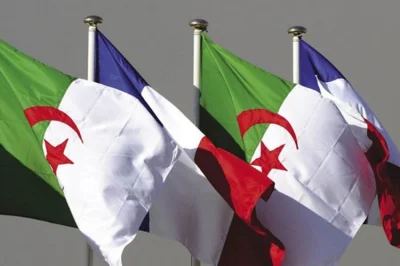
After months of refusal and fleeing forward, French authorities have leaned toward the option of de-escalation with Algeria, hoping to dismantle mines obstructing the restoration of normal bilateral relations, since French President, Emmanuel Macron, decided nearly two years ago to bias flagrantly toward the Moroccan regime regarding the Western Sahara issue, despite his awareness of the sensitivity of this file for Algeria. In an unexpected position, the French prosecutor surprised the defense team and judges by requesting the release of the Algerian consular agent, who has been in prison in France outside of diplomatic and consular norms for over a year, on the grounds that his continued imprisonment “is no longer useful in reaching the truth”, which was considered a shift in this case that has prevented progress in bilateral relations despite mutual official visits between officials of the two countries. Based on what was reported by the French newspaper “Le Monde”, the request from the National Anti-Terrorism Prosecutor’s Office came following a release request submitted by defense lawyers, which was considered, according to the newspaper, a “clear retreat” in the prosecution’s position on this case, as the Anti-Terrorism Prosecutor’s Office had until now rejected all requests to release the consular employee. The newspaper questioned whether this data is considered a “new flexibility linked to efforts made behind the scenes between Paris and Algeria to resolve the crisis and secure the release of the French journalist, Christophe Gleizes, whom the Algerian authorities have refused to pardon to this day”, despite the preparation of conditions for that, according to the French narrative. Until now, the liberties and detention judge in charge of the Algerian consular employee’s case still refuses to release him, as happened in the session on June 18, but the refusal decision was appealed, and the decision is to be issued in a session held before July 13, according to “Le Monde” sources. Until recently, French officials justified the continued imprisonment of the Algerian consular employee, who was imprisoned in a plot orchestrated by former French Interior Minister, Bruno Retailleau, on April 12, 2025, by the independence of justice, a justification that did not convince the Algerian side, which insisted on the corruption of the procedures for imprisoning the consular employee who fell victim to the enmity of French political parties trying to employ the crisis with Algeria to achieve political and electoral gains. French leaks talk about signs of a French offer for a swap between the Algerian consular employee and the French journalist who is serving a seven-year prison sentence in a case related to supporting and praising terrorism, which collapses the narrative of French officials who argued for a long time about the independence of French justice, which proved false over time after the shift that occurred in the recent French prosecution position. Perhaps what reinforces this approach is that the organization “Reporters Without Borders” picked up on the change in the French prosecution’s position on the case of the Algerian consular employee and the demand for the release of the French journalist, whose fate remains hanging on the decision of French justice. According to what was reported by “Le Monde”, the French side became convinced that the continued imprisonment of the Algerian consular employee is considered a major obstacle to any normalization of relations between the two countries, rather it destroyed any hope for a pardon for the sports journalist Christophe Gleizes, for whom all Paris’s efforts to obtain a pardon failed, and some French practices even increased the complexity of his situation by trying to internationalize his case by involving the International Federation of Association Football in provoking Algeria. In the view of observers, the Algerian toughness in dealing with Paris’s pleas to release the French journalist is what pushed the French government to pressure “independent” justice in order to search for a solution that ends the imprisonment of the consular employee and his return to his family in Algeria. This is clearly evident through the timing of the French prosecution’s leaning toward requesting the release of the consular employee, which coincides with Independence Day in Algeria (July 5), on which the President of the Republic, Mr. Abdelmadjid Tebboune, usually issues pardons for prisoners. However, in light of the French side’s hesitation in releasing the consular employee, it is unlikely that a pardon will be issued for Christophe Gleizes on the occasion of Independence Day, because trust is lost between the two sides, and keeping the Algerian national without full release by depriving him of returning to his family will also apply to the French prisoner, who is not unlikely to receive the same treatment, meaning ending the procedures on both sides regardless of the justifications of the French side, which argues for the completion of litigation procedures for the French national, unlike the Algerian national. In a related context, the investigative newspaper “Mediapart” quoted a French diplomatic source expressing pessimism about the restoration of relations between Algeria and Paris due to their specific nature. It pointed out that the decision of French President, Emmanuel Macron, regarding the Western Sahara issue, caused an earthquake that almost led to a diplomatic rupture, and brought back to the forefront a series of sensitive files that diplomacy between Algeria and France was trying to hide, most notably the somber colonial legacy and historical memory.
🏴 Nabil Bentaleb played the full 90 minutes as Newcastle cruised to the 4-1 win over Bournemouth, playing in a defensive midfielder role, the Algeria international had a solid game, completing 48 passes, including 2 key passes #NUFC pic.twitter.com/JI7onTssNy Algeria FC (@Algeria_FC) July 1, 2020
The Position On Western Sahara Has Broken The Back Of Bilateral Relations
The French press focused prominently on the statements of President Abdelmadjid Tebboune in response to the storm caused by the recent remarks of the French ambassador to Algeria, Stéphane Romatet, considering what is happening at the level of bilateral relations to be a new episode in the series of tensions that characterize the Algiers-Paris axis, while it was notable that the subject was ignored by the majority of right-wing and far-right outlets, which used to hold talk shows and interviews to insult Algeria and Algerians. In this regard, the leading news channel in France, “TF1”, while reporting President Tebboune’s statements on its website, described what is happening between the two countries as a “new episode that comes after a deep crisis in which tensions escalated between Paris and Algiers in the summer of 2024 when France expressed its support for the autonomy plan under the (alleged) sovereignty of Morocco over the disputed territory of Western Sahara”, which caused Algeria to withdraw its ambassador from Paris, in a decision that served as a prelude to a series of events that further strained relations between the two countries. It noted that one of the most prominent episodes of this escalation was the decision of the Algerian authorities last March to enact a law criminalizing the heinous practices of French colonialism in Algeria, a text that holds the French state “legally responsible for its colonial past in Algeria and the tragedies it caused”. The leftist-leaning newspaper “Libération” paved the way for President Tebboune’s statements with an introduction reviewing the difficult stages bilateral relations have passed through, saying they have been “characterized by historical complexity since independence in 1962”, and noting that the future of these relations seemed to be in better shape after Emmanuel Macron described French colonialism as a “crime against humanity” and expressed his desire to “turn the page on the past”. However, the newspaper pointed out that “the visa crisis in 2021, followed by France’s recognition of (alleged) Moroccan sovereignty over Western Sahara in July 2024, ended this period of improvement”, before the crisis worsened with the arrest of the French writer of Algerian origin, Boualem Sansal, and the explosion of the crisis regarding the deportation of Algerians present on French soil illegally, as well as the arrest of Algerian consular employees in France, according to the same source. For their part, both the private news channel “BFMTV” and the “France 24″channel, which is affiliated with the French Ministry of Foreign Affairs, focused on their websites on President Tebboune’s statements, which set the record straight and contributed to ending the political and media debate in Paris regarding Algeria, which had given some the impression of Algerian suggestions regarding visas. The same source noted that what is happening is merely an episode in a “deep crisis” that exploded in the summer of 2024 between France and Algeria, when Paris offered its support for an autonomy plan under the (alleged) sovereignty of the Moroccan regime regarding the disputed territory in Western Sahara, causing Algeria to recall its ambassador, who has not yet returned to his post. Added to this, according to “France 24”, is an old crisis dating back to the remnants of the colonial era, which Paris has been unable to overcome due to the inability of successive French presidents to rid themselves of the Algeria complex, which seems to still be entrenched in the gears of the deep state in Paris, leading Algeria to respond by enacting a law criminalizing the practices of French colonialism in Algeria after years of hesitation for political considerations. What is striking is that many outlets and channels associated with the far-right, such as “Le Figaro”, “CNews”, and “Europe 1”, which are accustomed to delving into every small and large detail related to Algeria, did not address the statements of President Abdelmadjid Tebboune, which seem to have caused them embarrassment due to the absolute denial of any Algerian role in that French political and media storm. Furthermore, many newspapers and websites covered the President of the Republic’s statements from a news perspective, quoting the “Agence France-Presse” (AFP), in what appeared to be an indication of directives from certain parties keen not to push matters toward further media deterioration.
🇩🇿 Ramy Bensebaini in #Bundesliga this season: 👕 9 appearances ⚽️ 4 goals 1-0 vs Augsburg✅ 2-0 vs Paderborn✅ 2-1 vs Bayern Munich✅ 4-2 vs Freiburg✅ 3-1 vs Werder Bremen✅ 5-1 vs Augsburg✅ 1-0 vs Koln✅ 0-0 vs Hertha Berlin🟡 1-2 vs Wolfsburg✖️ Another Paradou product 💪 pic.twitter.com/CmHSHomcjr Algeria FC (@Algeria_FC) February 29, 2020
Du stade in situ à la forme invasive : décryptage des multiples formes du cancer du sein
La complexité du cancer du sein réside dans sa diversité biologique. Il ne s’agit pas d’une pathologie unique, mais d’un ensemble de maladies distinctes aux […] L’article Du stade in situ à la forme invasive : décryptage des multiples formes du cancer du sein est apparu en premier sur .

French Foreign Minister To A Le Pen’s Party MP: “You Are Obsessed With Algeria”
Algeria was dragged early into the propaganda campaign of the French far-right in anticipation of the upcoming presidential elections, causing trouble for Emmanuel Macron’s administration, which rushed through its Foreign Minister, Jean-Noel Barrot, to accuse this political current of being “obsessed with Algeria”, in response to a parliamentary question regarding recent statements by the French ambassador about the number of visas granted to Algerians. Despite admitting to reducing the number by 20%, the French government, under pressure from deputies of Marine Le Pen’s extremist party, rushed to distance itself from the decline in the number of visas granted to Algerians, and attempted to justify this decline by the repercussions of the political and diplomatic crisis that has plagued bilateral relations since 2024, and the resulting mutual expulsion of consular staff. In a premature election campaign on the backs of Algerians, Edwige Diaz, a member of Parliament and vice-president of the National Rally party, claimed in her question to the French Foreign Minister “that 40% of Algerians over the age of 15 do not work, do not study, and are not retired”, and represent “43% of those who receive medical care at the expense of the French government”. The French minister perceived an unjustified prejudice by the vice-president of the National Rally party against Algerians, responding to her by saying: “You are obsessed with Algeria and Algerians…”, he also defended the steps being taken by the French government regarding pending issues with Algeria, including the case of the citizen Christophe Gleizes, who is serving a seven-year prison sentence due to his involvement in cases related to supporting and praising terrorism. In the briefing provided by the French Foreign Minister, Jean-Noel Barrot, last Tuesday before the members of the French National Assembly (the lower house of parliament), he said that the number of visas granted to Algerians decreased by 20% since 2024, which corresponds to the beginning of the crisis caused by the French President, Emmanuel Macron, by his decision to support the Moroccan regime’s occupation of Western Sahara. Jean-Noel Barrot explained: “Regarding the issue of visas, I would like to start by saying that since the outbreak of the crisis with Algeria, the issuance of visas has decreased by 20%, last year compared to the year before, and this is primarily due to the restrictions imposed by the Algerian government on our diplomatic network”. The French official added: “Since then, we have engaged in a new dynamic with the Algerian authorities, in the service of the interests of France and its people, as we have interests to defend in matters of migration, security, and the fight against drug trafficking and terrorism. There are no specific numerical targets, as our policy is not based on quantity or quotas, but on assessing how to protect our interests. Re-engaging with Algeria is a gradual and reversible process, and depends on the results we achieve”. The head of French diplomacy attributed this decrease in granting visas to what he described as “the strict decisions taken by the Algerian government against our diplomatic network. But apart from that, we have not set specific numerical targets. Our policy is not based on quantity or quotas, but on an assessment of our interests and the evolving relationship”. The percentage of decline in the number of visas granted to Algerians constitutes one-fifth of the total number, as the number decreased from 250,000 visas per year to only 200,000, which is a large figure that cannot be justified by the expulsion of a number of French consular staff working in Algeria, or by the withdrawal of the French ambassador, because the three consulates (Algiers, Annaba, and Oran) continued their work normally without harassment. Confirming the lack of credibility of those statements, the French President, Emmanuel Macron, had previously called for reducing the number of visas granted to Algeria by 30%, before the outbreak of the crisis over the French position on the Western Sahara issue, which indicates that the justifications provided by the master of the “Quai d’Orsay” palace remain mere words.
Algeria And Spain Officially Turn The Page On The Crisis Following Sanchez’s Visit To Algeria
Algerian-Spanish relations are heading towards further strengthening after the visit led by the President of the Madrid Government, Pedro Sanchez, on Monday to Algeria, thereby formalizing the end of a short-lived crisis between the two countries. These developments occurred in a context characterized by Algeria bolstering its relations with major European countries such as Germany, alongside a noticeable deterioration in the relationship with France. Less than a decade ago, relations between Algeria and Paris were ahead of other European capitals, and at that time, French interests were prioritized over those of other European Union member states. However, the acceleration of events since 2019 shuffled the deck in a scene where the data was turned upside down due to what the Algerian side considers repeated French provocations that counter Algeria’s geopolitical interests. This factor contributed to reaching the current situation, marked by the Algerian authorities’ decision to restructure their foreign policy to accommodate their vital interests. Hence came the vitality characterizing Algeria’s relations with its European neighbors, and the visit of the Spanish Prime Minister is but one stage of this new orientation. In the view of the diplomat and former official at the Ministry of Foreign Affairs, Mustapha Zeghlache, Pedro Sanchez’s visit to Algeria is considered a culmination of the two countries’ success in overcoming a crisis that proved over time to be fleeting. The Sahrawi issue was at the heart of that crisis, which has become a thing of the past with President Abdelmadjid Tebboune’s announcement of preparations to hold the 8th session of the Algerian-Spanish High-Level Meeting next October. The Spanish government’s decision to support the autonomy plan in Western Sahara triggered the dispute between the two countries in 2022. However, the Spanish side, which was under great pressure from the Moroccan regime (referring to opening access points for illegal migrants), according to Mustapha Zeghlache, knew how to get out of that predicament after it later decided to bind the Spanish decision to what international laws and norms dictate, unlike other neighboring countries that still view the autonomy plan submitted by the Moroccan regime in 2007 as the one and only solution, bypassing the relevant United Nations resolution. Mr. Mustapha Zeghlache told “Echorouk” that “some are trying to cast doubt on the Spanish position regarding the Sahrawi issue and are trying to target relations with it, but Madrid’s position on this issue has become clear and stable for some time. It has confirmed on more than one occasion that it stands with international legitimacy and relevant UN resolutions, and that it does not view autonomy as the only solution, which is a balanced position that cannot be disparaged.” The retired diplomat believes that the Spanish side’s position involves a great deal of moderation and rationality, which contributed to lowering tensions. This led to limiting the repercussions of the diplomatic rupture on commercial and economic relations, from which both sides suffered but to varying degrees. He noted that Spain will gain much, just as Italy and Germany did before it, from this rapprochement, because the potential Algeria possesses and the privileges it offers to its reliable European partners (the three countries), especially after the Russian war on Ukraine, cannot be provided by any other country in North Africa, and herein lies Algeria’s uniqueness. The biggest loser in the equation of Algerian rapprochement with major EU countries remains France, which placed all its eggs in the Moroccan regime’s basket. Mr. Mustapha Zeghlache noted the significant decline of French interests in Algeria with the emergence of new competitors such as China, Germany, Italy, Turkey, and Spain. This is likely to make Paris lose some of the privileges its companies enjoyed in Algeria compared to companies from other European countries, while conceding that not much remains of the relations between Algeria and Paris except for the human aspect, referring to social ties (the Algerian community), which are considered remnants of the colonial era. Due to French positions with uncalculated consequences, Mustapha Zeghlache did not rule out that Paris would suffer the loss of its remaining interests in Algeria, which are no longer beyond the energy sector, which Italy, Spain, and Germany seem to have monopolized, taking advantage of the specific circumstances. This is a reality the French side bears, as it did not play the de-escalation card well, which is no longer on the agenda for the time being, with the return of French provocations starting from the statements of the French Prime minister, Sebastien Lecornu, from Rabat last week regarding the Sahrawi issue.
« 30 milliards d’euros d’échanges » : Voici le client n°1 du Made in Algeria
La scène internationale s’ouvre de plus en plus aux produits algériens. Dans une récente publication, l’Ambassade d’Autriche à Alger a mis en lumière la dynamique […] L’article « 30 milliards d’euros d’échanges » : Voici le client n°1 du Made in Algeria est apparu en premier sur .