
البحث
20 نتيجة لـ "algeria-sonatrach-and-chevron-sign-agreement-to-develop-hydrocarbon-resources-in-south-2007964ar"
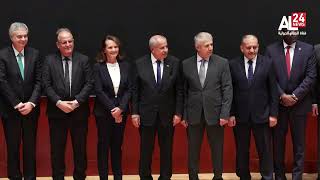
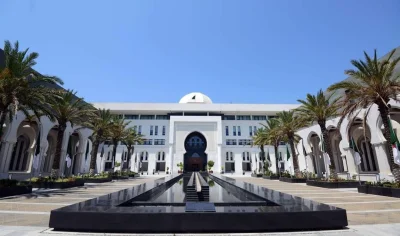
Algeria Welcomes US-Iran Agreement to Halt Military Operations in the Gulf and Middle East
Algiers — Algeria has welcomed the framework agreement reached between the United States of America and the Islamic Republic of Iran aimed at halting military operations in the Gulf region and the broader Middle East, describing the development as a positive step toward reducing tensions and promoting regional stability. In a statement issued on Monday, […] The post Algeria Welcomes US-Iran Agreement to Halt Military Operations in the Gulf and Middle East appeared first on الشروق أونلاين .

Algeria Eyes $25 Billion Investment to Build a World-Class Hydrogen Industry by 2040
A recent report by the Energy Research Unit has revealed that Algeria will require approximately $25 billion in investments to develop its hydrogen sector and achieve its 2040 targets, enabling the country to produce up to 1.2 million tonnes of green hydrogen annually for export. According to the report, Algeria’s hydrogen strategy is built on a dual-track approach. The first focuses on producing green hydrogen using renewable energy sources, while the second aims to develop blue hydrogen from natural gas, supported by carbon capture and storage (CCS) technologies. This strategy leverages Algeria’s abundant natural gas reserves while accelerating its transition toward a low-carbon energy future. شاهد المحتوى كاملا على الشروق أونلاين

Stellantis investit 3 milliards en Afrique du Sud et crée une usine de pointe
Stellantis has confirmed its intention to develop a greenfield manufacturing facility in Coega in South Africa with the Industrial Development Corporation (IDC) and the Department of Trade, Industry and Competition ( the dtic ). Minister Ebrahim Patel, senior officials from the IDC and Mr. Samir Cherfan, Stellantis Middle East and Africa Chief Operating Officer met at the Parliament Buildings in Cape Town to agree on investment in the South African motor industry. “It is a wonderful day for all South Africans when a global company of Stellantis’ proportions decides to expand its manufacturing footprint in South Africa, to assemble completely knocked down units,” said Mr. Ebrahim Patel, Minister of Trade, Industry and Competition. “South Africa currently has the capacity to produce close to 700 000 vehicles annually. This will add considerable additional capacity, just as we prepare to implement the African Continental Free Trade Area. The country remains a great investment destination and this commitment from Stellantis to invest in our local motor industry highlights the success of our manufacturing sector policy, its capability and potential. We look forward to welcoming Stellantis to South Africa and sharing in the detailed plan for employment and investment”. “We are delighted with the speed at which we are progressing on this project, thanks to the commitment of Minister Patel and the great collaboration with IDC, CDC and dtic teams,” commented Samir Cherfan-Chief Operating Officer Stellantis Middle East and Africa. “This project reflects our focus and trust in South Africa as one of the most important markets in Africa & Middle East. It is also the execution of our Dare Forward 2030 Strategy to reach over 22% Market Share in the region by 2030 with 70% regional localization of our sales leading to over 1 million units produced. We believe in South Africa and we intend to develop industrially and commercially bringing value to our customers”. The manufacturing plant will be built in the South African Special Economic Zone (SEZ) in Coega situated near Gqeberha in the Eastern Cape province of South Africa. The greenfield manufacturing project is planned to complete by the end of 2025. The first launch planned early 2026 is a 1 T pick-up truck with volumes expected to reach up to 50,000 completely knocked down (CKD's) units annually including export, in line with the industry masterplan, known as the Automotive Production Development Program (APDP). The plant will be predisposed in terms of space and painting to go up to 90K units / year. Direct employment to support the first capacity step is expected at 1000 jobs. Stellantis will be massively investing in over 500 000 hours in training and skills to develop and support the local teams to the level of global standards. We are targeting a localization rate over 30%. “The Coega Development Corporation (CDC) is enthralled for Stellantis to have chosen the proposed site in Coega for their Southern African manufacturing operations. Joining other major manufacturers in the area makes the Coega region the primary automotive hub in the country. The investment in the plant, employment, training and skills transfer will certainly benefit the region tremendously. “This is a much needed and welcomed economic boost for the Eastern Cape Province with an anticipated economy wide impact on the province’s GDP of R 664 million. Household income is anticipated to increase to R558.4 million within the Nelson Mandela Bay Municipality (NMBM) and R577.4 million for the entire Province. Most importantly, an anticipated 1800 jobs will be created in the Metro and around 2 097 for the EC Province,” said Khwezi Tiya, CEO the CDC. Stellantis continues to work closely with the IDC in developing a viable joint venture (JV) partnership that will be evaluated by appropriate credit committees. “Stellantis’ success with similar manufacturing plants around the world is well-known and our planned JV with Stellantis to build another greenfield plant in South Africa is progressing well. The investment is in line with IDC’s intent to drive investment that supports the development of the regional automobile value chain,” said Mr. TP Nchocho, CEO of the CP.

Has the Undeclared Truce Between Algeria And Paris Ended?
The Algerian side was forced to come out with affirmations that helped put many dots on the i’s, regarding what has been raised for over a week of debate among some French officials, in which Algeria was implicated, through the words of more than one official in the government of Sébastien Lecornu, and concluded with the Élysée Palace entering the fray / The Algerian clarification came from President Abdelmadjid Tebboune, in a video clip on the Presidency of the Republic account on the “Facebook” platform, through which he confirmed that he had never requested a visa “quota”. He said: “I emphasize three things to Algerians before our French friends, that the Algerian President never requested a ‘quota’ for visas or a certain number of visas, rather we never talked about this file at all. Also, I never requested an apology or compensations”, from the French side. For over a week, Algeria was dragged into discussions among the French against its will, and members of the French government excelled in giving the impression that Algeria had entered into discussions or negotiations with Paris to increase the number of visas, since the interview given by the French Ambassador to Algeria, Stéphane Romatet, through which he expressed his hope to increase the number of visas for Algerians to reach 250,000. This interview left a strange stir within French political circles, which was fueled by ministers in the current government, such as Naïma Moutchou, Minister of Overseas Territories, and the Minister Delegate to the Ministry of Foreign Affairs, in charge of Europe, Benjamin Haddad, and Foreign Minister Jean-Noël Barrot, and the matter even reached the Élysée Palace, which discussed the issue in the Council of Ministers meeting last Wednesday, during which Emmanuel Macron tasked the French government spokesperson, Maud Bregeon, with emphasizing that France “will not falter” on the visa file, in a hostile and gratuitous stance. Despite the Algerian side’s commitment to silence to avoid fueling political bickering, however, with the recurrence of provocative statements by French officials, it was forced to clarify that the matter is nothing more than a storm fabricated by the French in which they drowned, and that Algeria has no role in it, as stated by President Abdelmadjid Tebboune. So, are we facing the end of the undeclared truce between Algeria and Paris, which began with the visit of the French Interior Minister, Laurent Nuñez, in February 2026, and was followed by other visits by French officials, such as the Minister of Justice, Keeper of the Seals, Gérald Moussa Darmanin last May, and before him in the same month, the Minister Delegate to the French Ministry of the Armed Forces, Alice Rufo. Commenting on what is happening at the level of relations between Algeria and France these days, a former official at the Ministry of Foreign Affairs believes that the two countries have not been able to turn the page on accumulated differences enough to build on them in order to overcome the crisis, and confirmed that French intransigence in some files cannot lead to a result that satisfies both parties. The diplomatic source said in a statement to “Echorouk” that “relations between Algeria and Paris have not improved in a way that allows them to develop, because the French side sought in an excessively pragmatic way to obtain what it was looking for, in exchange for ignoring Algerian demands that cannot be compromised in any peer-to-peer relations”. He pointed out here that the visits of French ministers to Algeria had a clear goal, which was to seek gains in terms of migration, security information exchange, and restoring cooperation in this framework, embodied by the visit of Interior Minister Laurent Nuñez, as well as fighting organized crime, embodied by the visit of Justice Minister Gérald Moussa Darmanin, which are visits that have not resulted in anything tangible so far, due to the French side’s lack of commitment to the concerns raised by the Algerian side, such as recovering looted funds and handing over those involved and wanted by Algerian justice. The latter noted that the visa card played by the French side cannot be considered an effective card, because it is only on the table with Paris, while Algerians can resort to other options in the Schengen area which are available as he said, by virtue of the quality of Algeria’s relations with other European countries in the Schengen area, which led him to say that “French intransigence cannot bring any benefit”. The source expected that bilateral relations would gradually overcome their crisis in the future, while observers believe that the differences may extend until the end of French President Emmanuel Macron’s term, which ends next spring at the earliest.

German Auto Delegation Explores Algeria’s Growing Automotive Industry
The German delegation specializing in the automotive industry concluded its three-day visit to Algeria on Wednesday evening, following a program that spanned Algiers and Oran and highlighted the country’s accelerating ambitions in vehicle manufacturing and industrial integration. During the visit, the delegation met with approximately 135 Algerian professionals active in the automotive and auto parts sectors. Most participants expressed strong interest in establishing partnerships and cooperation with German companies. The delegation was also received by officials from Algeria’s Ministry of Industry and was briefed on the government’s strategy to develop the automotive sector. Delegates later toured industrial facilities to assess Algeria’s progress firsthand, including visits to the Fiat manufacturing plant and two component factories in Oran, western Algeria, specializing in electrical systems and exhaust technologies. According to presentations delivered by Stellantis Algeria officials, the local supplier ecosystem currently includes 22 subcontractors working directly with the company and 16 operators in after-sales services. Local integration rates have already exceeded 20% and are expected to rise to 30% before the end of the year. Rachid Bakhchi, President of the Western Algeria Subcontracting and Partnership Exchange, told Echorouk that the visit reflected growing interest among German manufacturers in the Algerian market, particularly as Algeria’s automotive and component industries undergo significant transformation. Bakhchi added that the visit began with an Automotive Industry Business Day held in Algiers last Sunday, organized by the Algerian-German Chamber of Industry and Commerce (AHK) in cooperation with the Subcontracting and Partnership Exchange and the presence of the German delegation. The event attracted nearly 135 Algerian participants—exceeding expectations—driven by strong interest from local companies seeking direct engagement with German counterparts and opportunities for investment and industrial cooperation. Strong Participation Signals Growing Interest The opening session was attended by Oliver Blank, Director General of the Algerian-German Chamber of Industry and Commerce, alongside Germany’s Deputy Minister for Economic Affairs at the German Embassy in Algiers and senior German officials, underscoring Berlin’s commitment to expanding industrial cooperation with Algeria. Throughout the business forum, the Algerian Investment Promotion Agency presented an overview of the country’s business climate and investment opportunities in the automotive sector. Meanwhile, the Automotive Subcontracting Committee of the Algerian Economic Renewal Council (CREA) outlined the current state of the industry and its future outlook. Seven German companies also presented their industrial expertise, technologies, and partnership proposals for collaboration with Algerian firms. Algeria Positions Itself as an Emerging Industrial Hub Bakhchi noted that the Subcontracting and Partnership Exchange introduced participants to Algeria’s industrial subcontracting framework and its role in building an integrated automotive industry. He emphasized that the message delivered to German investors was clear: Algeria has become a genuine investment destination. Foreign companies are entering the market following careful assessment of its opportunities and industrial potential, positioning the country as an emerging platform for broader manufacturing development. Fiat Algeria also presented its experience since launching operations, highlighting the factory’s expansion and job creation potential as a strategic industrial project. Additionally, one of Stellantis’ local suppliers specializing in electrical wiring systems shared its experience working within the company’s supply chain and contributing to higher local integration rates. Industrial Progress Observed Firsthand in Oran At the conclusion of the Algiers program, the German delegation met with senior officials from Algeria’s Ministry of Industry, including the Director General for SMEs and the Director General for Industrial Development, who presented the government’s roadmap for strengthening vehicle manufacturing and attracting foreign investment. On Monday evening, the delegation traveled to Oran, where the first stop was the Fiat plant. Delegates toured production lines and observed the various manufacturing stages, gaining direct insight into Algeria’s advances in automotive production. They also visited the section dedicated to locally manufactured components. Stellantis representatives explained that the company currently works with 22 local suppliers and 16 after-sales service partners, while local integration has surpassed 20% and is projected to reach 30% by year-end. The delegation also visited Aptiv’s facility, which specializes in electrical cable manufacturing. Visitors observed the full production cycle—from raw material processing to final assembly—as well as quality-control laboratories and development systems designed to meet international standards. Delegates expressed particular appreciation for the scale of the workforce, the number of technicians and engineers, and the company’s strong emphasis on training and workforce development. The tour included the company’s training center, which prepares young people from the region and develops qualified labor not only for the factory itself but also for other cable manufacturing facilities. Bakhchi described the initiative as a successful example of the broader economic and social impact of major industrial projects in job creation and skills transfer. German Investment Expands Beyond Vehicle Assembly The final stop of the visit was the Reichhart logistik plant—an existing German investment in Algeria currently preparing for production launch. Delegates reviewed the installation of industrial equipment ahead of manufacturing operations. The facility is expected to begin supplying components to Stellantis starting next year. According to Bakhchi, the German delegation left Algeria with highly positive impressions after witnessing firsthand the transformation taking place in the country’s industrial sector. He said the visit had opened new prospects for expanding industrial partnerships and attracting additional German investment into automotive manufacturing and component production. The delegation included representatives from several leading industrial and technology companies active across the automotive value chain, including specialists in industrial materials, vehicle engineering and development, industrial systems, logistics, tooling technologies, and automotive expertise. The German delegation included representatives from several leading industrial and technology companies operating across the automotive value chain. Participants included Allod Werkstoff, specializing in industrial materials; AVL Germany, focused on vehicle engineering and development; Compound Engineering; INFICON International; the LMT Group – Fette Compacting; LMT Tools Systems; Moviniti GmbH; Reichhart Logistik; and Tech Solution, in addition to representatives from the Automotive Experts Circle of the Algerian-German Chamber of Industry and Commerce. Participating companies held business-to-business (B2B) meetings with Algerian operators to explore investment opportunities, industrial partnerships, technology transfer, and expertise exchange in automotive manufacturing and components production. Bakhchi concluded that this visit represents only the first phase of bilateral cooperation. The next stage will involve additional B2B meetings between German and Algerian economic operators aimed at deepening discussions initiated during the visit and converting early contacts into concrete investment projects—particularly in subcontracting, automotive components manufacturing, and transferring technology and industrial know-how to Algeria.
Possibility Of Harking To The 2015 Peace And Reconciliation Agreement Exists
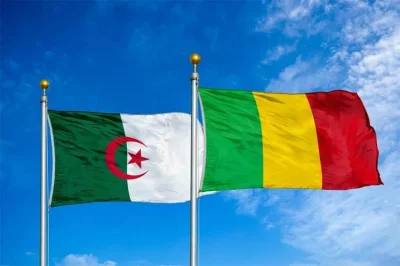
Researchers and specialists in Mali considered overcoming the previous diplomatic tension between Algeria and Mali, which was consolidated by the announcement of the return of the two countries’ ambassadors to their work and the lifting of the ban on closed airspace to the aircraft of both states, as a re-establishment of a “brotherly neighboring relationship rooted deep in history”, noting the role Algeria has played since the beginning of the 1960s until today in helping Malians solve their problems. Malian political analyst Ibrahim Djogourga did not rule out the possibility of the ruling Transitional Military Council in Bamako agreeing to return to working with the Peace and Reconciliation Agreement signed between the Malian state and the northern Azawad opposition factions, which was among the reasons that contributed to the tension in relations between Algeria and Mali. شاهد المحتوى كاملا على الشروق أونلاين
Russia Calls on Mali to Revive the 2015 Algiers Peace and Reconciliation Accord
The unexpected diplomatic reconciliation between Algeria and Mali continues to attract attention and spark interest among observers because of its implications for the security situation in the strategically sensitive Sahel region, which has become an arena for competition among major powers seeking to expand their influence in the former colonies of a weakened French state. France appears to have been among the countries most unsettled by the rapprochement, which is seen as running counter to Paris’s interests in the region. French officials had reportedly counted on their ally, the Moroccan regime, to maintain strained relations with the regimes of the Sahel. However, the sudden reconciliation between Algeria and Mali disrupted those calculations, prompting French policymakers to examine the circumstances behind the breakthrough and reassess their approach in light of the changing regional dynamics. According to an investigation by the French newspaper Le Monde, the reconciliation dealt a significant blow to France’s already diminished presence in the Sahel. The restoration of ties between Algeria and Mali is viewed as strengthening Algerian influence alongside that of Russia, further eroding France’s traditional role in a region long regarded as strategically important to Paris. Citing unnamed sources, Le Monde reported that the de-escalation between Algiers and Bamako has also helped stabilize Russia’s position in Mali and the wider region. Following setbacks suffered by the Russian Africa Corps—which has been supporting the Malian armed forces since last spring—Moscow reportedly concluded that resolving the crisis would require Algeria to play a central role, given its longstanding ability to influence the conflict and its repeated mediation efforts over several decades. Russian authorities have ultimately come to believe that the conflict in Mali cannot be brought to an end without reviving the 2015 Algiers Peace and Reconciliation Agreement, signed under United Nations auspices and facilitated by Algeria. The conclusion reportedly reflects growing recognition that a purely military solution is unlikely to succeed—an assessment Algeria has consistently advocated. Le Monde quoted a source in Mali as saying that Russian Foreign Minister Sergey Lavrov reiterated this position during a summit with his counterparts from the Sahel states in Niamey, Niger, on July 8—two days before the reconciliation with Algeria was publicly announced. Lavrov told the ministers that “a purely military solution is not a good solution” and that “Mali needs reconciliation with Algeria.” The reported shift in both Russian and Malian positions is said to have followed a series of military setbacks suffered by the Africa Corps and Malian regular forces since last spring during fighting on the outskirts of Bamako. The clashes reportedly resulted in the deaths of Mali’s defense minister and intelligence chief. Fighting resumed earlier this month across several cities in central, northern, and northeastern Mali, with armed opposition groups capturing a number of towns and taking control of strategic routes leading to major urban centers such as Timbuktu. Commenting on these developments, Toufik Bougaada, a professor of political science and international relations at the University of Algiers 3, argued that if Le Monde’s reporting is accurate, Moscow’s renewed interest in the peace agreement reflects a recognition that continued instability in Mali undermines Russia’s own regional interests. He suggested that a prolonged conflict would impose mounting costs on both the Russian Africa Corps and the Malian armed forces. Bougaada noted that the Algiers Agreement, brokered under UN auspices, had contributed to stability in northern Mali. However, he argued that its provisions were never fully implemented, particularly following the political changes in Bamako after the military coups that began in 2020, which disrupted efforts to carry out the accord. He further suggested that Russia may have gradually concluded that Algeria—drawing on decades of experience mediating between the Azawad movements in northern Mali and successive governments in Bamako—is uniquely positioned to bridge the divide between the Malian authorities and the Tuareg-led opposition. Algeria has sponsored a series of peace initiatives dating back to the 1960s, including the 1991 accords and culminating in the 2015 Accord for Peace and Reconciliation in Mali. According to Bougaada, Algeria remains the only actor capable of helping resolve the deep political disagreements between the Malian government and the Azawad movements, which seek greater participation in state governance as well as a more equitable distribution of national wealth and development resources. He concluded that the reconciliation reached approximately a week ago between Algeria and Mali was ultimately predictable given the failure of an exclusively security-based approach to a crisis rooted in political grievances. In his view, the Malian conflict should have been addressed through dialogue from the outset, building on the lessons of previous crises that were ultimately resolved through negotiation rather than military force.
French Minister of Moroccan Origin Risk Deepening Tensions with Algeria
The French government has found itself embroiled in yet another political controversy, this time triggered by reckless and irresponsible remarks made by Overseas Territories Minister Naïma Moutchou, who also holds Moroccan citizenship. In a striking stance for a member of the French government. Moutchou called for distinguishing between the Algerian people and the Algerian government—a political and diplomatic misstep that is likely to further strain already troubled bilateral relations. Speaking on a talk show broadcast jointly by CNews and Europe 1 on Tuesday, July 21, 2026, Moutchou was asked about “the dispute with Algeria” in relation to immigration. She replied: “I don’t like that characterization because it lumps the Algerian people together with the Algerian government. I prefer to use the term “the Algerian regime”,referring to the issue of undocumented Algerian migrants. Moutchou originated from Ouarzazate, in southern Morocco, and holds both Moroccan and French citizenship. This dual nationality raises questions about her remarks on Algeria, suggesting they could have been influenced (misinformation) by the Moroccan regime, whose diplomatic relations with Algeria remain severed. The French minister of Moroccan origin also rejected comments made by France’s ambassador to Algeria, Stéphane Romatet, who had spoken of plans to increase the number of visas issued to Algerian nationals to 250,000 annually. Moutchou dismissed those remarks, saying they reflected the ambassador’s own views rather than any policy under consideration by the French government. Although she distanced herself from the agenda pursued by former right-wing Interior Minister Bruno Retailleau, arguing that it had proven unsuccessful, Moutchou did not rule out a return to a tougher approach in relations with Algeria. In doing so, she appeared to go beyond the more conciliatory rhetoric adopted by other ministers in Prime Minister Sébastien Lecornu’s government. She also referred to negotiations with Algeria extending beyond the readmission of Algerian nationals facing deportation from France to include the revision of the 1968 Franco-Algerian migration agreement. The article argues that Moutchou’s remarks closely mirrored recent attacks on the French ambassador to Algeria following his comments on visa policy. Far-right leader Marine Le Pen, National Rally president Jordan Bardella, and Bruno Retailleau, leader of the Republicans party, had accused President Emmanuel Macron’s administration of yielding to Algeria. Those criticisms also prompted Benjamin Haddad, France’s Minister Delegate for Europe, to publicly distance himself from Ambassador Romatet’s remarks. In an interview with LCI, Haddad likewise rejected the ambassador’s statements, saying: “Let’s be clear: there are no numerical targets, quotas or defined roadmap regarding visas currently under discussion. As for Algeria, we have one of our citizens, Christophe Gleizes, who must be reunited with his family. Those are the clear priorities guiding our relationship with Algeria.” The French official also sought to avoid questions about whether the ambassador might face disciplinary action over his visa comments, instead emphasizing broad policy objectives such as defending France’s interests pragmatically, deporting undocumented migrants, combating drug trafficking, securing the release of Christophe Gleizes, and strengthening cooperation on security matters. For the first time in months a minister in Sébastien Lecornu’s government has made remarks viewed as provocative toward Algeria. The government had previously identified de-escalation as one of its priorities, abandoning the hard-line approach associated with the previous interior minister under the now-defunct François Bayrou government, suggesting that France may now be entering a new phase of escalation unless it chooses to distance itself from Moutchou’s comments. Moutchou’s statements were a blatant interference in Algeria’s internal affairs—an issue that has frequently provoked strong reactions from Algerian authorities. Her Moroccan nationality is likely to intensify that reaction, potentially leading to another setback in bilateral relations. Her remarks came at a time when Algeria has been strengthening ties with European countries seen as rivals to France, including Germany and Spain, following earlier progress with Italy, suggesting that Moutchou’s comments could be interpreted as a sign of French frustration, although it is France itself who chose to align with the Moroccan regime.
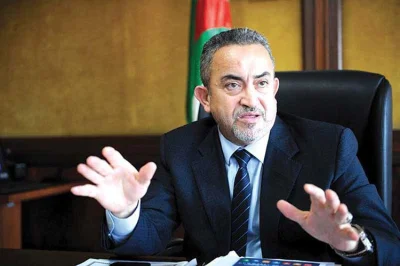
Former Minister Arezki Berraki Faces Trial July 14 Over DZD6B Corruption Scandal
Algiers- The Economic and Financial Criminal Division Court of Sidi M’Hamed has set July 14 as the date for the trial of former Minister of Water Resources Arezki Berraki, along with the former Director General of the National Agency of Dams “M.M” his successor at the same agency “B.C.O”, and other defendants. The case involves serious corruption allegations related to the project to reinforce the Majez El-Bgar Dam in Guelma, eastern Algeria, which allegedly cost the public treasury nearly DZD 6 billion. The postponement was granted at the request of the defense lawyers to allow them more time to review the case file. After the detained defendants, led by Arezki Berraki, as well as those who were not in custody, entered the courtroom, the judge began calling the names of the defendants, witnesses, and civil parties involved in the case. The court then announced that the trial would be postponed until July 14. Former Minister Arezki Berraki and the other defendants are facing serious charges, including the misdemeanor offense of exploiting actual or presumed influence within a public administration or authority to obtain undue benefits; the intentional misuse of public office to carry out actions that violate laws and regulations in order to grant unjustified advantages to others; misappropriation of public funds; and granting unjustified privileges to others during the conclusion of a contract or public procurement agreement with the state or one of its institutions in violation of legal and regulatory provisions. These charges fall under Articles 26, 29, 32, 33, and 48 of Algeria’s Law on the Prevention and Combating of Corruption. The owner of the private company that benefited from the Majez El-Bgar Dam reinforcement project in Guelma, identified as “R.H,” is also facing charges. These include inciting public officials to abuse their actual or presumed influence in order to obtain an undue advantage, benefiting from unjustified privileges during the awarding of a contract or public procurement deal with the state or one of its affiliated institutions, participating in the misappropriation of public funds, and money laundering. The case was investigated by the Regional Judicial Investigation Department in Algiers, which uncovered alleged corruption within the National Agency of Dams and Transfers. According to the investigation, the agency was vulnerable to practices involving the misuse of public funds in previous years, including the allegedly suspicious awarding of a contract to a private company owned by “R.H” for the Majez El-Bgar Dam reinforcement project, intended for agricultural irrigation in the municipality of Ain Makhlouf, Guelma. The original value of the contract was estimated at around DZD 1.3 billion. However, according to the security authorities’ investigation, the project’s cost later nearly quadrupled, exceeding DZD 5.8 billion. This increase was allegedly caused by the signing of additional contract amendments whose value surpassed the original contract amount. These amendments had reportedly not been agreed upon between the National Agency of Dams and the company benefiting from the project. The investigation identified three such amendments, with the project reportedly being changed from merely reinforcing the dam to increasing its height. The second amendment alone cost more than DZD 2.3 billion, while the third exceeded DZD 750 million, along with other alleged irregularities, resulting in losses to the public treasury of more than DZD 5.8 billion. The case comes as part of Algeria’s ongoing efforts to combat corruption and strengthen accountability in the management of public funds. In recent years, Algerian authorities have pursued several high-profile corruption investigations involving former officials, public institutions, and business figures, focusing on allegations of abuse of power, misuse of state resources, and irregularities in public contracts. Algeria has also strengthened its legal framework to fight corruption, including through the enforcement of its anti-corruption legislation, which criminalizes offenses such as bribery, influence peddling, embezzlement, and the granting of unjustified advantages in public procurement. Authorities have emphasized improving transparency and protecting public resources.
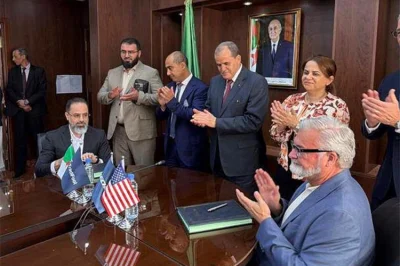
Why Skechers Selected Algeria for Its First Factory in Africa and the Arab World
Officials from the global American brand Skechers and its Algerian partner Tradifoot agreed that selecting Algeria to host the company’s first manufacturing plant in Africa and the Arab world was far from coincidental. The decision was driven by improvements in the country’s business climate, a more favorable investment environment, and Algeria’s strategic geographic position, which enables it to serve as an industrial and export hub for African, Arab, and even European markets. Both parties emphasized that the project reflects a shared vision centered on strengthening local production, increasing national integration rates, and opening new opportunities for exports beyond Algeria’s borders. During the partnership agreement signing ceremony held Monday evening at the Sheraton Hotel in Algiers, Tradifoot’s CEO, Walid Ben Ahmed, stated that the project represents the culmination of more than 17 years of experience and development in the Algerian market. He described Skechers’ decision to partner with an Algerian company for its first industrial investment in Africa and the Arab world as recognition of Algerian expertise and its ability to meet international standards. Ben Ahmed explained that the new factory will be built in the Baba Ali industrial zone on a total area of 22,000 square meters. Operations are scheduled to begin in the first quarter of 2027, with an annual production capacity of up to 2 million pairs of shoes. The facility is also expected to create at least 1,500 direct jobs and manufacture 16 different footwear models. In the same context, Skechers’ Vice President for Finance, Douglas Parker, highlighted Algeria’s strong growth and expansion potential. He noted that the company generated sales of $9.6 billion in 2025, with projections exceeding $10 billion in 2026. He added that 65% of Skechers’ revenue comes from markets outside the United States, making expansion into Africa and the Arab world a strategic priority for the company. Parker further revealed that the local integration rate will start at 40% when operations begin and gradually increase to 70% by 2031. During the initial phase, production will primarily meet domestic market demand before expanding into exports across African markets. The long-term target is to export 1 million pairs of shoes annually to Africa and the Middle East, with potential future expansion into Southern European markets. Earlier, Algeria’s Minister of Foreign Trade and Export Promotion, Kamel Rezig, oversaw the signing of the partnership agreement between the American company Skechers and Algeria’s Tradifoot to establish the brand’s first manufacturing facility in Africa in the Baba Ali area of Algiers. The factory is expected to become operational in the first quarter of 2027 with an annual output of 2 million pairs of shoes. The agreement was signed following the minister’s meeting with a Skechers delegation that included Vice President for Finance Douglas Parker and Vice President for International Sales Daniel Levy, in the presence of representatives from Tradifoot. The project aims to establish the American brand’s first industrial base on the African continent, reinforcing Algeria’s position as a destination for foreign industrial investment and as a production platform serving both domestic and international markets. Beyond the factory’s production figures, the project reflects Algeria’s broader ambition to attract international manufacturers and strengthen its industrial base. The investment could contribute to the development of local supply chains, skills transfer, and job creation while positioning the country as a regional manufacturing platform. If export targets are achieved, the facility may also reinforce Algeria’s role in connecting African, Middle Eastern, and European markets.
Algerian Air Conditioners Surge with 250,000 European Orders, shipped in 48 Hours
Algeria’s non-hydrocarbon exports received a fresh boost on Tuesday with the launch of three major export operations from the province of Bordj Bou Arreridj, eastern Algiers, to European and North African markets. The shipments included the first export of portable air conditioners manufactured by Condor to Spain, as well as a consignment of fixed split-system air conditioners destined for Tunisia, comprising 46 containers. A first shipment of Midea refrigerators and freezers, produced by the Arcodym Group, also got underway, bound for the Tunisian and Libyan markets. The operations underscore the growing presence of Algerian home appliances in international markets and highlight the expanding reach of the country’s domestic manufacturing sector. The launch was overseen by Foreign Trade and Export Promotion Minister Kamel Rezig during a working visit to Bordj Bou Arreridj, alongside the province’s governor and local authorities. The minister officially inaugurated Algeria’s first export operation of portable air conditioners to Europe, specifically Spain, following an initial commercial order from major European purchasing centers for this category of appliances. During the same visit, Rezig also oversaw the shipment of fixed split-system air conditioners to Tunisia, as part of a 46-container consignment. During the second leg of his visit, he gave the go-ahead for the shipment of Midea refrigerators and freezers, manufactured by the Arcodym Group, to the Tunisian and Libyan markets. According to Rezig, the export drive reflects the results of the economic policy pursued by President Abdelmadjid Tebboune, which focuses on supporting domestic production, encouraging industrial investment and assisting exporters. He said the policy is beginning to deliver tangible results, as Algerian products gain an increasingly visible foothold in foreign markets. The minister revealed that major European purchasing centers are now sourcing Algerian products, a development he said reflects growing confidence in the capabilities of the country’s industrial companies. He added that export orders for Condor’s portable air conditioners have so far exceeded 250,000 units, highlighting the scale of the opportunities available to Algerian manufacturers in the European market. “This is not simply the export of an industrial product,” Rezig said in substance, stressing that the operation sends a broader message: Algerian industry is now capable of entering some of the world’s most competitive markets. Algerian products, he noted, have demonstrated compliance with European standards in terms of quality, safety and performance. The minister also highlighted Algeria’s geographical proximity to Europe as a major competitive advantage. Maritime shipments can reach European destinations in just 48 hours, compared with the considerably longer transit times associated with imports from Asian markets. This proximity gives Algerian manufacturers an edge in terms of faster delivery, lower transportation costs and greater flexibility in responding to customer demand. Turning to the export of refrigerators and freezers, Rezig said the operation demonstrated the qualitative progress achieved by Algeria’s home-appliance industry. The sector, he noted, has developed the capacity to manufacture equipment that meets international standards of quality and competitiveness, positioning Algerian companies to enter new foreign markets and strengthen the presence of locally made products across regional and international markets. The minister reaffirmed that the Foreign Trade sector would continue working to expand the international presence of Algerian products, with a particular focus on higher-value-added goods. The strategy forms part of the government’s broader effort, under President Tebboune’s directives, to increase non-hydrocarbon exports, diversify the national economy and strengthen the position of “Made in Algeria” in global markets.
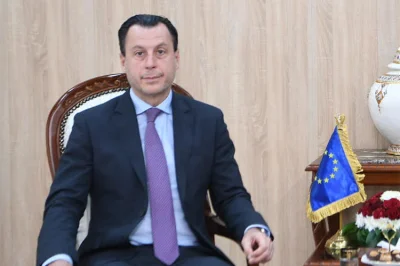
EU Ambassador Diego Mellado Pascua reveals to “Echorouk”: “European visit soon in framework of amending partnership with Algeria”
The European Union’s Commissioner for Mediterranean Affairs is scheduled to pay a high-level visit to Algeria in the coming weeks, as part of pushing forward the process of re-evaluating and updating the partnership agreement with Algeria, which dates back more than twenty years, within the new approach based on the “Mediterranean Compact”. This direction comes […] The post EU Ambassador Diego Mellado Pascua reveals to “Echorouk”: “European visit soon in framework of amending partnership with Algeria” appeared first on الشروق أونلاين .

History, Hegemony and the Civilizations That Outlive Empires
There are moments when the decline of a power can be measured in statistics, military setbacks or shifting alliances. And there are moments when something deeper seems to be happening — something we recognize before we can fully measure it: an entire historical order begins to lose the confidence, coherence and authority that once allowed it to shape the world in its own image. For those of us who grew up in societies that experienced colonialism not as an abstraction in a history book but as a memory still carried by families, cities and generations, this question is inevitably more than academic. We have seen the extraordinary power of the West, learned from its knowledge, encountered its institutions and contradictions, and watched its promises of universality collide, too often, with the realities of power. Today, as the Middle East is again shaken by war, Gaza devastated, Iran confronted, American power tested and the international order increasingly contested, we find ourselves returning to a thinker who understood that civilizations cannot ultimately be measured by the weapons they possess or the wealth they accumulate. Long before “multipolarity” became the vocabulary of contemporary geopolitics, Malek Bennabi had offered another way of reading history: through man, time, ideas, moral energy and the mysterious moment when a society acquires the capacity to enter history — or begins to lose it. Perhaps this is why Bennabi speaks so directly to our present. Not because he predicted it. But because he gave us a language with which to think about it. The Equation of History In a timely and readable recent book titled “Why History Matters”1, Dr Yakoob Ahmed engages themes from theology and civilization to imagination and storytelling with a view to reviving historical consciousness as both an intellectual and spiritual imperative. In it, he reminds us of the oft-cited saying according to which history tends to repeat itself and the quote, widely attributed to American humorist Mark Twain suggesting that “history does not repeat itself, but it rhymes.2 One way to examine the idea that humans are destined to repeat the actions of the past, Ahmed says, is “through the rise and fall of states, the inevitable end of power, and the cyclical patterns of tyranny that ultimately come to a close.” He also rightly observed that Ibn Khaldun was not the only Muslim thinker who made the case of cycles in history, nor that simply Muslims wrote about cyclical theories. Indeed, during the 18th and 19th centuries, Ahmed adds, thinkers in Western Europe and the Ottoman 1 Yakoob Ahmed, Why History Matters: Reviving Faith Through the Lens of History, Ketebe Publishing, Istanbul, Türkiye, 2025. 2 Although the saying is almost universally attributed to Mark Twain, the earliest documented use of a similar phrasing appears in Theodor Reik’s 1965 essay The Unreachables, where he wrote: “It has been said that history repeats itself. This is perhaps not quite correct; it merely rhymes.” Twain did, however, express related ideas about historical repetition in his 1874 novel The Gilded Age: A Tale of To-Day, stating: “History never repeats itself, but the Kaleidoscopic combinations of the pictured present often seem to be constructed out of the broken fragments of antique legends”. This conveys a sense of historical echoes, though it does not use the rhyme metaphor. (Source: David J. Kent, in Word Hot White Snow, wordpress.com, April 2024). Empire examined Ibn Khaldun’s ideas to establish where and how nations tend to repeat themselves, and where lessons can be learned. He specifically mentioned the Scottish 18th century historian Alexander Fraser Tyler who claimed that democracies follow a predictable cyclical pattern, evolving from “having virtuous intentions to becoming corrupted, and later declining.” Conventional political science commonly diagnoses the deep and accelerating shift characterizing the modern landscape of global geopolitics — that is the transition away from a unipolar world anchored by Western hegemony toward a fragmented, multipolar reality— through macroeconomic volatility, demographic deficits, or logistical overreach. Such a view stems from a secular understanding of reality, typically supposed to be grounded in the scientific method, empirical evidence, rational enquiry, and experimentation, while totally excluding any religious interpretations. For his part, Malek Bennabi offered a profoundly different diagnosis. By way of a method reflective of his personal intellectual and religious culture — consisting essentially in bridging traditional Islamic sociology, mid-twentieth century Western historiography, and modern structural analysis — he approached history not as a sequence of random interactions or pure material accumulations, but as a rigorous biological and psychological cycle governed by structural laws. As outlined earlier, Bennabi treated sociology with the precision of mathematics through his famous triad: Civilization = Man + Soil + Time. These three fundamental elements, Bennabi explains, exist in every human group, yet they remain static, inert materials until they are vitalized by an ideological or spiritual catalyst. He mapped the lifecycle of any civilization across three psychological and chronological stages. Hence, when an intense moral breath tames the primal instincts of a society, it binds individuals into a unified social network (the Stage of the Spirit) turning raw human potential into an engine capable of historical creation of institutions, sciences, law, and physical architecture (the Stage of the Reason). Conversely, when that spiritual catalyst loses its active energy, the social network disintegrates and dissolves into individualism, hyper-consumerism, and a worship of material objects, thereafter initiating an irreversible slide into ethical decay, which in turn unavoidably leads to societal collapse (the Stage of the Instinct). How does Bennabi’s view compare to some other influential classical and contemporary civilizational theorists? During the classical and modern eras, two towering figures, Abdurrahman Ibn Khaldun and Arnold Toynbee, profoundly influenced the history of ideas concerning the study of the destiny of human civilizations, particularly through their monumental works, the “Muqaddimah” and ‘The Study of History”, respectively. It is therefore not surprising that Bennabi was considerably influenced by their theories. That being said, while Ibn Khaldun asserted that “Asabiyyah” (social bonds and group solidarity) naturally develops among rugged desert groups and nomadic states and is subsequently dissolved by urban luxury within a strict four-generation cycle, thus paving the way for the rise of a new group with a stronger asabiyyah, Bennabi deepened this observation. He posited that social cohesion is not generated spontaneously by environment or blood alone; rather, it is a secondary manifestation of a primary spiritual/religious catalyst. He further argued that luxury is not toxic because it is comfortable, but because it breaks the social network by shifting focus from transcendent duties to immediate individual instincts. Similarly, Bennabi’s framework closely parallels Arnold Toynbee’s concept of “Challenge and Response.” Both scholars rejected racial or strictly geographical explanations of historical primacy. Toynbee argued that when a “Creative Minority” stops offering innovative solutions to existential challenges, it degenerates into a “Dominant Minority” that can only govern through coercive violence. Bennabi provided the inner psychological anatomy for this transition: the loss of creativity is the direct consequence of a society entering the Stage of the Instinct, where its ideas turn into hollow cultural artifacts, leaving behind nothing but raw force. All Roads Lead to Rome In more recent times, thinkers like Paul Kennedy, Francis Fukuyama, Samuel Huntington and others provided diverging opinions but having in common a strongly-marked materialistic perspective. In his acclaimed book “The Rise and Fall of the Great Powers”3, historian Paul Kennedy traces the postures of the world’s leading nations over five centuries starting with the Habsburg Empire in the 16th century. In it, he argues that empires project military power according to their economic resources but eventually the high cost of maintaining military supremacy weakens their economic base. As a result, they tend to respond by spending more on defense and thus weaken themselves further by diverting essential resources away from new, productive investment. Bennabi would view Kennedy’s fundamentally materialist analysis of “imperial overstretch” as a symptom, not a cause, given that, for him, economic and military imbalances occur only after a civilization has entered its Stage of the Instinct, and also because a society rich in “moral capital” can survive material scarcity, whereas a morally bankrupt society will collapse regardless of its GDP or military spending. Huntington, argued that post-Cold War conflicts would trigger along cultural and religious fault lines. Bennabi anticipated this friction but offered a deeper diagnostic. He contended that the tension between the West and the Islamic world is not an inherent clash of civilizations, but a clash between a dying, over-materialized civilization (the West) and a stagnant, “colonizable” society (the Islamic world) that has yet to rekindle its original spiritual formula. Bennabi’s entire philosophy stands as a direct refutation of Francis Fukuyama’s thesis positing that Western liberal democracy was the final endpoint of human ideological evolution. Bennabi warned against confusing “civilization” with “accumulation”, considering that buying, copying, or implementing Western political institutions and consumer products does not make a society civilized. Without a living spiritual and moral anchor, he explained, consumerist democracy is merely the final, sterile stage of the Stage of the Instinct. Two decades before Fukuyama, Bennabi used the concept of the “end of history,” but from radically different civilizational lenses: while Fukuyama — who views history as a linear, evolutionary process — history “ends” because the ultimate political and ideological consensus (that is Western liberal democracy and market capitalism) has been reached, for Bennabi — who views history as a cyclical law of nature — history “ must end at some point” when a specific civilizational cycle has exhausted its psychological and spiritual momentum. History then does not stop permanently; it resets so that a “new point” of civilizational genesis can begin. As for the “Last Man”, Fukuyama — drawing from Friedrich Nietzsche — sees him as a secure, materially satisfied individual devoid of great passions, higher ideals, or willingness to struggle, in other words, a figure representing the psychological stagnation of a triumphant Western model. Conversely, Bennabi observed a similar stagnation in the 3 Paul Kennedy, The Rise and Fall of the Great Powers: Economic Change and Military Conflict from 1500 to 2000, Unwyn Hyman, London, 1988. Muslim world, which he termed the “colonizability” stage: when a civilization’s initial moral and spiritual impulse dies out, its people become passive consumers of other civilizations’ products, losing their agency in making history. Historian and demographer Emmanuel Todd famously predicted the collapse of the Soviet Union using mainly infant mortality rates. In his 2004 book first published in French “La Défaite de l’Occident” (The Defeat of the West) 4, he argues that the war in Ukraine (as well as the American nihilism exhibited in Gaza) acts as a revealer of the terminal decline of the West, triggered by internal self-destruction rather than just the power of its adversaries. Organized around demographic, industrial, and religious factors, Todd’s analysis concludes that the West in general and the United States in particular are in a deep state of social disintegration. Moreover, the total disappearance of Protestantism, which, he says, historically drove the strength of the Anglo-Saxon world (literacy, discipline, work ethic) left an ideological and moral vacuum. Thus, deprived of religious or collective guidance, the West has plummeted into a metaphysical void and a self-destructive impulse, resulting in a divorce between elites and the working class. In short, Todd is of the opinion that the Western bloc survives only through the aggressive expansion of an already hollow model. The concluding remark of the book is particularly grim: “If we want to anticipate America’s strategic choices, we must urgently abandon the axiom of rationality. The United States is not looking for gains by weighing costs. In the village of Washington, in the land of mass shootings, in the era of zero religion, the primary impulse is a need for violence.” Like Bennabi, Todd looks at the biological metrics of “Man” and “Time.” In particular, his observation of rising nihilism and declining birth rates in the West aligns precisely with Bennabi’s Stage of the Instinct, where individual gratification supersedes the generational transmission of civilization. In the same vein, jumping on the bandwagon of thinkers like Edward Gibbon5 in particular, historian Peter Heather and economist John Rapley contend, in their new book “Why Empires Fall”,6 that empires inevitably sow the seeds of their own destruction through an internal “imperial life cycle”. The authors show how an empire’s own success enriches and modernizes its geographic “periphery”, only to see these newly empowered outside regions rise up to challenge and overtake the imperial core. In such a pattern they find striking parallels between ancient Rome and the modern West (led by the United States), including — interestingly enough in light of the ongoing unjust US-Israeli war on Iran — in the fact that “the eventual revival of Persia as a peer competitor put unsustainable pressure on Rome’s declining fiscal and military capacities.”7 In concluding they stress that Western 4 Emmanuel Todd, La Défaite de l’Occident, Editions Gallimard, 2024. 5 Edward Gibbon (1737-1794) was a British historian, essayist, and politician best known for his six-volume The History of the Decline and Fall of the Roman Empire in which he analyzed the causes of Rome’s fall from 98 to 1590, emphasizing internal decay, barbarian invasions, and the role of Christianity. His skeptical analysis of Christianity sparked lasting controversy, but his narrative style and rigorous scholarship profoundly influenced later historians and writers. Among those is British historian Niall Ferguson who said in 2015 that Europe “has grown decadent in its shopping malls and sports stadiums” while letting in “outsiders who have coveted its wealth without renouncing their ancestral faith (…) Like the Roman Empire in the early fifth century, Europe has allowed its defenses to crumble (…) This is exactly how civilizations fall.” 6 Peter Heather and John Rapley, Why Empires Fall: Rome, America, and the Future of the West, Allen Lane, 2023. 7 Read in this respect: -the essay co-authored by Narges Bajoghli and Vali Nasr titled Iran’s New Grand Strategy, published in the July/August 2026 issue of Foreign Affairs magazine (https://www.foreignaffairs.com/iran/irans-new-grand-strategy). In it, the two scholars of Iranian origin examine how a new generation of Iranian leaders is reshaping the country’s domestic order, society, and regional policy. following recent conflicts; -Marc Lynch’s analysis titled The End of the American Middle East: Iran and the Last Gasp of a Failed Order, in the September/October 2026 issue of the same magazine, in which the Professor of Political Science and International Affairs global primacy cannot be recovered, but total collapse is not a foregone conclusion if leadership adapts. To preserve the West’s core interests, they say, Western leaders must stop trying to police the world and instead focus on creating a multipolar global framework. By doing so, “Not only would the form of the Western nation state — originally built on leveraged wealth flows from the rest of the planet — have managed to negotiate a moment of potentially existential crisis, but it would have generated a post-colonial legacy of real greatness, of which its citizens could be genuinely proud.” It is important to point out here that the literature on the historiography of how empires rise and fall, and more specifically the one on the parallel between the fate of ancient Rome and that of the modern West (under the leadership of the United States), has exploded in recent decades, especially following the fall of the Soviet Union and, consequently, the emergence of the United States of America as the sole “hyperpower,” to use the term coined by former French Foreign Minister Dominique de Villepin. Almost two decades before Heather and Hapley, the former editor-at-large of Vanity Fair magazine in the US, and previously managing editor of The Atlantic Monthly, Cullen Murphy, wrote a compelling book8 on this very subject. In it, he explores how the Roman and American populations saw their political elites, and their insular cultures; looks at the consequences of military overstretch and the widening gap between military and civilian society; sees both states weakened through “privatization” and vexed by the paradoxical issue of borders; and argues that America most resembles Rome in the “burgeoning corruption of its government and in its arrogant ignorance of the world”. With regard to this last point, he writes: “The Romans were aware, to be sure, that all previous empires had fallen. But they saw their own empire as the culminating work of creation. The torch had been passed, once and for all. Roma Aeterna! In the eyes of a Roman living in the empire’s Golden Age, Rome would never die.” Outside of academia, French President Emmanuel Macron was one of the few Western leaders to publicly acknowledge this historical shift. At a conference, on August 27, 2019, at the Élysée Palace, he delivered a significant speech to his ambassadors accredited worldwide, in which he notably declared: “We are undoubtedly witnessing the end of Western hegemony over the world,” due to Western errors and the emergence of new powers. The President analyzed the transition from an international order shaped since the 18th century by the West (France, the United Kingdom, and then the United States) to a new balance of power disrupted by geopolitical missteps and American choices.9 The fate of the “Jewish State”: Like Father like Son at George Washington University and author of America’s Middle East: The Ruination of a Region, argues that “The American Middle East is finished. The regional order that has prevailed since 1991 has been one of the many casualties of the U.S.-Israeli war with Iran. The American and Israeli failure to dislodge the regime in Tehran has proved the bankruptcy of decades of sanctions and violence (…) the old order is in fact giving way to something new (…) And assuming that the Iranian regime does not collapse any time soon — which it appears highly unlikely to do — an emboldened Tehran will hope to defend and expand its regional influence by bogging Washington down in the kinds of endless, borderless ‘gray zone’ conflicts in which it has always thrived.” 8 Cullen Murphy, The New Rome: The Fall of an Empire and the Fate of America, Houghton Mifflin Company, USA, 2007. 9 To read the full speech in French: https://www.elysee.fr/emmanuel- macron/2019/08/27/discours-du-president-de-la- republique-a-la-conference-des-ambassadeurs-1 In his recent book, The Monstrosity of Our Century 10, Amir Nour devoted an entire chapter to the complex issue of the fate of what Israelis call the “Jewish state.” He expressed his conviction that this “state” — created from scratch with the active complicity and multifaceted support of the West in 1948 in a geographical and civilizational area entirely different from the history, culture, and aspirations of the Zionist settlers who came primarily from Central and Eastern Europe — lacks both the legitimacy and the demographics necessary to guarantee its long-term survival. Nour offered his perspective on what he considers the only lasting solution to a conflict originating In World War I and whose dramatic consequences risk multiplying in the future absent an urgent and definitive settlement. Past and present upheavals throughout the West Asian region prove beyond a doubt that such a lasting solution could be nothing other than the creation of a democratic state (or confederation) in Palestine where Muslim, Jewish, Christian and other citizens will have the same constitutional rights and obligations, and share the common desire to achieve peace and prosperity in a “holly land”, transformed by an “unholy alliance” between a supremacist Zionist ideology and nihilist West only pursuing its vested interests, into a land of genocide and other tragedies, of which the Palestinians are the principal sin-offerings. This viewpoint, long considered by representatives of the said alliance as a chimera, or even anathema, is today increasingly shared and defended by figures who are authorities in Western academic circles and, more significantly, among young Jews and a significant fringe within the American Democratic Party, as evidenced by recent polls conducted by bodies known for their seriousness.11 To back up our point, we’ll share in the lines that follow some viewpoints similar to Nour’s, expressed by well-known personalities from different cultural and religious backgrounds. In his latest book12 “Israël. Une course vers l’abîme” (Israel. A Race to the Abyss), renowned Jewish historian, a specialist of Nazi Germany and the genocide of the Jews of Europe, Omer Bartov gives a searing critique of Israel’s trajectory from a post-Shoah refuge to what he describes as an ethno- nationalist regime engaged in “systematic war crimes, crimes against humanity, and genocidal acts” in Gaza. The grandson and son of fervent Zionist figures, the Israeli-American academician wonders what “went wrong” in the realization of the Zionist dream, an ideology, he says, that has now become “indefensible” and must be relegated to the dustbin of history.13 It is important to note here that in November 2023, Bartov believed that there was no evidence a genocide was happening in Gaza, and in an interview with Democracy Now! the same month he explained that neither the two-state solution nor a binational state is realistic, saying “A binational state wouldn’t work, and an independent Palestinian state has become practically impossible. The only solution is a confederation, two distinct but interdependent states, with shared institutions.” Without a political solution, he says, Israeli society will sink a little deeper into a moral and psychological abyss every day. He, therefore, places 10 See:https://www.claritypress.com/product/the-monstrosity-of-our-century-the-war-on-palestine-and-the-last-western- man/ 11 Read Bededict Vigers’ article “Israelis No Longer Ahead in Americans’ Middle East Sympathies” showing shifting public opinion in the United States, with 57% of Americans supporting an independent Palestinian state, and 41% expressing more sympathy for Palestinians compared to 36% for Israelis, especially among specific young adults: https://share.google/Sjb3Ar8563GxuAPWK 12 Omer Bartov, Israël. Une course vers l’abîme, (translated by Sibylle Grimbert), Editions du Seuil, May 2026. 13 For more insights about the Zionist ideology, read: Pr. Yakov Rapkin, Israel in Palestine: Jewish Rejection of Zionism, Aspect Editions, September 2025. his hope in international pressure, particularly from Germany, which would force Israel to accept the creation of a confederation based on openness and cooperation, linking two distinct states, one Palestinian and the other Israeli, separated by a border set along the “1967 Green Line” (the one that existed before the so-called Six-Day War). Pr. John Mearsheimer argues that history is not a neutral backdrop in international politics. It is “a living force that shapes perceptions, fuels grievances, and molds the behavior of states and societies. The Six-Day War of 1967 — which left Israel in control of Jerusalem, the West Bank, Gaza, and the Golan Heights — he rightly reminds us, was a humiliation for the Arab world and a turning point in regional memory. That defeat still echoes in Arab political culture, and the longer those territories remain occupied, the more deeply they entrench hostility toward Israel, not only among Palestinians but across the wider region. Beyond the Middle East, especially in Africa, Asia and Latin America, Mearsheimer adds, Israel is increasingly viewed through the lens of colonial history, and “in a multipolar world where the voices of the Global South carry more weight, this perception magnifies Israel’s isolation.” Moreover, resentment is not confined to the Arab-Muslim worlds and the other countries of the Global South. In Europe, Mearsheimer explains, memories of colonialism and guilt over the Holocaust initially produced strong sympathy for Israel, but “as the decades have passed, the sympathy has waned. This shift in European sentiment is significant because “Europe remains an important partner in international diplomacy, and its criticism adds to Israel’s isolation in global forums.” Even more significant is for Mearsheimer the fact that in the United Stated, “which has provided Israel with a unique combination of military aid, diplomatic cover, and economic assistance that no other state on earth has enjoyed for such an extended period of time — consensus is eroding as younger Americans evaluate Israel primarily through the lens of contemporary politics, namely respect for human rights and international law rather than Cold War ideologies and alliances. For them, “the narrative of eternal victimhood rings hollow when it conflicts with the lived reality of Palestinians under occupation.”. History, Mearsheimer concludes as a serious warning to Israel, “is full of examples where states dependent on external guarantees found themselves exposed when their patrons shifted course.” Concurring broadly with Mearsheimer’s views, Wadah Khanfar, a prominent Palestinian journalist and former Director of the Al Jazeera Network, explicitly compares the current contends that Western and Israeli strategists evaluate their conflicts in the Arab-Muslim world solely in terms of physical destruction and technological superiority. In doing so, they overlook the civilizational psychology of the region, and much like the Crusaders, the Mongols, Napoleon Bonaparte, and Western colonialists experienced in their entanglements with the peoples of the region, “bombing infrastructures does not erase a people’s will for dignity or their collective memory. The escalation against Iran and the siege of Gaza only entrench long-term resistance, turning Israel into a pariah state that is unmanageable for Washington.” For Khanfar, the war on Gaza and the strikes against Iran are not isolated events, but the convulsions of a dying Western order. Escaping the colonial era and Western hegemony in the Middle East, he says, relies on a dual dynamic: an internal impulse (the youth rejecting passive elites and rewriting the global narrative) and an external geopolitical coalition (i.e. an expanded Islamic alliance). Only through such a synergy will the region cease to be a playground for major powers and “once again become the author of its own history.”` Conclusion Only through such a synergy, Khanfar argues, will the region cease to be a playground for major powers and “once again become the author of its own history.” And perhaps this is where we should return, one final time, to Bennabi. Because the decline of one civilization is not the birth certificate of another. The weakening of Western hegemony, however profound it may become, will not by itself restore the historical agency of the Arab-Muslim world. Nor will American retreat, Israeli isolation, multipolarity, or the emergence of new powers automatically produce a new civilization. Bennabi would probably have regarded such expectations as another form of dependence: waiting for history to be delivered by the decline of others instead of creating it ourselves. This, ultimately, is why history matters to us. We come from a region that has known conquest and resistance, humiliation and renewal, colonization and independence. We have inherited both wounds and possibilities. And we have learned that military superiority can occupy territory, destroy cities and impose political orders — sometimes for generations — but it cannot indefinitely command memory, dignity or the human desire to recover agency. Empires eventually discover this. Peoples rarely forget it. Bennabi’s enduring lesson is therefore neither a prophecy of Western collapse nor a promise of Muslim renaissance. It is considerably more demanding: no civilization inherits the future simply because another civilization is losing its grip on the present. History does not reward those who wait beside the ruins of an exhausted order. It begins again with those capable of transforming Man, Soil and Time into meaning, responsibility and action. The question before us is therefore no longer merely whether an age is ending. It is whether we are ready to help write what comes next.
TIZI OUZOU | The famous Algerian independence song resonated in the new JSK stadium. A song that has always brought together all of Algeria from north to south and from west to east & especially on the day of July 5th. تعيش الجزائر الحرة المستقلة 🇩🇿♥️ pic.twitter.com/fre6FMCZv9 A.S PROJECT (@NewStadiumsDZ) April 5, 2023
كيف تستثمر الجزائر في النخب الإفريقية لتعزيز نفوذها القاري؟
تحتل الجامعات موقعًا متزايد الأهمية في التنافس الدولي على النفوذ، فالدولة التي تستقبل طلبة أجانب لا تقدم لهم تكوينًا أكاديميًا فحسب؛ بل تتيح لهم الاحتكاك بمؤسساتها ومجتمعها ولغتها وثقافتها ونخبها، بما يخلق علاقات شخصية ومهنية يمكن أن تستمر بعد عودتهم إلى بلدانهم، ولهذا أصبحت المنح الدراسية وحركة الطلبة الدوليين جزءًا من أدوات الدبلوماسية التعليمية والقوة الناعمة. وتكتسب هذه المسألة أهمية أكبر في إفريقيا، حيث لا تزال الفوارق في الوصول إلى التعليم العالي والقدرات البحثية كبيرة، في الوقت الذي يتزايد فيه الطلب على التكوين المتخصص، وتشير اليونسكو إلى أن الالتحاق بالتعليم العالي في إفريقيا جنوب الصحراء لا يزال منخفضًا مقارنة بالمناطق الأخرى، بينما تتوسع الحاجة إلى تكوين الكفاءات في مجالات الطاقة والزراعة والرقمنة والذكاء الاصطناعي والتنمية المستدامة. ضمن هذا السياق، تبدو السياسة الجزائرية تجاه الطلبة الأفارقة أكثر من مجرد سياسة جامعية، فهي تتقاطع مع تصور أوسع لدور الجزائر داخل القارة. أولًا: من التعاون التعليمي إلى بناء رأس المال العلائقي تاريخيًا، ارتبط الحضور الجزائري في إفريقيا بمزيج من الدبلوماسية السياسية والتضامن التحرري والتعاون جنوب–جنوب، غير أن التحولات الراهنة تفرض أدوات أكثر استدامة، لا سيما أن التأثير السياسي لا ينتج فقط عن الاتفاقيات الحكومية، بل كذلك عن العلاقات التي تتشكل بين الأفراد والمؤسسات. من هنا يمكن النظر إلى الطالب الإفريقي في الجزائر باعتباره فاعلًا مستقبليًا محتملًا داخل شبكة عابرة للحدود، وليس مجرد مستفيد من منحة. فالطالب الذي يقضي سنوات في جامعة جزائرية يتعرف إلى الإدارة والمؤسسات والأساتذة والباحثين، ويكوّن علاقات مع طلبة من دول إفريقية أخرى، ويكتسب معرفة بالمجتمع الجزائري، وعندما يعود إلى بلده، قد يحتفظ بهذه الروابط في المجال الأكاديمي أو الإداري أو الاقتصادي. ولا يعني ذلك أن كل خريج سيصبح مؤيدًا للسياسة الخارجية الجزائرية، فهذا استنتاج لا تسمح المعطيات الحالية بإثباته، الأصح هو الحديث عن رأس مال علائقي: معرفة متبادلة، وثقة، وشبكات شخصية ومؤسسية يمكن أن تتحول، في ظروف معينة، إلى تعاون أو تسهيل للعلاقات الثنائية. وهنا تكمن القيمة الاستراتيجية الحقيقية للتعليم بوصفه أداة نفوذ. ثانيًا: الجزائر تراكم استثمارًا طويل الأمد في الكفاءات الإفريقية تظهر المعطيات الرسمية حجمًا لافتًا لهذا الاستثمار، فقد أعلنت الجزائر في المؤتمر القاري حول التعليم في ديسمبر 2024 أنها دعمت تكوين نحو 65 ألف إفريقي، مع الإعلان عن توفير 2500 منحة سنوية للتعليم العالي والتكوين المهني. ولا ينبغي قراءة الرقم باعتباره عدد الطلبة الموجودين حاليًا في الجامعات الجزائرية، بل باعتباره حصيلة تراكمية للتكوين والدعم التعليمي منذ الاستقلال، وهذه نقطة منهجية مهمة، لأن الخلط بين التدفق السنوي والمخزون التراكمي يمكن أن يؤدي إلى تضخيم تقدير التأثير الجزائري. كما أن الجزائر تعمل على تطوير نموذج أكثر تنوعًا لاستقطاب الطلبة الدوليين، ففي فبراير 2026 أطلقت وزارة التعليم العالي دورة جديدة من برنامج «Study in Algeria»، وأوضحت أن الدورة الأولى مكنت من استقبال نحو 415 طالبًا دوليًا من إفريقيا وأوروبا وآسيا خارج نظام المنح التقليدي، وفق صيغة تعاقدية. وتكشف هذه الخطوة عن تحول مهم: فالتدويل الجامعي الجزائري بدأ ينتقل تدريجيًا من منطق المساعدة التعليمية إلى منطق أكثر مؤسسية يجمع بين التعاون الأكاديمي، والاستقطاب الدولي، وتنويع مصادر تمويل الجامعات. لقد مثّلت الجامعات والمعاهد الجزائرية خلال السنوات الماضية حاضنةً استراتيجية لصناعة النخب الإفريقية، حيث تخرّج منها وزراء وسفراء ومستشارون بارزون في السياسة، والطاقة، والاقتصاد، والإدارة، من دول الساحل وغرب ووسط إفريقيا، مثل النيجر، و جمهورية الكونغو، وتشاد، و أنغولا، و موزمبيق، وموريتانيا، والجمهورية العربية الصحراوية الديمقراطية، ومالي. ويبرز هنا بين هذه الكوادر وزير الخارجية المالي الحالي، عبد الله ديوب، الذي تخرج من المدرسة الوطنية للإدارة (ENA). ثالثًا: تلمسان بوصفها عقدة في الدبلوماسية الجامعية الجزائرية تقدم جامعة تلمسان نموذجًا واضحًا لهذا التحول، ففي فبراير 2025، أفادت وزارة التعليم العالي بأن الجامعة تستقبل أكثر من 500 طالب من أكثر من 35 دولة، معظمهم من إفريقيا، كما وصفتها الوزارة بأنها من الجامعات الجزائرية الرائدة في استقبال الطلبة الدوليين. ولا تقتصر أهمية تلمسان على حجم الطلبة، بل ترتبط أيضًا بطبيعة التخصصات والمؤسسات الموجودة فيها، فالمعهد الإفريقي الموجود بالجامعة يوفر تكوينات في مجالات مثل الطاقات المتجددة والبيئة والاقتصاد المستقبلي، وهي مجالات ذات أهمية مباشرة بالنسبة لأجندة التنمية الإفريقية. الأكثر أهمية هو احتضان تلمسان لمعهد PAUWES التابع للجامعة الإفريقية، والمتخصص في علوم المياه والطاقة وتغير المناخ. وفي 30 مارس 2026، تخرج من المعهد 76 طالبًا من 37 دولة إفريقية في برامج ماجستير شملت المياه والطاقة وتغير المناخ، بتخصصات هندسية وسياساتية، وشكلت النساء 31 من الخريجين، أي نحو 41%، كما حضرت مراسم التخرج وفود دبلوماسية وممثلون عن الاتحاد الإفريقي وشركاء دوليون. هذه الحالة ذات دلالة استراتيجية، لأنها تنقل التعاون من المجالات العامة إلى قطاعات حيوية تمثل تحديات مركزية أمام الدول الإفريقية: أمن المياه، الطاقة، التحول المناخي والقدرة على صياغة السياسات العامة. رابعًا: لماذا يمكن أن تتحول الجامعة إلى أداة نفوذ؟ يمكن تحديد آلية التأثير في أربع مراحل مترابطة: الاستقطاب → التكوين → الشبكة → التأثير المؤسسي. في المرحلة الأولى تستقطب الجزائر الطلبة من دول مختلفة، وفي الثانية توفر لهم تكوينًا أكاديميًا ومهنيًا. أما الثالثة فتتعلق بالروابط التي تتشكل أثناء الدراسة بين الخريجين والأساتذة والمؤسسات، وفي الرابعة يمكن أن تتحول هذه الروابط إلى مشاريع بحثية، وشراكات جامعية، واستثمارات، واتصالات حكومية أو مهنية. وتؤكد التجربة الإفريقية الأوسع أن الاعتراف بالشهادات والتنقل الأكاديمي أصبحا عنصرين أساسيين في بناء فضاء جامعي إفريقي أكثر تكاملًا، وقد وضعت اتفاقية أديس أبابا للاعتراف بالمؤهلات إطارًا لتسهيل الاعتراف بالشهادات وتعزيز حركة الطلبة والباحثين وأعضاء هيئة التدريس داخل القارة. وبالتالي، فإن قيمة الطالب الإفريقي بالنسبة للجزائر لا تتوقف عند سنوات الدراسة؛ بل تبدأ أهميتها الاستراتيجية بعد التخرج. إذا تمكنت الجزائر من بناء قاعدة بيانات فعالة للخريجين، وتنظيم منتدى سنوي للنخب الإفريقية المتخرجة من الجامعات الجزائرية، وإطلاق منح بحثية للخريجين، وتشجيع المشاريع المشتركة، فإن الاستثمار التعليمي يمكن أن يتحول إلى شبكة نفوذ مؤسسية أكثر استدامة. خامسًا: من المنحة إلى دبلوماسية الخريجين تحتاج الجزائر إلى الانتقال من مفهوم الطالب الدولي إلى مفهوم الخريج كشريك طويل الأمد. وهذا يتطلب إنشاء آلية وطنية لـ«دبلوماسية الخريجين» تتضمن: 1. قاعدة بيانات موحدة للخريجين الأفارقة. 2. تحديد مواقعهم المهنية والأكاديمية بعد التخرج. 3. إنشاء شبكة خريجين جزائرية–إفريقية. 4. تمويل مشاريع بحثية مشتركة يقودها خريجون. 5. ربط الخريجين بالسفارات الجزائرية والجامعات والغرف الاقتصادية. 6. إطلاق منتدى سنوي للنخب الإفريقية المتخرجة من الجزائر. 7. توجيه جزء من المنح نحو القطاعات التي تحتاجها إفريقيا مستقبلًا: المياه، الطاقة، الصحة، الأمن الغذائي، الذكاء الاصطناعي والتحول الرقمي. وتزداد أهمية هذا المسار في ضوء التحول العالمي نحو الاعتراف بالمؤهلات والتنقل الأكاديمي، فاليونسكو تعتبر الاعتراف بالشهادات وسيلة لتسهيل الحركة الأكاديمية وتعزيز التعاون بين المؤسسات، بينما تؤكد اتفاقية أديس أبابا على دور التعليم العالي في التكامل القاري. سادسًا: البعد الثقافي والسياسي للتدويل الجامعي لا تعمل الجزائر على البعد الأكاديمي وحده، ففي يوليو 2026 احتضنت الجزائر العاصمة النسخة الأولى من المهرجان الإفريقي–الجزائري للمسرح الجامعي بمشاركة مؤسسات من 16 دولة إفريقية، ووصفت وزارة التعليم العالي المبادرة بأنها أداة للدبلوماسية الثقافية وتعزيز الروابط بين الشعوب الإفريقية. وتكشف هذه المبادرة عن توسع مفهوم الجامعة في السياسة الخارجية الجزائرية: الجامعة ليست فضاءً للتدريس فقط، بل منصة للثقافة والحوار والتواصل بين الشباب الأفارقة. وبذلك تتشكل منظومة ثلاثية: التعليم + البحث العلمي + الثقافة وهي أكثر قدرة على إنتاج نفوذ ناعم مستدام من المنحة الدراسية وحدها. سابعًا: حدود السياسة ومخاطر المبالغة في تقدير النفوذ رغم أهمية هذه الأدوات، ينبغي تجنب المبالغة في تقدير نتائجها. فارتفاع أعداد الطلبة الأفارقة لا يعني تلقائيًا ارتفاع النفوذ السياسي الجزائري. هناك ثلاثة شروط لازمة لتحويل الاستثمار التعليمي إلى تأثير فعلي: أولًا: جودة التعليم. فالنفوذ لا يمكن أن يقوم طويلًا على الكم إذا لم تقترن الأعداد بجودة أكاديمية وبحثية معترف بها. ثانيًا: استمرارية العلاقة بعد التخرج. الطالب الذي يعود إلى بلده وينقطع تمامًا عن الجامعة الجزائرية لا يمثل شبكة نفوذ مستدامة. ثالثًا: تحويل المعرفة إلى تعاون. القيمة الاستراتيجية تظهر عندما تتحول العلاقات الأكاديمية إلى مشاريع بحثية، واستثمارات، واتفاقيات، واستشارات، وشراكات مؤسسية. ومن ثم، فإن المؤشر الحقيقي لنجاح السياسة الجزائرية ليس عدد الطلبة وحده، بل عدد الخريجين الذين حافظوا على روابط مؤسسية مع الجزائر، ونوعية المواقع التي يشغلونها، وعدد المشاريع التي نشأت من شبكاتهم. استنادًا إلى هذه المعطيات، تملك الجزائر عناصر مهمة لبناء نموذج إفريقي خاص من الدبلوماسية التعليمية. فالتراكم التاريخي، والعدد الكبير من الأفارقة الذين استفادوا من التعليم والتكوين، والمنح السنوية، واستقبال الطلبة الدوليين، ووجود مؤسسات قارية مثل PAUWES في تلمسان، كلها توفر قاعدة مادية لبناء نفوذ طويل الأمد. لكن الجامعة لا «تصنع قادة إفريقيا» بصورة آلية. الأدق أنها تساهم في تكوين شبكات من الكفاءات والنخب الإفريقية التي يمكن أن تصبح، بمرور الزمن، جزءًا من رأس المال العلائقي للجزائر. وعليه، فإن التحدي الجزائري خلال الفترة 2026–2030 ليس زيادة أعداد الطلبة فقط، بل بناء منظومة متكاملة تبدأ بالاستقطاب والتكوين وتنتهي بإدارة شبكة الخريجين والبحث العلمي والتعاون الاقتصادي والثقافي. إذا نجحت الجزائر في هذه النقلة، فإن جامعاتها يمكن أن تتحول من مؤسسات تستقبل الطلبة الأفارقة إلى عقد استراتيجية لشبكة معرفية وقارية عابرة للحدود، أما إذا بقي التركيز على أرقام المنح والاستقبال دون إدارة ما بعد التخرج، فسيظل الأثر السياسي والاستراتيجي للتعليم أقل بكثير من إمكاناته. المراجع أولًا: المراجع باللغة الإنجليزية 1. African Union (AU). (2024). African Leaders Rally Behind Education Reform at Continental Conference in Nouakchott. African Union, 10 December 2024. 2. African Union (AU). (2026). Pan African University Graduates 76 Students from 37 African Nations at PAUWES 10th Graduation Ceremony in Tlemcen. African Union, 30 March 2026. 3. Ministry of Higher Education and Scientific Research of Algeria (MESRS). (2025). Mr. Kamel Baddari’s Visit to Tlemcen: Algeria Set to Emerge as a Preferred Destination for International Students, Particularly Those from Arab and African Countries. February 2025. 4. Ministry of Higher Education and Scientific Research of Algeria (MESRS). (2026). Mr. Kamel Baddari Launches the Second Registration Session for the “Study in Algeria” Program. 15 February 2026. 5. Ministry of Higher Education and Scientific Research of Algeria (MESRS). (2026). Minister of Higher Education and Scientific Research Presides over the Opening of the First Edition of the Algerian-African University Theatre Festival. July 2026. 6. UNESCO. (2014). Revised Convention on the Recognition of Studies, Certificates, Diplomas, Degrees and Other Academic Qualifications in Higher Education in African States. Addis Ababa, Ethiopia, 12 December 2014. دخلت الاتفاقية حيز النفاذ في 15 December 2019. 7. UNESCO. (2026). Higher Education Regional Conventions. UNESCO. 8. UNESCO. (2026). Global Convention on Higher Education. UNESCO. ثانيًا: المصادر الرسمية الإلكترونية 9. Ministry of Higher Education and Scientific Research of Algeria (MESRS). Study in Algeria. Official platform. 10. African Union (AU). Pan African University (PAU). Official institutional resources. 11. UNESCO. Algeria – Conventions. UNESCO Country Profile. ويظهر في السجل الرسمي أن الجزائر طرف في عدد من اتفاقيات اليونسكو ذات الصلة بالتعليم العالي، ومنها اتفاقية الاعتراف بالدراسات والشهادات والمؤهلات في الدول الإفريقية.

Algeria.. List of new oil and gas discoveries in 2023
Algeria.. List of new oil and gas discoveries in 2023 Algeria was able to make ten (10) new discoveries of hydrocarbon deposits at the end of September 2023, adding to the 16 other discoveries made in 2022, according to the Government’s General Policy Declaration, presented to the National People’s Assembly (APN) by the Prime Minister, … ظهرت المقالة Algeria.. List of new oil and gas discoveries in 2023 أولاً على الجزائرية للأخبار .
Algérie-Etats-Unis : Les relations entre passé, présent et perspectives
“The United States is one of Algeria’s top partners, and Algeria is one of the top U.S trading partners in the Middle-East/North Africa region. Most of US investment in Algeria has been in the hydrocarbon sector […] The United States supports Algeria’s desire to diversify its economy, more toward transparent economic policies and liberate its […]