Recherche
56 résultats pour "us-president-visits-grieving-community-to-pay-tribute-to-the-victims-algerie-832431fr"



The French Far-Right Disrupts Bilateral Relations Based On The Burning Memory File
The French far-right is striving to disrupt the noticeable calm in Algerian-French relations, based on the sensitive memory file, which has previously caused bilateral relations to deteriorate on many occasions, by poisoning the atmosphere of the joint committee’s work to examine the memory file. Following the initiatives taken by French President Emmanuel Macron regarding memory, such as recognizing the French state’s responsibility for suppressing Algerian demonstrators and throwing them into the Parisian Seine River on October 17, 1961, and the assassination of the revolutionaries’ supporters, represented by the martyrs Larbi Ben M’hidi, Ali Boumendjel, and Maurice Audin, supporters of “French Algeria” are targeting recognition of what they call the events of Oran. This demand came in the context of a written question published in the Official Gazette of the French National Assembly (the lower house of parliament) on Tuesday, June 23, addressed by MP Cyril Tréboullani to Alice Rivault, Minister of the Armed Forces and Veterans Affairs in the government of Sébastien Lecornu, who visited Algeria last May 8 to participate in commemorating the massacres of Sétif, Guelma, and Kherrata. The French MP calls on the government to “recognize” the events of Oran that occurred on July 5, 1962, which coincides with the day of Algeria’s declaration of independence, and which witnessed the fall of victims from French citizens residing in Algeria, in addition to individuals considered supporters of the French presence, as he claimed. The questioner calls on the French authorities to investigate those events, which he said left a deep mark on the memory of French citizens returning to their homeland, the families of the victims, and everyone who is still committed to historical truth, more than sixty years after they occurred. MP Cyril Tréboullani alluded to the initiatives taken by the French President in this regard, which came, as is known, based on the advice of the French historian and advisor on memory affairs to the French presidency, Benjamin Stora, in the report he submitted to the Élysée Palace in 2021, where he referred to the initiatives taken in this regard and called for what he called “full recognition of those events and a clear study of historical truth.” Before asking about the measures the government intends to take to enhance official recognition of the Oran events that occurred on July 5, 1962, to preserve the memory of the victims and contribute to transferring this tragic incident from national history to future generations, as he put it. This written question comes at a time when Algerian-French relations are witnessing a remarkable calm, marked by many reciprocal visits between officials of the two countries, the latest of which was the visit of the Minister of Interior, Local Assemblies and Transport, Said Saayoud, to France, less than a month ago, in response to a visit by his French counterpart, Laurent Nuñez, to Algeria last February. Raising this demand leads to the question of whether the aim of the question is to embarrass the French President before public opinion in his country? And on the other hand, to undermine the work of the joint committee to examine the memory file, whose fate remains ambiguous, as it was not among the files that were reopened after the two countries moved towards de-escalation.
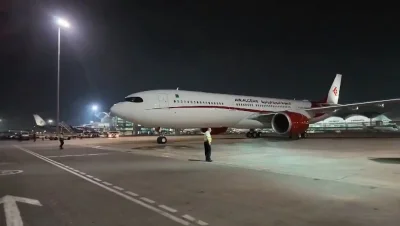
Air Algérie réceptionne son sixième Airbus A330neo
Le Groupe Air Algérie a annoncé, ce samedi 17 octobre, la réception de son sixième avion de type Airbus A330neo, dans le cadre de son programme de renouvellement et d’extension de sa flotte, rapporte l’agence APS. Il s’agit d’un appareil baptisé « Ras El Afia » , en référence au phare maritime de Ras El Afia, situé dans la wilaya de Jijel, a précisé la compagnie, ajoutant que le choix de cette appellation traduit « la fidélité à la mémoire nationale et la reconnaissance envers des âmes qui resteront présentes dans les esprits » , ainsi qu’un hommage aux habitants de la région qui « ont incarné, par leur résilience, la force de l’espoir » . TRANSPORT | Air Algérie has received its 6th Airbus A330neo, naming it “Ras El Afia” after Jijel’s famous lighthouse, in tribute to the city devastated by the recent wildfires. pic.twitter.com/IBInfD0QYN — Algeria Project (@Algeria3New) October 17, 2026 Cet appareil est le sixième avion de ce type à intégrer la flotte du transporteur national, après les appareils baptisés « Novembre 54 » , « Gara Djebilet » , « Yennayer » , « Diaspora » et « Fennec » . Les Airbus A330neo sont destinés aux vols long-courriers. Ils peuvent accueillir plus de 300 passagers, toutes classes confondues, et se distinguent par une consommation de carburant réduite pouvant atteindre 25 % par rapport aux générations précédentes. Ils permettent également de réduire les émissions de dioxyde de carbone et sont équipés de systèmes de divertissement modernes, dont un service d’accès à Internet via le Wi-Fi. Cette opération s’inscrit dans le cadre du programme de renouvellement et d’extension de la flotte d’Air Algérie, lancé en 2023, qui prévoit l’acquisition de dix avions « Boeing 737 MAX 9 » et de dix « Airbus A330neo » , ainsi que de 16 appareils « ATR 72-600 » , afin de renforcer le réseau de transport aérien intérieur. Cette acquisition s’inscrit également dans le cadre du plan d’action de la compagnie à l’horizon 2035, qui prévoit des acquisitions supplémentaires d’avions pour répondre à la demande croissante de transport aérien aux niveaux national et international.

Has the Undeclared Truce Between Algeria And Paris Ended?
The Algerian side was forced to come out with affirmations that helped put many dots on the i’s, regarding what has been raised for over a week of debate among some French officials, in which Algeria was implicated, through the words of more than one official in the government of Sébastien Lecornu, and concluded with the Élysée Palace entering the fray / The Algerian clarification came from President Abdelmadjid Tebboune, in a video clip on the Presidency of the Republic account on the “Facebook” platform, through which he confirmed that he had never requested a visa “quota”. He said: “I emphasize three things to Algerians before our French friends, that the Algerian President never requested a ‘quota’ for visas or a certain number of visas, rather we never talked about this file at all. Also, I never requested an apology or compensations”, from the French side. For over a week, Algeria was dragged into discussions among the French against its will, and members of the French government excelled in giving the impression that Algeria had entered into discussions or negotiations with Paris to increase the number of visas, since the interview given by the French Ambassador to Algeria, Stéphane Romatet, through which he expressed his hope to increase the number of visas for Algerians to reach 250,000. This interview left a strange stir within French political circles, which was fueled by ministers in the current government, such as Naïma Moutchou, Minister of Overseas Territories, and the Minister Delegate to the Ministry of Foreign Affairs, in charge of Europe, Benjamin Haddad, and Foreign Minister Jean-Noël Barrot, and the matter even reached the Élysée Palace, which discussed the issue in the Council of Ministers meeting last Wednesday, during which Emmanuel Macron tasked the French government spokesperson, Maud Bregeon, with emphasizing that France “will not falter” on the visa file, in a hostile and gratuitous stance. Despite the Algerian side’s commitment to silence to avoid fueling political bickering, however, with the recurrence of provocative statements by French officials, it was forced to clarify that the matter is nothing more than a storm fabricated by the French in which they drowned, and that Algeria has no role in it, as stated by President Abdelmadjid Tebboune. So, are we facing the end of the undeclared truce between Algeria and Paris, which began with the visit of the French Interior Minister, Laurent Nuñez, in February 2026, and was followed by other visits by French officials, such as the Minister of Justice, Keeper of the Seals, Gérald Moussa Darmanin last May, and before him in the same month, the Minister Delegate to the French Ministry of the Armed Forces, Alice Rufo. Commenting on what is happening at the level of relations between Algeria and France these days, a former official at the Ministry of Foreign Affairs believes that the two countries have not been able to turn the page on accumulated differences enough to build on them in order to overcome the crisis, and confirmed that French intransigence in some files cannot lead to a result that satisfies both parties. The diplomatic source said in a statement to “Echorouk” that “relations between Algeria and Paris have not improved in a way that allows them to develop, because the French side sought in an excessively pragmatic way to obtain what it was looking for, in exchange for ignoring Algerian demands that cannot be compromised in any peer-to-peer relations”. He pointed out here that the visits of French ministers to Algeria had a clear goal, which was to seek gains in terms of migration, security information exchange, and restoring cooperation in this framework, embodied by the visit of Interior Minister Laurent Nuñez, as well as fighting organized crime, embodied by the visit of Justice Minister Gérald Moussa Darmanin, which are visits that have not resulted in anything tangible so far, due to the French side’s lack of commitment to the concerns raised by the Algerian side, such as recovering looted funds and handing over those involved and wanted by Algerian justice. The latter noted that the visa card played by the French side cannot be considered an effective card, because it is only on the table with Paris, while Algerians can resort to other options in the Schengen area which are available as he said, by virtue of the quality of Algeria’s relations with other European countries in the Schengen area, which led him to say that “French intransigence cannot bring any benefit”. The source expected that bilateral relations would gradually overcome their crisis in the future, while observers believe that the differences may extend until the end of French President Emmanuel Macron’s term, which ends next spring at the earliest.
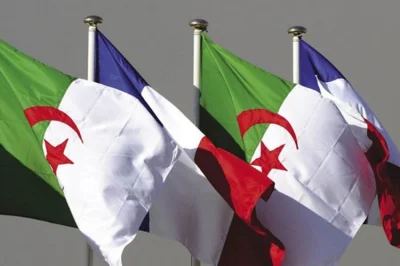
Paris Leans Toward Reason After Despairing Of Achieving Its Goals Through Leverage
After months of refusal and fleeing forward, French authorities have leaned toward the option of de-escalation with Algeria, hoping to dismantle mines obstructing the restoration of normal bilateral relations, since French President, Emmanuel Macron, decided nearly two years ago to bias flagrantly toward the Moroccan regime regarding the Western Sahara issue, despite his awareness of the sensitivity of this file for Algeria. In an unexpected position, the French prosecutor surprised the defense team and judges by requesting the release of the Algerian consular agent, who has been in prison in France outside of diplomatic and consular norms for over a year, on the grounds that his continued imprisonment “is no longer useful in reaching the truth”, which was considered a shift in this case that has prevented progress in bilateral relations despite mutual official visits between officials of the two countries. Based on what was reported by the French newspaper “Le Monde”, the request from the National Anti-Terrorism Prosecutor’s Office came following a release request submitted by defense lawyers, which was considered, according to the newspaper, a “clear retreat” in the prosecution’s position on this case, as the Anti-Terrorism Prosecutor’s Office had until now rejected all requests to release the consular employee. The newspaper questioned whether this data is considered a “new flexibility linked to efforts made behind the scenes between Paris and Algeria to resolve the crisis and secure the release of the French journalist, Christophe Gleizes, whom the Algerian authorities have refused to pardon to this day”, despite the preparation of conditions for that, according to the French narrative. Until now, the liberties and detention judge in charge of the Algerian consular employee’s case still refuses to release him, as happened in the session on June 18, but the refusal decision was appealed, and the decision is to be issued in a session held before July 13, according to “Le Monde” sources. Until recently, French officials justified the continued imprisonment of the Algerian consular employee, who was imprisoned in a plot orchestrated by former French Interior Minister, Bruno Retailleau, on April 12, 2025, by the independence of justice, a justification that did not convince the Algerian side, which insisted on the corruption of the procedures for imprisoning the consular employee who fell victim to the enmity of French political parties trying to employ the crisis with Algeria to achieve political and electoral gains. French leaks talk about signs of a French offer for a swap between the Algerian consular employee and the French journalist who is serving a seven-year prison sentence in a case related to supporting and praising terrorism, which collapses the narrative of French officials who argued for a long time about the independence of French justice, which proved false over time after the shift that occurred in the recent French prosecution position. Perhaps what reinforces this approach is that the organization “Reporters Without Borders” picked up on the change in the French prosecution’s position on the case of the Algerian consular employee and the demand for the release of the French journalist, whose fate remains hanging on the decision of French justice. According to what was reported by “Le Monde”, the French side became convinced that the continued imprisonment of the Algerian consular employee is considered a major obstacle to any normalization of relations between the two countries, rather it destroyed any hope for a pardon for the sports journalist Christophe Gleizes, for whom all Paris’s efforts to obtain a pardon failed, and some French practices even increased the complexity of his situation by trying to internationalize his case by involving the International Federation of Association Football in provoking Algeria. In the view of observers, the Algerian toughness in dealing with Paris’s pleas to release the French journalist is what pushed the French government to pressure “independent” justice in order to search for a solution that ends the imprisonment of the consular employee and his return to his family in Algeria. This is clearly evident through the timing of the French prosecution’s leaning toward requesting the release of the consular employee, which coincides with Independence Day in Algeria (July 5), on which the President of the Republic, Mr. Abdelmadjid Tebboune, usually issues pardons for prisoners. However, in light of the French side’s hesitation in releasing the consular employee, it is unlikely that a pardon will be issued for Christophe Gleizes on the occasion of Independence Day, because trust is lost between the two sides, and keeping the Algerian national without full release by depriving him of returning to his family will also apply to the French prisoner, who is not unlikely to receive the same treatment, meaning ending the procedures on both sides regardless of the justifications of the French side, which argues for the completion of litigation procedures for the French national, unlike the Algerian national. In a related context, the investigative newspaper “Mediapart” quoted a French diplomatic source expressing pessimism about the restoration of relations between Algeria and Paris due to their specific nature. It pointed out that the decision of French President, Emmanuel Macron, regarding the Western Sahara issue, caused an earthquake that almost led to a diplomatic rupture, and brought back to the forefront a series of sensitive files that diplomacy between Algeria and France was trying to hide, most notably the somber colonial legacy and historical memory.

4 Projets Home Assistant à réaliser sur Raspberry Pi
Des cartes NFC pour films jusqu’à une machine à laver qui sait quand elle a terminé, Home Assistant offre au Raspberry Pi de quoi s’occuper. myboys.me/Shutterstock Home Assistant can start innocently enough. Maybe you simply need the bedroom lights to turn off automatically, but that’s just a gateway drug. After a while, your washing machine starts texting you and your phone charger becomes a part of your bedtime ritual. That flexibility is the whole appeal. Home Assistant is a free, open-source smart home platform that can integrate devices and services from different manufacturers and use things like location, power usage, NFC tags or a device changing state to trigger automations. It currently has over 1,500 integrations. You don’t need any of Home Assistant’s hardware to get started, either. Home Assistant OS officially supports the Raspberry Pi 4 and Pi 5, with a minimum of 2GB of RAM and a 32GB microSD card, and it is the recommended installation for most people who bring their own Pi. The software is free, and there is no subscription or feature paywall, though optional services like Home Assistant Cloud cost extra. When it’s up and running, the more interesting question is what you can get your house to do for you. Turn NFC cards into a physical music or movie collection Streaming is wonderfully convenient until movie night becomes 15 minutes of scrolling. NFC tags offer a slightly nerdier alternative: Give something physical a job again. Home Assistant can use an NFC tag as an automation trigger. In the simplest version, you can assign individual stickers or cards to albums, playlists, movies or other actions, and then scan one of them with the Home Assistant app on your phone. The automation can be set up through Home Assistant’s visual editor, so this doesn’t require diving straight into YAML. It’s even more fun with a dedicated NFC reader. Place a card on the reader and Home Assistant can respond instantly, without anyone picking up a phone. It can also tell different readers apart, so the same tag could theoretically trigger different actions depending on which room it’s scanned in. One dedicated builder turned the idea into a custom 3D-printed movie player. Their setup uses an ESP32 and an NFC reader, with physical cartridges for different movies. Insert one and Home Assistant can use Plex to start the corresponding movie. But that’s the enthusiast version. You don’t need a soldering iron, 3D printer or even a fake VHS collection to have most of the fun with a few NFC cards and your phone. Turn charging your phone into a bedtime trigger RaspberryStudio/Shutterstock A phone charger typically has one job, but Home Assistant can give it another one. The Companion app can tell Home Assistant if your phone is charging, so plugging your phone in at night can become the trigger for a bedtime routine. Throw in a few conditions, such as the time and whether you’re home, and Home Assistant can turn off the lights, lower smart blinds, adjust the thermostat or shut down whatever you forgot to switch off downstairs. Those conditions are key though. Without them, topping up your phone at 3PM could be interpreted as everyone going to bed very early. Android provides charging information directly via Home Assistant’s sensors. If you want the automation to trigger as soon as the charger is plugged in, you can also use an iOS Shortcuts automation on an iPhone. The nice part is that this project may not require buying anything at all. If you already have your phone and the devices you wish to control connected to Home Assistant, you’re pretty much just deciding what « good night » means to your house. Make a dumb appliance tell you when it’s finished Daisy Daisy/Shutterstock Your washing machine doesn’t need Wi-Fi, a touchscreen or an app of questionable quality to become part of your smart home. In some cases, a simple smart plug with power-monitoring capabilities is all that is required. Home Assistant can monitor the amount of electricity an appliance consumes and use that measurement as a trigger for an automation. For instance, a washer will usually draw more power while running a cycle before dropping back toward its idle level when it is done. When Home Assistant notices that lower reading stays there long enough, it can notify your phone. The same concept is used by people in the Home Assistant community with dishwashers, rice cookers, coffee makers and other devices that have predictable power consumption during operation. The key is to monitor your own device rather than take someone else’s wattage threshold and hope for the best. Appliances have their own concept of « idle. » You will also need an energy-monitoring smart plug that is rated for the appliance you are plugging in. That’s not a great spot to be adventurous with high-power gear, but for the right appliance, it’s a very easy way to make old gear feel a lot smarter. Make your shopping list appear when you reach the store Pressmaster/Shutterstock Remembering to make a shopping list is one problem. When you’re already in aisle five, remembering that the list exists is another. Home Assistant can do that second part for you. It can use your arrival at a saved zone, like your favorite grocery store, as an automation trigger with its Companion app. Combine that with Home Assistant’s own shopping list, and you can have a notification appear once you arrive, with a tap taking you directly to the shopping list. The concept can be as detailed as you want. Different stores can trigger different notifications, or the notification may remain silent if there is nothing on the list to begin with. You don’t need to pay for Home Assistant’s Cloud subscription for this, but your phone must have a way to communicate with your Home Assistant setup when you’re not at home. There’s a privacy tradeoff to be aware of as well. Obviously, location-based automations need some location data, but the Companion app can restrict what it shares. If you feel like you’re going overboard with exact coordinates just to remember milk, there is also a Zone Name Only option.
The Algiers–Rome and Berlin–Madrid Axis Shakes Paris
French Prime Minister Sébastien Lecornu’s visit to Morocco has been widely interpreted by observers as a hastily arranged diplomatic move, one closely linked to President Abdelmadjid Tebboune’s state visit to Germany. The timing has further highlighted the persistent strains in Algerian-French relations, which remain mired in recurring political and diplomatic crises that, from Algiers’ perspective, continue to be fueled by French provocations. Paris announced Lecornu’s trip to Morocco less than a week before it took place. Significantly, it coincided exactly with President Tebboune’s official visit to Germany on July 15–16, 2026—a synchronization that many analysts consider too deliberate to be dismissed as mere coincidence, particularly since the Algerian president’s visit had been scheduled and publicly known for weeks. The French government sought to focus domestic attention on Lecornu’s visit to Rabat in order to avoid the impression that France is steadily losing its strategic foothold in North Africa—and its relationship with its largest regional partner, Algeria—to increasingly influential European powers. Germany’s growing engagement follows similar advances by Italy and, more recently, Spain, which has managed to overcome its previous diplomatic rift with Algeria. Spanish Prime Minister Pedro Sánchez is expected to visit Algiers next Monday, a trip carrying considerable political symbolism. This renewed exchange of visits between Algerian and European leaders comes as Algerian-French relations remain deeply strained. Only weeks ago, there were tentative signs that both sides might be moving toward a diplomatic thaw. Those hopes, however, have since faded, with Algerian observers arguing that influential figures within the French establishment have actively worked to derail any rapprochement. That perception was reinforced last week when a French court refused to release an Algerian consular official currently detained in France. Algerian authorities maintain that the detention violates diplomatic norms and attribute the case to a decision originally taken by France’s former interior minister, a political figure whom they regard as closely aligned with influential circles within the French deep state. Unlike previous high-level French visits to Morocco, Lecornu refrained from publicly addressing the Western Sahara issue. The restraint contrasted with Rabat’s customary practice of encouraging visiting dignitaries to comment on the dispute, often presenting their remarks in ways that bolster Rabat’s agendas. Paris sought to avoid triggering another escalation with Algeria, although such caution is unlikely to repair relations that have already deteriorated to the brink of a diplomatic rupture. Over the past two days, several French officials have also adopted a markedly conciliatory tone toward Algeria. Interior Minister Laurent Nuñez, speaking during ceremonies marking the centenary of the Grand Mosque of Paris, strongly defended both the institution and France’s Muslim community. The event was also attended by prominent right wing figures from the conservative Republicans party, including Valérie Pécresse and Jean-François Copé. Meanwhile, France’s ambassador to Algeria, Stéphane Romatet, struck a similarly accommodating tone in an interview with Le Figaro. He announced that France would increase the number of visas granted to Algerian nationals to 250,000, a move widely viewed as part of broader efforts to ease tensions with Algiers. Nevertheless, such gestures remain largely symbolic in the absence of substantive policy changes, echoing previous French attempts to calm the relationship without addressing its underlying disputes. Taken together, the statements and diplomatic initiatives of French officials suggest a government struggling to define a coherent strategy toward Algeria. On the one hand, Paris dispatched Prime Minister Lecornu to Rabat to reassure Morocco that French support for its interests remains intact. On the other, it has simultaneously sought to rebuild goodwill with Algeria through conciliatory rhetoric. This dual-track approach is unlikely to succeed. In the view of many Algerian observers, President Emmanuel Macron has failed to maintain balanced relations with both Algeria and the Moroccan regime since the summer of 2024. From their perspective, France ultimately chose to align itself with Morocco’s position—and must now bear the consequences of that decision.
The French Ambassador Received A Mandate From His Superiors To Speak About Visas
The state of nervousness that characterized the positions of French officials regarding the statements made by the French Ambassador to Algeria, Stephane Romatet, while discussing visas granted to Algerians, revealed that something unknown to the public lies behind this commotion that “demonized” the Ambassador and made him an outcast even by those who appointed him to this position. However, this secret did not remain hidden for long, and as it has become known to many in Algeria and Paris, the traces of the former French Ambassador, Xavier Driencourt, can be felt to discover that the man is behind every political and media “bombshell”, as is the case for what has become known as the “visa” affair, which seems likely to claim other heads in the near future. In this regard, the former French Ambassador to Algeria, Xavier Driencourt, dropped a bombshell regarding the “visa controversy” between Algeria and France, confirming that the French Ambassador, Stephane Romatet, when he spoke about his intention to increase the number of visas, did not decide on his own, but rather received a “mandate” from the higher authorities, represented by the French President, Emmanuel Macron. Driencourt said in a contribution, Wednesday, July 29, 2026, on the website of “Le Journal du Dimanche”, that Ambassador Romatet stated that he “returned to Algeria commissioned by President Macron, in order to put relations between the two countries back on the right track, and to return the number of visas issued to Algerian citizens to pre-crisis levels, i.e., 250,000 visas annually.” The retired French diplomat explained: “With this seemingly innocent statement, the Ambassador acknowledged two things: first, he confirmed his goal of issuing 250,000 visas from the three French consulates in Algeria; second, he acknowledged receiving this mandate from the President (and therefore from the Ministries of Foreign Affairs and Interior) for this purpose. These two statements are what exposed him to harsh criticism, as well as a correction from the Elysee Palace.” Immediately after the French Ambassador made those statements, an uproar broke out, and prominent figures in the government and opposition mobilized to attack him. However, what is striking is the campaign he was subjected to by state officials, while opposition criticism remains part of the political practice there. He was criticized by the Minister Delegate for Europe at the Ministry of Foreign Affairs, Benjamin Haddad, by the Minister of Overseas Territories, Naïma Moutchou, and most strangely by the minister overseeing him, Foreign Minister Jean-Noël Barrot. The matter did not stop there, but even reached the Elysee Palace, where Emmanuel Macron, in a cabinet meeting, tasked the government spokesperson, Maud Bregeon, with refuting the French Ambassador, in an unenviable scene. In his analysis of this issue, the author of the book “The Double Blindness” wondered: “Why?”, before answering: “Because the issue of visas is an extremely sensitive topic in Algeria, which is no secret to anyone, because the Algerian community in France is the largest of all, and this imposes obligations on Paris that it must fulfill.” Until now, the French authorities have not announced the dismissal of the Ambassador, nor has the Ambassador himself voluntarily resigned as is customary in a country described as democratic. This means, among other things, that the French authorities do not believe the Ambassador committed an error justifying his dismissal, nor does the Ambassador believe he committed an error requiring resignation, and therefore he did not. This leads to the hypothesis that what the former Ambassador said is true, which is that the current Ambassador executed what he received from his superiors in Paris. Here lies the importance of the confirmations issued by President Abdelmadjid Tebboune in his recent meeting with the media, which indicate, among other things, that the storm created by the French Ambassador’s statements about visas is a French-French matter, and that Algeria has no role in it, considering that some might be misled into thinking that Stephane Romatet’s “move” could be misunderstood as having come as a result of suggestions by the host country. This is what the former French Ambassador debunked by confirming that such statements cannot be issued by the Ambassador without referring back to his superiors in Paris, especially when it comes to a country like Algeria, which has very sensitive relations with the French state.
Algeria And Spain Officially Turn The Page On The Crisis Following Sanchez’s Visit To Algeria
Algerian-Spanish relations are heading towards further strengthening after the visit led by the President of the Madrid Government, Pedro Sanchez, on Monday to Algeria, thereby formalizing the end of a short-lived crisis between the two countries. These developments occurred in a context characterized by Algeria bolstering its relations with major European countries such as Germany, alongside a noticeable deterioration in the relationship with France. Less than a decade ago, relations between Algeria and Paris were ahead of other European capitals, and at that time, French interests were prioritized over those of other European Union member states. However, the acceleration of events since 2019 shuffled the deck in a scene where the data was turned upside down due to what the Algerian side considers repeated French provocations that counter Algeria’s geopolitical interests. This factor contributed to reaching the current situation, marked by the Algerian authorities’ decision to restructure their foreign policy to accommodate their vital interests. Hence came the vitality characterizing Algeria’s relations with its European neighbors, and the visit of the Spanish Prime Minister is but one stage of this new orientation. In the view of the diplomat and former official at the Ministry of Foreign Affairs, Mustapha Zeghlache, Pedro Sanchez’s visit to Algeria is considered a culmination of the two countries’ success in overcoming a crisis that proved over time to be fleeting. The Sahrawi issue was at the heart of that crisis, which has become a thing of the past with President Abdelmadjid Tebboune’s announcement of preparations to hold the 8th session of the Algerian-Spanish High-Level Meeting next October. The Spanish government’s decision to support the autonomy plan in Western Sahara triggered the dispute between the two countries in 2022. However, the Spanish side, which was under great pressure from the Moroccan regime (referring to opening access points for illegal migrants), according to Mustapha Zeghlache, knew how to get out of that predicament after it later decided to bind the Spanish decision to what international laws and norms dictate, unlike other neighboring countries that still view the autonomy plan submitted by the Moroccan regime in 2007 as the one and only solution, bypassing the relevant United Nations resolution. Mr. Mustapha Zeghlache told “Echorouk” that “some are trying to cast doubt on the Spanish position regarding the Sahrawi issue and are trying to target relations with it, but Madrid’s position on this issue has become clear and stable for some time. It has confirmed on more than one occasion that it stands with international legitimacy and relevant UN resolutions, and that it does not view autonomy as the only solution, which is a balanced position that cannot be disparaged.” The retired diplomat believes that the Spanish side’s position involves a great deal of moderation and rationality, which contributed to lowering tensions. This led to limiting the repercussions of the diplomatic rupture on commercial and economic relations, from which both sides suffered but to varying degrees. He noted that Spain will gain much, just as Italy and Germany did before it, from this rapprochement, because the potential Algeria possesses and the privileges it offers to its reliable European partners (the three countries), especially after the Russian war on Ukraine, cannot be provided by any other country in North Africa, and herein lies Algeria’s uniqueness. The biggest loser in the equation of Algerian rapprochement with major EU countries remains France, which placed all its eggs in the Moroccan regime’s basket. Mr. Mustapha Zeghlache noted the significant decline of French interests in Algeria with the emergence of new competitors such as China, Germany, Italy, Turkey, and Spain. This is likely to make Paris lose some of the privileges its companies enjoyed in Algeria compared to companies from other European countries, while conceding that not much remains of the relations between Algeria and Paris except for the human aspect, referring to social ties (the Algerian community), which are considered remnants of the colonial era. Due to French positions with uncalculated consequences, Mustapha Zeghlache did not rule out that Paris would suffer the loss of its remaining interests in Algeria, which are no longer beyond the energy sector, which Italy, Spain, and Germany seem to have monopolized, taking advantage of the specific circumstances. This is a reality the French side bears, as it did not play the de-escalation card well, which is no longer on the agenda for the time being, with the return of French provocations starting from the statements of the French Prime minister, Sebastien Lecornu, from Rabat last week regarding the Sahrawi issue.

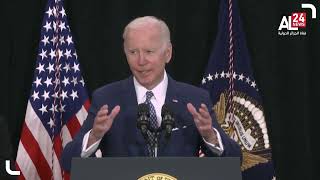
Israeli generals send a message to US President Joe Biden
Israeli generals send a message to US President Joe BidenMohammed NassarA number of Israeli army generals sent a secret letter to US President Joe Biden. The letter was written by a number of senior officers in the Israeli army, warning Joe Biden against fully cooperating with Prime Minister Benjamin Netanyahu, and that America’s support for … ظهرت المقالة Israeli generals send a message to US President Joe Biden أولاً على الجزائرية للأخبار .

History, Hegemony and the Civilizations That Outlive Empires
There are moments when the decline of a power can be measured in statistics, military setbacks or shifting alliances. And there are moments when something deeper seems to be happening — something we recognize before we can fully measure it: an entire historical order begins to lose the confidence, coherence and authority that once allowed it to shape the world in its own image. For those of us who grew up in societies that experienced colonialism not as an abstraction in a history book but as a memory still carried by families, cities and generations, this question is inevitably more than academic. We have seen the extraordinary power of the West, learned from its knowledge, encountered its institutions and contradictions, and watched its promises of universality collide, too often, with the realities of power. Today, as the Middle East is again shaken by war, Gaza devastated, Iran confronted, American power tested and the international order increasingly contested, we find ourselves returning to a thinker who understood that civilizations cannot ultimately be measured by the weapons they possess or the wealth they accumulate. Long before “multipolarity” became the vocabulary of contemporary geopolitics, Malek Bennabi had offered another way of reading history: through man, time, ideas, moral energy and the mysterious moment when a society acquires the capacity to enter history — or begins to lose it. Perhaps this is why Bennabi speaks so directly to our present. Not because he predicted it. But because he gave us a language with which to think about it. The Equation of History In a timely and readable recent book titled “Why History Matters”1, Dr Yakoob Ahmed engages themes from theology and civilization to imagination and storytelling with a view to reviving historical consciousness as both an intellectual and spiritual imperative. In it, he reminds us of the oft-cited saying according to which history tends to repeat itself and the quote, widely attributed to American humorist Mark Twain suggesting that “history does not repeat itself, but it rhymes.2 One way to examine the idea that humans are destined to repeat the actions of the past, Ahmed says, is “through the rise and fall of states, the inevitable end of power, and the cyclical patterns of tyranny that ultimately come to a close.” He also rightly observed that Ibn Khaldun was not the only Muslim thinker who made the case of cycles in history, nor that simply Muslims wrote about cyclical theories. Indeed, during the 18th and 19th centuries, Ahmed adds, thinkers in Western Europe and the Ottoman 1 Yakoob Ahmed, Why History Matters: Reviving Faith Through the Lens of History, Ketebe Publishing, Istanbul, Türkiye, 2025. 2 Although the saying is almost universally attributed to Mark Twain, the earliest documented use of a similar phrasing appears in Theodor Reik’s 1965 essay The Unreachables, where he wrote: “It has been said that history repeats itself. This is perhaps not quite correct; it merely rhymes.” Twain did, however, express related ideas about historical repetition in his 1874 novel The Gilded Age: A Tale of To-Day, stating: “History never repeats itself, but the Kaleidoscopic combinations of the pictured present often seem to be constructed out of the broken fragments of antique legends”. This conveys a sense of historical echoes, though it does not use the rhyme metaphor. (Source: David J. Kent, in Word Hot White Snow, wordpress.com, April 2024). Empire examined Ibn Khaldun’s ideas to establish where and how nations tend to repeat themselves, and where lessons can be learned. He specifically mentioned the Scottish 18th century historian Alexander Fraser Tyler who claimed that democracies follow a predictable cyclical pattern, evolving from “having virtuous intentions to becoming corrupted, and later declining.” Conventional political science commonly diagnoses the deep and accelerating shift characterizing the modern landscape of global geopolitics — that is the transition away from a unipolar world anchored by Western hegemony toward a fragmented, multipolar reality— through macroeconomic volatility, demographic deficits, or logistical overreach. Such a view stems from a secular understanding of reality, typically supposed to be grounded in the scientific method, empirical evidence, rational enquiry, and experimentation, while totally excluding any religious interpretations. For his part, Malek Bennabi offered a profoundly different diagnosis. By way of a method reflective of his personal intellectual and religious culture — consisting essentially in bridging traditional Islamic sociology, mid-twentieth century Western historiography, and modern structural analysis — he approached history not as a sequence of random interactions or pure material accumulations, but as a rigorous biological and psychological cycle governed by structural laws. As outlined earlier, Bennabi treated sociology with the precision of mathematics through his famous triad: Civilization = Man + Soil + Time. These three fundamental elements, Bennabi explains, exist in every human group, yet they remain static, inert materials until they are vitalized by an ideological or spiritual catalyst. He mapped the lifecycle of any civilization across three psychological and chronological stages. Hence, when an intense moral breath tames the primal instincts of a society, it binds individuals into a unified social network (the Stage of the Spirit) turning raw human potential into an engine capable of historical creation of institutions, sciences, law, and physical architecture (the Stage of the Reason). Conversely, when that spiritual catalyst loses its active energy, the social network disintegrates and dissolves into individualism, hyper-consumerism, and a worship of material objects, thereafter initiating an irreversible slide into ethical decay, which in turn unavoidably leads to societal collapse (the Stage of the Instinct). How does Bennabi’s view compare to some other influential classical and contemporary civilizational theorists? During the classical and modern eras, two towering figures, Abdurrahman Ibn Khaldun and Arnold Toynbee, profoundly influenced the history of ideas concerning the study of the destiny of human civilizations, particularly through their monumental works, the “Muqaddimah” and ‘The Study of History”, respectively. It is therefore not surprising that Bennabi was considerably influenced by their theories. That being said, while Ibn Khaldun asserted that “Asabiyyah” (social bonds and group solidarity) naturally develops among rugged desert groups and nomadic states and is subsequently dissolved by urban luxury within a strict four-generation cycle, thus paving the way for the rise of a new group with a stronger asabiyyah, Bennabi deepened this observation. He posited that social cohesion is not generated spontaneously by environment or blood alone; rather, it is a secondary manifestation of a primary spiritual/religious catalyst. He further argued that luxury is not toxic because it is comfortable, but because it breaks the social network by shifting focus from transcendent duties to immediate individual instincts. Similarly, Bennabi’s framework closely parallels Arnold Toynbee’s concept of “Challenge and Response.” Both scholars rejected racial or strictly geographical explanations of historical primacy. Toynbee argued that when a “Creative Minority” stops offering innovative solutions to existential challenges, it degenerates into a “Dominant Minority” that can only govern through coercive violence. Bennabi provided the inner psychological anatomy for this transition: the loss of creativity is the direct consequence of a society entering the Stage of the Instinct, where its ideas turn into hollow cultural artifacts, leaving behind nothing but raw force. All Roads Lead to Rome In more recent times, thinkers like Paul Kennedy, Francis Fukuyama, Samuel Huntington and others provided diverging opinions but having in common a strongly-marked materialistic perspective. In his acclaimed book “The Rise and Fall of the Great Powers”3, historian Paul Kennedy traces the postures of the world’s leading nations over five centuries starting with the Habsburg Empire in the 16th century. In it, he argues that empires project military power according to their economic resources but eventually the high cost of maintaining military supremacy weakens their economic base. As a result, they tend to respond by spending more on defense and thus weaken themselves further by diverting essential resources away from new, productive investment. Bennabi would view Kennedy’s fundamentally materialist analysis of “imperial overstretch” as a symptom, not a cause, given that, for him, economic and military imbalances occur only after a civilization has entered its Stage of the Instinct, and also because a society rich in “moral capital” can survive material scarcity, whereas a morally bankrupt society will collapse regardless of its GDP or military spending. Huntington, argued that post-Cold War conflicts would trigger along cultural and religious fault lines. Bennabi anticipated this friction but offered a deeper diagnostic. He contended that the tension between the West and the Islamic world is not an inherent clash of civilizations, but a clash between a dying, over-materialized civilization (the West) and a stagnant, “colonizable” society (the Islamic world) that has yet to rekindle its original spiritual formula. Bennabi’s entire philosophy stands as a direct refutation of Francis Fukuyama’s thesis positing that Western liberal democracy was the final endpoint of human ideological evolution. Bennabi warned against confusing “civilization” with “accumulation”, considering that buying, copying, or implementing Western political institutions and consumer products does not make a society civilized. Without a living spiritual and moral anchor, he explained, consumerist democracy is merely the final, sterile stage of the Stage of the Instinct. Two decades before Fukuyama, Bennabi used the concept of the “end of history,” but from radically different civilizational lenses: while Fukuyama — who views history as a linear, evolutionary process — history “ends” because the ultimate political and ideological consensus (that is Western liberal democracy and market capitalism) has been reached, for Bennabi — who views history as a cyclical law of nature — history “ must end at some point” when a specific civilizational cycle has exhausted its psychological and spiritual momentum. History then does not stop permanently; it resets so that a “new point” of civilizational genesis can begin. As for the “Last Man”, Fukuyama — drawing from Friedrich Nietzsche — sees him as a secure, materially satisfied individual devoid of great passions, higher ideals, or willingness to struggle, in other words, a figure representing the psychological stagnation of a triumphant Western model. Conversely, Bennabi observed a similar stagnation in the 3 Paul Kennedy, The Rise and Fall of the Great Powers: Economic Change and Military Conflict from 1500 to 2000, Unwyn Hyman, London, 1988. Muslim world, which he termed the “colonizability” stage: when a civilization’s initial moral and spiritual impulse dies out, its people become passive consumers of other civilizations’ products, losing their agency in making history. Historian and demographer Emmanuel Todd famously predicted the collapse of the Soviet Union using mainly infant mortality rates. In his 2004 book first published in French “La Défaite de l’Occident” (The Defeat of the West) 4, he argues that the war in Ukraine (as well as the American nihilism exhibited in Gaza) acts as a revealer of the terminal decline of the West, triggered by internal self-destruction rather than just the power of its adversaries. Organized around demographic, industrial, and religious factors, Todd’s analysis concludes that the West in general and the United States in particular are in a deep state of social disintegration. Moreover, the total disappearance of Protestantism, which, he says, historically drove the strength of the Anglo-Saxon world (literacy, discipline, work ethic) left an ideological and moral vacuum. Thus, deprived of religious or collective guidance, the West has plummeted into a metaphysical void and a self-destructive impulse, resulting in a divorce between elites and the working class. In short, Todd is of the opinion that the Western bloc survives only through the aggressive expansion of an already hollow model. The concluding remark of the book is particularly grim: “If we want to anticipate America’s strategic choices, we must urgently abandon the axiom of rationality. The United States is not looking for gains by weighing costs. In the village of Washington, in the land of mass shootings, in the era of zero religion, the primary impulse is a need for violence.” Like Bennabi, Todd looks at the biological metrics of “Man” and “Time.” In particular, his observation of rising nihilism and declining birth rates in the West aligns precisely with Bennabi’s Stage of the Instinct, where individual gratification supersedes the generational transmission of civilization. In the same vein, jumping on the bandwagon of thinkers like Edward Gibbon5 in particular, historian Peter Heather and economist John Rapley contend, in their new book “Why Empires Fall”,6 that empires inevitably sow the seeds of their own destruction through an internal “imperial life cycle”. The authors show how an empire’s own success enriches and modernizes its geographic “periphery”, only to see these newly empowered outside regions rise up to challenge and overtake the imperial core. In such a pattern they find striking parallels between ancient Rome and the modern West (led by the United States), including — interestingly enough in light of the ongoing unjust US-Israeli war on Iran — in the fact that “the eventual revival of Persia as a peer competitor put unsustainable pressure on Rome’s declining fiscal and military capacities.”7 In concluding they stress that Western 4 Emmanuel Todd, La Défaite de l’Occident, Editions Gallimard, 2024. 5 Edward Gibbon (1737-1794) was a British historian, essayist, and politician best known for his six-volume The History of the Decline and Fall of the Roman Empire in which he analyzed the causes of Rome’s fall from 98 to 1590, emphasizing internal decay, barbarian invasions, and the role of Christianity. His skeptical analysis of Christianity sparked lasting controversy, but his narrative style and rigorous scholarship profoundly influenced later historians and writers. Among those is British historian Niall Ferguson who said in 2015 that Europe “has grown decadent in its shopping malls and sports stadiums” while letting in “outsiders who have coveted its wealth without renouncing their ancestral faith (…) Like the Roman Empire in the early fifth century, Europe has allowed its defenses to crumble (…) This is exactly how civilizations fall.” 6 Peter Heather and John Rapley, Why Empires Fall: Rome, America, and the Future of the West, Allen Lane, 2023. 7 Read in this respect: -the essay co-authored by Narges Bajoghli and Vali Nasr titled Iran’s New Grand Strategy, published in the July/August 2026 issue of Foreign Affairs magazine (https://www.foreignaffairs.com/iran/irans-new-grand-strategy). In it, the two scholars of Iranian origin examine how a new generation of Iranian leaders is reshaping the country’s domestic order, society, and regional policy. following recent conflicts; -Marc Lynch’s analysis titled The End of the American Middle East: Iran and the Last Gasp of a Failed Order, in the September/October 2026 issue of the same magazine, in which the Professor of Political Science and International Affairs global primacy cannot be recovered, but total collapse is not a foregone conclusion if leadership adapts. To preserve the West’s core interests, they say, Western leaders must stop trying to police the world and instead focus on creating a multipolar global framework. By doing so, “Not only would the form of the Western nation state — originally built on leveraged wealth flows from the rest of the planet — have managed to negotiate a moment of potentially existential crisis, but it would have generated a post-colonial legacy of real greatness, of which its citizens could be genuinely proud.” It is important to point out here that the literature on the historiography of how empires rise and fall, and more specifically the one on the parallel between the fate of ancient Rome and that of the modern West (under the leadership of the United States), has exploded in recent decades, especially following the fall of the Soviet Union and, consequently, the emergence of the United States of America as the sole “hyperpower,” to use the term coined by former French Foreign Minister Dominique de Villepin. Almost two decades before Heather and Hapley, the former editor-at-large of Vanity Fair magazine in the US, and previously managing editor of The Atlantic Monthly, Cullen Murphy, wrote a compelling book8 on this very subject. In it, he explores how the Roman and American populations saw their political elites, and their insular cultures; looks at the consequences of military overstretch and the widening gap between military and civilian society; sees both states weakened through “privatization” and vexed by the paradoxical issue of borders; and argues that America most resembles Rome in the “burgeoning corruption of its government and in its arrogant ignorance of the world”. With regard to this last point, he writes: “The Romans were aware, to be sure, that all previous empires had fallen. But they saw their own empire as the culminating work of creation. The torch had been passed, once and for all. Roma Aeterna! In the eyes of a Roman living in the empire’s Golden Age, Rome would never die.” Outside of academia, French President Emmanuel Macron was one of the few Western leaders to publicly acknowledge this historical shift. At a conference, on August 27, 2019, at the Élysée Palace, he delivered a significant speech to his ambassadors accredited worldwide, in which he notably declared: “We are undoubtedly witnessing the end of Western hegemony over the world,” due to Western errors and the emergence of new powers. The President analyzed the transition from an international order shaped since the 18th century by the West (France, the United Kingdom, and then the United States) to a new balance of power disrupted by geopolitical missteps and American choices.9 The fate of the “Jewish State”: Like Father like Son at George Washington University and author of America’s Middle East: The Ruination of a Region, argues that “The American Middle East is finished. The regional order that has prevailed since 1991 has been one of the many casualties of the U.S.-Israeli war with Iran. The American and Israeli failure to dislodge the regime in Tehran has proved the bankruptcy of decades of sanctions and violence (…) the old order is in fact giving way to something new (…) And assuming that the Iranian regime does not collapse any time soon — which it appears highly unlikely to do — an emboldened Tehran will hope to defend and expand its regional influence by bogging Washington down in the kinds of endless, borderless ‘gray zone’ conflicts in which it has always thrived.” 8 Cullen Murphy, The New Rome: The Fall of an Empire and the Fate of America, Houghton Mifflin Company, USA, 2007. 9 To read the full speech in French: https://www.elysee.fr/emmanuel- macron/2019/08/27/discours-du-president-de-la- republique-a-la-conference-des-ambassadeurs-1 In his recent book, The Monstrosity of Our Century 10, Amir Nour devoted an entire chapter to the complex issue of the fate of what Israelis call the “Jewish state.” He expressed his conviction that this “state” — created from scratch with the active complicity and multifaceted support of the West in 1948 in a geographical and civilizational area entirely different from the history, culture, and aspirations of the Zionist settlers who came primarily from Central and Eastern Europe — lacks both the legitimacy and the demographics necessary to guarantee its long-term survival. Nour offered his perspective on what he considers the only lasting solution to a conflict originating In World War I and whose dramatic consequences risk multiplying in the future absent an urgent and definitive settlement. Past and present upheavals throughout the West Asian region prove beyond a doubt that such a lasting solution could be nothing other than the creation of a democratic state (or confederation) in Palestine where Muslim, Jewish, Christian and other citizens will have the same constitutional rights and obligations, and share the common desire to achieve peace and prosperity in a “holly land”, transformed by an “unholy alliance” between a supremacist Zionist ideology and nihilist West only pursuing its vested interests, into a land of genocide and other tragedies, of which the Palestinians are the principal sin-offerings. This viewpoint, long considered by representatives of the said alliance as a chimera, or even anathema, is today increasingly shared and defended by figures who are authorities in Western academic circles and, more significantly, among young Jews and a significant fringe within the American Democratic Party, as evidenced by recent polls conducted by bodies known for their seriousness.11 To back up our point, we’ll share in the lines that follow some viewpoints similar to Nour’s, expressed by well-known personalities from different cultural and religious backgrounds. In his latest book12 “Israël. Une course vers l’abîme” (Israel. A Race to the Abyss), renowned Jewish historian, a specialist of Nazi Germany and the genocide of the Jews of Europe, Omer Bartov gives a searing critique of Israel’s trajectory from a post-Shoah refuge to what he describes as an ethno- nationalist regime engaged in “systematic war crimes, crimes against humanity, and genocidal acts” in Gaza. The grandson and son of fervent Zionist figures, the Israeli-American academician wonders what “went wrong” in the realization of the Zionist dream, an ideology, he says, that has now become “indefensible” and must be relegated to the dustbin of history.13 It is important to note here that in November 2023, Bartov believed that there was no evidence a genocide was happening in Gaza, and in an interview with Democracy Now! the same month he explained that neither the two-state solution nor a binational state is realistic, saying “A binational state wouldn’t work, and an independent Palestinian state has become practically impossible. The only solution is a confederation, two distinct but interdependent states, with shared institutions.” Without a political solution, he says, Israeli society will sink a little deeper into a moral and psychological abyss every day. He, therefore, places 10 See:https://www.claritypress.com/product/the-monstrosity-of-our-century-the-war-on-palestine-and-the-last-western- man/ 11 Read Bededict Vigers’ article “Israelis No Longer Ahead in Americans’ Middle East Sympathies” showing shifting public opinion in the United States, with 57% of Americans supporting an independent Palestinian state, and 41% expressing more sympathy for Palestinians compared to 36% for Israelis, especially among specific young adults: https://share.google/Sjb3Ar8563GxuAPWK 12 Omer Bartov, Israël. Une course vers l’abîme, (translated by Sibylle Grimbert), Editions du Seuil, May 2026. 13 For more insights about the Zionist ideology, read: Pr. Yakov Rapkin, Israel in Palestine: Jewish Rejection of Zionism, Aspect Editions, September 2025. his hope in international pressure, particularly from Germany, which would force Israel to accept the creation of a confederation based on openness and cooperation, linking two distinct states, one Palestinian and the other Israeli, separated by a border set along the “1967 Green Line” (the one that existed before the so-called Six-Day War). Pr. John Mearsheimer argues that history is not a neutral backdrop in international politics. It is “a living force that shapes perceptions, fuels grievances, and molds the behavior of states and societies. The Six-Day War of 1967 — which left Israel in control of Jerusalem, the West Bank, Gaza, and the Golan Heights — he rightly reminds us, was a humiliation for the Arab world and a turning point in regional memory. That defeat still echoes in Arab political culture, and the longer those territories remain occupied, the more deeply they entrench hostility toward Israel, not only among Palestinians but across the wider region. Beyond the Middle East, especially in Africa, Asia and Latin America, Mearsheimer adds, Israel is increasingly viewed through the lens of colonial history, and “in a multipolar world where the voices of the Global South carry more weight, this perception magnifies Israel’s isolation.” Moreover, resentment is not confined to the Arab-Muslim worlds and the other countries of the Global South. In Europe, Mearsheimer explains, memories of colonialism and guilt over the Holocaust initially produced strong sympathy for Israel, but “as the decades have passed, the sympathy has waned. This shift in European sentiment is significant because “Europe remains an important partner in international diplomacy, and its criticism adds to Israel’s isolation in global forums.” Even more significant is for Mearsheimer the fact that in the United Stated, “which has provided Israel with a unique combination of military aid, diplomatic cover, and economic assistance that no other state on earth has enjoyed for such an extended period of time — consensus is eroding as younger Americans evaluate Israel primarily through the lens of contemporary politics, namely respect for human rights and international law rather than Cold War ideologies and alliances. For them, “the narrative of eternal victimhood rings hollow when it conflicts with the lived reality of Palestinians under occupation.”. History, Mearsheimer concludes as a serious warning to Israel, “is full of examples where states dependent on external guarantees found themselves exposed when their patrons shifted course.” Concurring broadly with Mearsheimer’s views, Wadah Khanfar, a prominent Palestinian journalist and former Director of the Al Jazeera Network, explicitly compares the current contends that Western and Israeli strategists evaluate their conflicts in the Arab-Muslim world solely in terms of physical destruction and technological superiority. In doing so, they overlook the civilizational psychology of the region, and much like the Crusaders, the Mongols, Napoleon Bonaparte, and Western colonialists experienced in their entanglements with the peoples of the region, “bombing infrastructures does not erase a people’s will for dignity or their collective memory. The escalation against Iran and the siege of Gaza only entrench long-term resistance, turning Israel into a pariah state that is unmanageable for Washington.” For Khanfar, the war on Gaza and the strikes against Iran are not isolated events, but the convulsions of a dying Western order. Escaping the colonial era and Western hegemony in the Middle East, he says, relies on a dual dynamic: an internal impulse (the youth rejecting passive elites and rewriting the global narrative) and an external geopolitical coalition (i.e. an expanded Islamic alliance). Only through such a synergy will the region cease to be a playground for major powers and “once again become the author of its own history.”` Conclusion Only through such a synergy, Khanfar argues, will the region cease to be a playground for major powers and “once again become the author of its own history.” And perhaps this is where we should return, one final time, to Bennabi. Because the decline of one civilization is not the birth certificate of another. The weakening of Western hegemony, however profound it may become, will not by itself restore the historical agency of the Arab-Muslim world. Nor will American retreat, Israeli isolation, multipolarity, or the emergence of new powers automatically produce a new civilization. Bennabi would probably have regarded such expectations as another form of dependence: waiting for history to be delivered by the decline of others instead of creating it ourselves. This, ultimately, is why history matters to us. We come from a region that has known conquest and resistance, humiliation and renewal, colonization and independence. We have inherited both wounds and possibilities. And we have learned that military superiority can occupy territory, destroy cities and impose political orders — sometimes for generations — but it cannot indefinitely command memory, dignity or the human desire to recover agency. Empires eventually discover this. Peoples rarely forget it. Bennabi’s enduring lesson is therefore neither a prophecy of Western collapse nor a promise of Muslim renaissance. It is considerably more demanding: no civilization inherits the future simply because another civilization is losing its grip on the present. History does not reward those who wait beside the ruins of an exhausted order. It begins again with those capable of transforming Man, Soil and Time into meaning, responsibility and action. The question before us is therefore no longer merely whether an age is ending. It is whether we are ready to help write what comes next.

Israel is more precious than the whole world to America
For US President Joe Biden, Israel is more precious and more important than America and the entire world, and it is the axis of the earth and the universe, and it may not be accused of any accusation whatsoever, nor may it be criticized, according to US President Joe Biden, who renewed the warning against … ظهرت المقالة Israel is more precious than the whole world to America أولاً على الجزائرية للأخبار .
Algerian Products Strengthen Their Presence in the Spanish Market
Algerian products are gaining increasing traction in the Spanish market, reflecting the country’s expanding export base and the growing momentum behind Algerian-Spanish economic cooperation, according to Jaber Ben Sedira, President of the Algerian Organization for Trade and Social Investment. Ben Sedira said Algeria has emerged as a significant economic partner for Spain, driven by the diversification of its exports. Products such as dates, olive oil, fresh fruit, and ceramics have established a stronger foothold in the Spanish market, reinforcing a bilateral trade relationship that is increasingly based on a mutually beneficial “win-win” approach. Speaking on the Multimedia Economy program of Algerian Radio, Ben Sedira said the steady growth of Algerian exports illustrates the transformation underway in commercial relations between the two countries and highlights Algeria’s rising status as a strategic economic partner. He also underscored the importance of Spanish Prime Minister Pedro Sánchez’s upcoming visit to Algeria, describing it as a pivotal moment in bilateral relations. The visit, he noted, comes after several years of diplomatic tensions and presents an opportunity to reset cooperation, particularly in the areas of trade, investment, and economic development. According to Ben Sedira, Spanish investors continue to play a key role in expanding commercial exchanges, encouraged by Algeria’s increasingly competitive investment environment. He pointed to a series of government incentives—including tax and customs exemptions, as well as streamlined export procedures—that have been positively received by Spanish businesses seeking to expand their operations in Algeria. Ben Sedira further revealed that several Spanish shipping companies have signed agreements with the Port of Algiers, recognizing its strategic position as a gateway to African markets. With maritime routes linking Algeria to Nouakchott, Nouadhibou, and Dakar, the port is expected to facilitate the movement of Spanish goods across West Africa while strengthening Algeria’s role as a regional logistics hub. Highlighting the growing interest of the Spanish business community, Ben Sedira noted that five Spanish chambers of commerce have recently conducted successive visits to Algeria to explore new opportunities in trade and investment. He concluded that Algerian-Spanish economic relations are entering a new phase marked by deeper strategic cooperation, greater complementarity of interests, and expanding prospects for long-term partnership.

German Auto Delegation Explores Algeria’s Growing Automotive Industry
The German delegation specializing in the automotive industry concluded its three-day visit to Algeria on Wednesday evening, following a program that spanned Algiers and Oran and highlighted the country’s accelerating ambitions in vehicle manufacturing and industrial integration. During the visit, the delegation met with approximately 135 Algerian professionals active in the automotive and auto parts sectors. Most participants expressed strong interest in establishing partnerships and cooperation with German companies. The delegation was also received by officials from Algeria’s Ministry of Industry and was briefed on the government’s strategy to develop the automotive sector. Delegates later toured industrial facilities to assess Algeria’s progress firsthand, including visits to the Fiat manufacturing plant and two component factories in Oran, western Algeria, specializing in electrical systems and exhaust technologies. According to presentations delivered by Stellantis Algeria officials, the local supplier ecosystem currently includes 22 subcontractors working directly with the company and 16 operators in after-sales services. Local integration rates have already exceeded 20% and are expected to rise to 30% before the end of the year. Rachid Bakhchi, President of the Western Algeria Subcontracting and Partnership Exchange, told Echorouk that the visit reflected growing interest among German manufacturers in the Algerian market, particularly as Algeria’s automotive and component industries undergo significant transformation. Bakhchi added that the visit began with an Automotive Industry Business Day held in Algiers last Sunday, organized by the Algerian-German Chamber of Industry and Commerce (AHK) in cooperation with the Subcontracting and Partnership Exchange and the presence of the German delegation. The event attracted nearly 135 Algerian participants—exceeding expectations—driven by strong interest from local companies seeking direct engagement with German counterparts and opportunities for investment and industrial cooperation. Strong Participation Signals Growing Interest The opening session was attended by Oliver Blank, Director General of the Algerian-German Chamber of Industry and Commerce, alongside Germany’s Deputy Minister for Economic Affairs at the German Embassy in Algiers and senior German officials, underscoring Berlin’s commitment to expanding industrial cooperation with Algeria. Throughout the business forum, the Algerian Investment Promotion Agency presented an overview of the country’s business climate and investment opportunities in the automotive sector. Meanwhile, the Automotive Subcontracting Committee of the Algerian Economic Renewal Council (CREA) outlined the current state of the industry and its future outlook. Seven German companies also presented their industrial expertise, technologies, and partnership proposals for collaboration with Algerian firms. Algeria Positions Itself as an Emerging Industrial Hub Bakhchi noted that the Subcontracting and Partnership Exchange introduced participants to Algeria’s industrial subcontracting framework and its role in building an integrated automotive industry. He emphasized that the message delivered to German investors was clear: Algeria has become a genuine investment destination. Foreign companies are entering the market following careful assessment of its opportunities and industrial potential, positioning the country as an emerging platform for broader manufacturing development. Fiat Algeria also presented its experience since launching operations, highlighting the factory’s expansion and job creation potential as a strategic industrial project. Additionally, one of Stellantis’ local suppliers specializing in electrical wiring systems shared its experience working within the company’s supply chain and contributing to higher local integration rates. Industrial Progress Observed Firsthand in Oran At the conclusion of the Algiers program, the German delegation met with senior officials from Algeria’s Ministry of Industry, including the Director General for SMEs and the Director General for Industrial Development, who presented the government’s roadmap for strengthening vehicle manufacturing and attracting foreign investment. On Monday evening, the delegation traveled to Oran, where the first stop was the Fiat plant. Delegates toured production lines and observed the various manufacturing stages, gaining direct insight into Algeria’s advances in automotive production. They also visited the section dedicated to locally manufactured components. Stellantis representatives explained that the company currently works with 22 local suppliers and 16 after-sales service partners, while local integration has surpassed 20% and is projected to reach 30% by year-end. The delegation also visited Aptiv’s facility, which specializes in electrical cable manufacturing. Visitors observed the full production cycle—from raw material processing to final assembly—as well as quality-control laboratories and development systems designed to meet international standards. Delegates expressed particular appreciation for the scale of the workforce, the number of technicians and engineers, and the company’s strong emphasis on training and workforce development. The tour included the company’s training center, which prepares young people from the region and develops qualified labor not only for the factory itself but also for other cable manufacturing facilities. Bakhchi described the initiative as a successful example of the broader economic and social impact of major industrial projects in job creation and skills transfer. German Investment Expands Beyond Vehicle Assembly The final stop of the visit was the Reichhart logistik plant—an existing German investment in Algeria currently preparing for production launch. Delegates reviewed the installation of industrial equipment ahead of manufacturing operations. The facility is expected to begin supplying components to Stellantis starting next year. According to Bakhchi, the German delegation left Algeria with highly positive impressions after witnessing firsthand the transformation taking place in the country’s industrial sector. He said the visit had opened new prospects for expanding industrial partnerships and attracting additional German investment into automotive manufacturing and component production. The delegation included representatives from several leading industrial and technology companies active across the automotive value chain, including specialists in industrial materials, vehicle engineering and development, industrial systems, logistics, tooling technologies, and automotive expertise. The German delegation included representatives from several leading industrial and technology companies operating across the automotive value chain. Participants included Allod Werkstoff, specializing in industrial materials; AVL Germany, focused on vehicle engineering and development; Compound Engineering; INFICON International; the LMT Group – Fette Compacting; LMT Tools Systems; Moviniti GmbH; Reichhart Logistik; and Tech Solution, in addition to representatives from the Automotive Experts Circle of the Algerian-German Chamber of Industry and Commerce. Participating companies held business-to-business (B2B) meetings with Algerian operators to explore investment opportunities, industrial partnerships, technology transfer, and expertise exchange in automotive manufacturing and components production. Bakhchi concluded that this visit represents only the first phase of bilateral cooperation. The next stage will involve additional B2B meetings between German and Algerian economic operators aimed at deepening discussions initiated during the visit and converting early contacts into concrete investment projects—particularly in subcontracting, automotive components manufacturing, and transferring technology and industrial know-how to Algeria.

Top secret… Details of a secret American-Israeli deal
US President Joe Biden begged Israeli Prime Minister Benjamin Netanyahu not to escalate with Iran, and not to launch a major strike against sensitive targets in Iran in exchange for two pledges from the United States of America in favor of Israel. The first pledge is that both the United States of America and Britain … ظهرت المقالة Top secret… Details of a secret American-Israeli deal أولاً على الجزائرية للأخبار .